Getting Biometrics In Hand

It is amazing how quickly you get used to a car that starts as long as you have the key somewhere on your person. When you switch vehicles, it becomes a nuisance to fish the key out and insert it into the ignition. Biometrics aims to make it even easier. Why carry around a key (or an access card), if a computer can uniquely identify you?

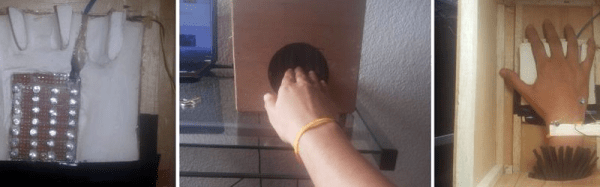
[Alexis Ospitia] wanted to experiment with vein matching biometrics and had good results with a Raspberry Pi, a web cam, and a custom IR illumination system. Apparently, hemoglobin is a good IR reflector and the pattern of veins in your hand is as unique as other biometrics (like fingerprints, ear prints, and retina vein patterns). [Alexis’] post is in Spanish, but Google Translate does a fine job as soon as you realize that it thinks “fingerprint” is “footprint.” The software uses OpenCV, but we’ve seen the same thing done in MATLAB (see the video below).
Continue reading “Getting Biometrics In Hand”

Hacking A Pi Camera With A Nikon Lens

Cell phones have killed many industries. It is getting harder and harder to justify buying an ordinary watch, a calculator, or a day planner because your phone does all those things at least as well as the originals. Cell phones have cameras too, so the days of missing a shot because you don’t have a camera with you are over (although we always wonder where the flood of Bigfoot and UFO pictures are). However, you probably still have a dedicated camera tucked away somewhere because, let’s face it, most cell phone cameras are just not that good.

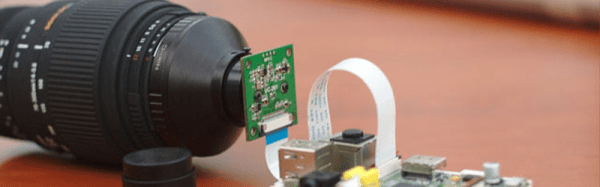
The Raspberry Pi camera is about on par with a cheap cell phone camera. [Martijn Braam] has a Nikon camera, and he noticed that he could get a Raspberry Pi camera with a C-mount for lenses. He picked up a C to F adapter and proceeded to experiment with Nikon DSLR lenses on the Raspberry Pi camera.

Continue reading “Hacking A Pi Camera With A Nikon Lens”

3D Printed Battery Forms

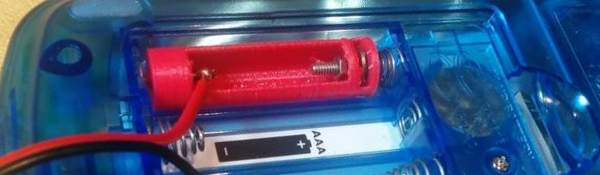
What’s the worst thing that can happen when you are trying to show off a project? Dead batteries might not be the absolute worst thing, but it is pretty close to the top of the list. [KermMartian] has this problem every year at World Maker Faire with demos based around calculators. At first, he tried wedging power supply wires into the calculator using dead batteries to hold the wires in place. However, it didn’t take much wear and tear before the wires would pull out.

The solution? A 3D printed battery form that accepts metal hardware that can connect to the external power supply. The AAA-sized plastic batteries insert into the calculator’s battery compartment and the small machine screws and washers form the connection points.

Continue reading “3D Printed Battery Forms”

There’s A Bug In My Robot

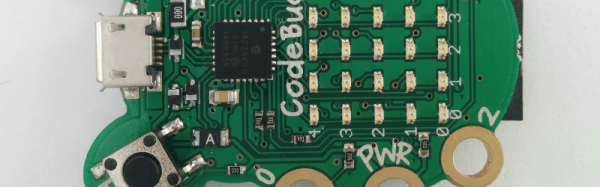
What has six legs, 25 LEDs, a Microchip CPU, can be sewn into clothing, and even plugged into a Raspberry Pi? The answer, it turns out, is the CodeBug–a low cost computer board aimed at the educational market. These board were crowdfunded and are now available for general purchase. [Mike Redrobe] took one of the boards, connected a few servos and used the CodeBug’s Scratch-like language to create a small robot.

You can see the robot in the video below. Programs download via USB (the board looks like a USB drive). You can also send commands over USB to operate in tether mode, or you can directly plug the board into a Raspberry Pi.

Continue reading “There’s A Bug In My Robot”

Visualizing The Fourier Transform

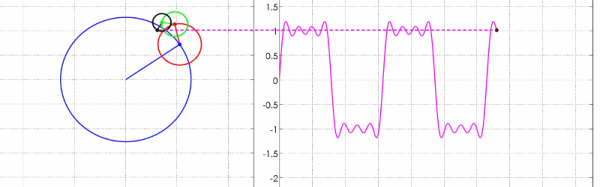
If you do any electronics work–especially digital signal processing–you probably know that any signal can be decomposed into a bunch of sine waves. Conversely, you can generate any signal by adding up a bunch of sine waves. For example, consider a square wave. A square wave of frequency F can be made with a sine wave of frequency F along with all of its odd harmonics (that is, 3F, 5F, 7F, etc.). Of course, to get a perfect square wave, you need an infinite number of odd harmonics, but in practice only a few will do the job.

Like a lot of abstract concepts, it is easy to understand the basic premise and you could look up any of the mathematical algorithms that can take a signal and perform a Fourier transform on it. But can you visualize why the transform works the way it does? If you can’t (or even if you can), you should check out [Mehmet’s] MATLAB visualization of harmonic circles. If you don’t have MATLAB yourself, you can always check out the video (see below).

Continue reading “Visualizing The Fourier Transform”

Hack Your Rib Cage With Titanium 3D Printing

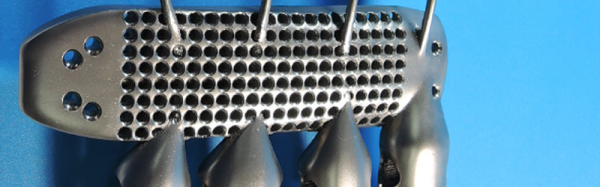
A Spanish hospital recently replaced a significant amount of a man’s rib cage and sternum with a titanium replacement. Putting titanium inside people’s chests is nothing new, but what made this different was the implant was 3D printed to match his existing bone structure.

An Australian company, Anatomics, created the 3D print from high-resolution CT scans of the patient. They used a printer provided by an Australian Government corporate entity, CSIRO, that helps bring technology to Australian companies.

Biomedical printing has been in the news quite a bit lately and we’ve covered CT scan to 3D model conversions more than once. Is this the dawn of the age of the cyborg? Maybe it’s really mid morning. Many people walk around with pacemakers, Vagus nerve stimulators, and plenty of more conventional titanium hardware in them now.

While the ethics of replacing a cancer patient’s rib cage is pretty clear, the real issue will be when people want enhancements just for the sake of it (think of the controversy surrounding runners with prosthetic legs, for example). It might seem far-fetched, but as replacements become better than originals, some people will want to opt for replacements for perfectly good body parts.

Continue reading “Hack Your Rib Cage With Titanium 3D Printing”

Radio Receiver Or Art? Why Not Both?

We’ve heard it said before that you should build things twice. Once to learn how to build it and the second time to build it right. [AA7EE] must agree. He was happy with his homebrew regenerative receiver that he called Sproutie. But he also wanted to build one more and use what he learned to make an even better receiver. The Sproutie Mark II was born.

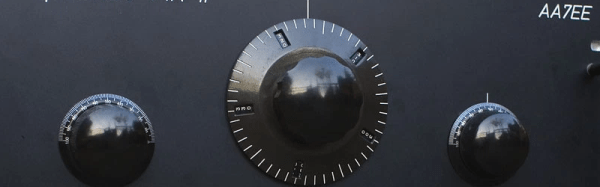
This isn’t some rip off of an old P-Box kit either. [AA7EE] used a four-device RF stage with FET isolation back to the antenna and a regulated power supply. Plug in coils allow reception on multiple bands ranging from about 3 to 13 MHz. There’s an audio stage with multiple selectable audio filters, and–the best part–a National HRO tuning dial that is a work of art all by itself.

Continue reading “Radio Receiver Or Art? Why Not Both?”