As LLMs Devour The Storage Market, Fujifilm Bets On Tape

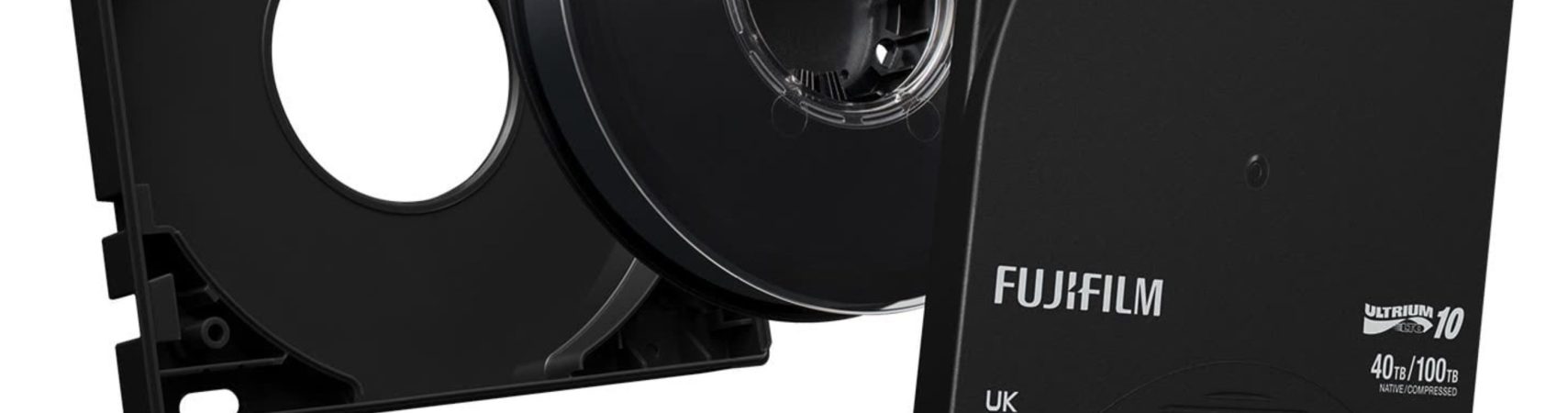
One of the interesting things about the slow-moving AI apocalypse we seem to be trapped in is watching the knock-on effects reverberate through communities and economies. We’ve seen how — and lamented that — the LLM-driven datacenter build up has increased demand for GPUs, RAM and SSDs directly, and we watched that in turn increase demand for traditional, spinning rust hard drives. Perhaps it was only a matter of time before demand came for the tapes, too. Yes, tapes: good old fashioned “sticky tape and rust”. With AI increasing demand for archival material, Fujifilm has announced they’ll be increasing production by 5x through 2028.

This production increase is specifically targeting about the latest and greatest 10th generation of Linear Tape, Open (LTO) which Fujifilm has produced since its inception. Indeed, Fujifilm has been in the tape storage business for almost as long as we’ve been storing data on magnetic tape, with their first forays into the field dating to the 1950s. The Ultrium10 tapes are available in 30 TB and 40 TB standard sizes, which are advertised as 75 TB and 100 TB based on a perhaps-optimistic 1.5:1 compression ratio. Given it’s already a linear standard and not exactly blazing fast at 400 uncompressed MB/s, there’s no reason not to compress the heck out of data being sent to cold-storage on tape. While not great by modern SSD or HDD standards, those are dizzying numbers if the last tape drive you used was a Datasette.

Still, it shows that the industry is reacting to the same trends that have hackers bringing surplus tape drives into their homelabs. This isn’t a small bet by Fujifilm, with 10 billion yen (about $63 million) at stake.

While some of us have been making more use of optical media these days, it looks like Sony isn’t reversing course on getting out of the Blu-ray business, so don’t expect to see giant disk changers coming to a server room near you. Tape bots are apparently a different story.


Header image: Fujifilm.
Cat Feeder Ensures Fed Cats

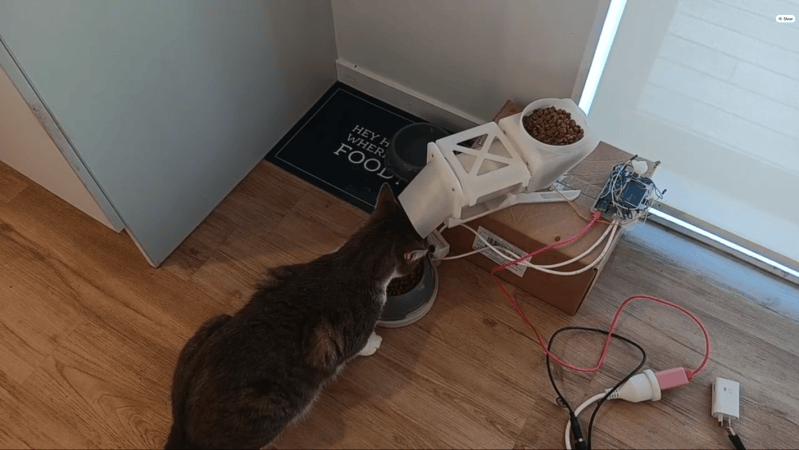
Automatic cat feeders are a dime a dozen, largely because this is an easy problem to solve. Dry cat food is easy for machines to manipulate, and the electronics needed to accomplish the task to a bare minimum are plentiful and inexpensive. But just doling out food is only easy part of the problem. [Jason] wanted to make sure that his cats actually ate once the food was dispensed so he added a few extra features to this cat feeder.

The main addition to this feeder compared to off-the-shelf models is a weight sensor under the bowl. The feeder metes out a certain amount of food, and then a Raspberry Pi Pico W keeps an eye on the weight of the dish. If it goes down, presumably the cat has eaten all of the food. But just to be sure, an ultrasonic sensor was added beside the bowl to ensure something cat-shaped was there at the same time. There was some issue with this sensor blasting out noise in a cat’s audible range at first, but it seems like that problem has since been solved as well.

The build has a few other perks as well. The hardware has wireless communication ability, so it’s easy to keep an eye on when out and about. It can log data and is much more programmable than others. Like most cat feeders, though, it’ll only work for dry food. For automatically feeding wet food something like this robotic feeder that opens cans and dispenses them at set intervals would be needed.

Continue reading “Cat Feeder Ensures Fed Cats” →

Etching Press Aims To Impress

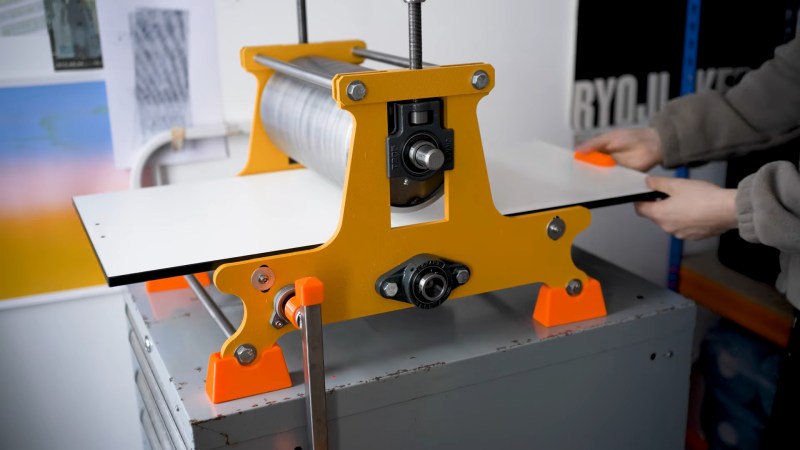
There’s an old joke about inviting a girl up to your dorm room to ‘look at your etchings’– but if you’re going to do that, you’d best have some etchings, lest she call your bluff. Even better would be to have prints available, so you might share your hard work with adoring fans. Over on YouTube, [This Designed That] shows building the perfect little etching press  so you need never invite anyone to your room again: you can crank out enough prints on this bad boy to hand out your etchings on a street corner!

Crank is the right word, because it’s hand-cranked, with the rollers chain-driven off a separate driveshaft. It works like, well, a roller press: two steel rollers squeeze a plattern holding your inked etching and a of paper together to put an image onto. His choice of an off-cut of steel pipe to use as the top roller is inspired, even if he did have to turn it down quite a bit to get an even radius and smooth surface finish. The whole thing is very well made, and all of it hand-machined except for off-the-shelf bearings and the yellow side plates, which were commercially CNC’d.

We also appreciate that [This Designed That] took the time to prove the merit of his machine by showing the press in work, and the resulting prints.  We’re not art critics, but we are willing to say this makes a good impression.

[This Designed That] is both printer and machinist, and we’ve seen his print projects before, like using resin prints for foil stamping or a DIY proofing press that seems to share some DNA with this larger project.

Thanks to [Paul Manwaring] for the tip!

Continue reading “Etching Press Aims To Impress” →

Toddler Phone Calls Family And No One Else

The great thing about the modern world is how connected we are. It’s also the worst thing about the modern world, to be honest. [Allan Binder] wanted to give his toddler the very best of that, and escape the worst, with a specially-designed telephone to call Grandma with– and not get scam calls in turn. We’re not going to say his build guide is so thorough a toddler could follow it, but it’s not too far off.

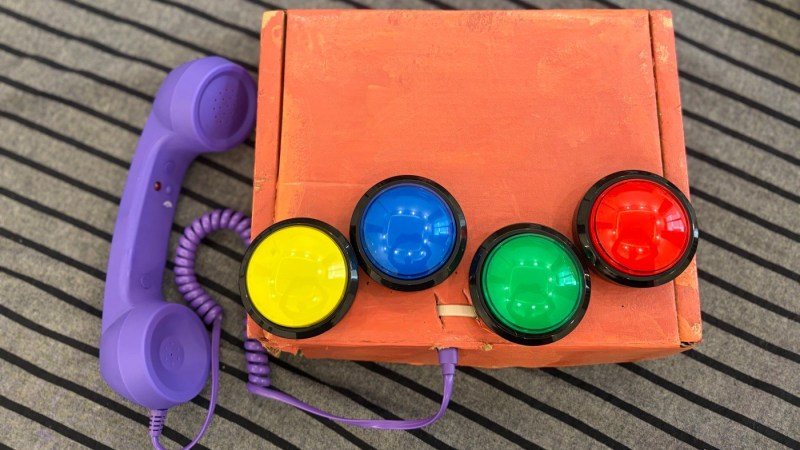
The device is very simple: a commercial ‘retro-style’ handset pairs with an ESP32-S3 over USB. Said ESP32, aside from acting as a USB host, runs a minimal Session Initiation Protocol (SIP) client, which connects via WiFi to a VoIP account the parent has set up. In this case, [Allan] is using Twilio, but there are other internet telephony providers one could use if a Twilio employee once ran over your dog or something.

There are no inbound calls in this setup, so little Timmy isn’t going  to be bothered needlessly about import fees on nonexistent packages or his car’s extended warranty. Dialing out is toddler-friendly, too– it’s as simple as mashing an arcade button linked to the ESP32’s GPIO. Each designated contact gets a button with its pre-programed contact, like the speed dial of yore. A really nice touch is the use of illuminated buttons tied to the time-zone of the designated contact: kiddo will learn quick that if the button isn’t lit, it’s not time for phone calls. The phone will actually say so, via a text-to-speech that also announces network errors and the like.

While cardboard box housing the prototype seems a bit flimsy to trust with any toddler we’ve met, but the concept here is very sound indeed. We’ve seen such kid-communication devices before, but this implementation, aside from being more current, has a lot to recommend it.

Thanks to [Allan Binder] for the tip!


Detecting An Eight Magnetic Pole State Using Chiral Phonons

The idea that magnetism doesn’t necessarily always have a dipolar configuration is not a new one, but it’s not an easy theory to find evidence for. Most recently a team of scientists at the University of Toronto used a new method involving vibrational energy in the form of phonons to find evidence for an octupolar magnetic order.

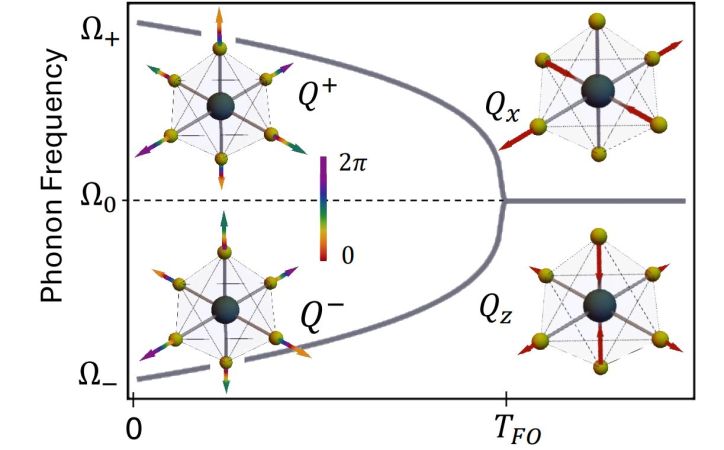
In the associated paper in Physical Review Letters (paywalled, arXiv version) by [Ruairidh Sutcliffe] et al. we can find more details on this method and what their findings may mean for various fields. Naturally, this is a quantum-level phenomenon that requires Raman spectroscopy to be detectable via said phonons.

The materials investigated here are also somewhat exotic, ranging from actinides like NpO2 to transition metal oxides like Sr2MgReO6, while having on common strong spin-orbit coupling. Where the phonons come into play is that they can be used to indirectly measure crystal lattice distortions due to the pseudo-angular momentum assigned to the phonons. This generates pseudo-chiral phonons which then show up in the Raman spectroscopy.

Although finding evidence for octopolar magnetic order is interesting in itself, this way to measuring a crystal lattice’s structure makes for another fascinating research tool that can be used to study many similar phenomenon.

These quantum-level magnetic states could conceivably be used for anything from sensors to magnetic data storage, though any such research is unlikely to be commercialized any time soon.

2026 Hackaday Supercon: Bruce Potter’s Keynote Explores The Hacker Mind

What is hacking? Many, especially in the mainstream, view it through the lens of computer security. Others consider it synonymous with making or creating. Even for those of us immersed in the community, this can be a surprisingly difficult question to answer.

In his Hackaday Supercon 2026 keynote address, Bruce Potter will explore this idea by taking a step back and looking at what makes someone a hacker in the first place. Rather than viewing hacking as a singular act, he’ll make the case that it’s a mindset, a way of approaching problems that’s not strictly dependent on the tools used or even the desired outcome.

Bruce Potter

With a cybersecurity career that’s spanned three decades, Bruce has been involved with hacking at every level and in every form — from conducting DARPA research to founding The Shmoo Group and helping organize the legendary ShmooCon. Currently the Chief Product Officer at Trinity Cyber, Bruce has made creative problem solving his life’s work, and he’s eager to share what he’s learned with the Hackaday community. While most of us won’t get the opportunity to advise on national cybersecurity policy as he has, we can still apply the same techniques to our own personal and professional projects.

Those joining us this weekend in Pasadena will get to experience Bruce’s keynote, as well as more than 30 other fascinating presentations, with a group of individuals who are just as eager to understand the how and why of the world around them as you are. Making personal connections with like-minded folks is truly the highlight of Hackaday Supercon; badge hacking and tacos are just the fringe benefits.

In our totally unbiased opinion, we believe Hackaday Supercon is the ultimate hardware hacking conference, but you don’t have to take our word for it. A few tickets are still left if you want to see for yourself.

ToothPaste Goes Where Your Password Manager Doesn’t

One of the easiest ways of improving security and privacy when using the Internet, and computers in general, is to use strong passwords unique to each site or service. A password manager makes this easy on your phone or computer, but what if you’re in a situation where you can’t install any software on the device you’re logging into? In that case, maybe it’s time to get out the Toothpaste.

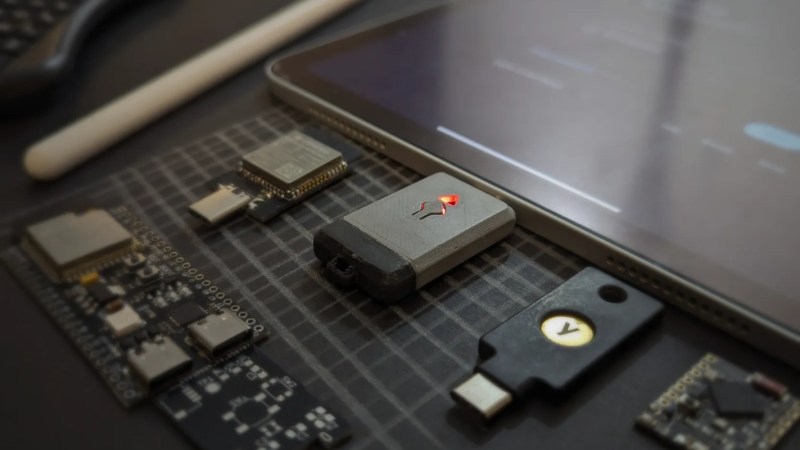
The way this creation from [brisk4t] works is that an ESP32-S3 is programmed to act as a keyboard and mouse for any computer it’s plugged into. From there, it connects over an encrypted WEB-BLE connection to another device like a laptop or smartphone. This second device can send text to the ESP32 acting using an extension for Chromium-based browsers, and the ESP32 sends it over the USB connection as if it were nothing more than a standard keyboard. This is all done without having to install any apps or drivers on the target machine, since any machine in the last two or three decades can recognize a USB keyboard and mouse with no problem.

Not only does this allow for easy password input for awkward situations, this can also be used for BIOS where an app couldn’t be installed anyway, for air-gapped systems with no networking, or insecure systems the user doesn’t trust. If you don’t need quite as many bells and whistles, we’ve seen a similar technique pulled off with an ATtiny85.