Binaural Microphone On A Budget

For as many speakers as someone can cram into a surround sound system, humans still (generally) only have two ears to listen to those sounds with. This means that, for recording purposes, it’s possible to create incredibly vivid three-dimensional sounds with just two microphones, provided that there’s an actual physical replica of a human ear attached to each microphone. This helps ensure that all the qualities of the sounds are preserved in a way a real human would experience them, and as [David Green] demonstrates, these systems don’t need to be very expensive.

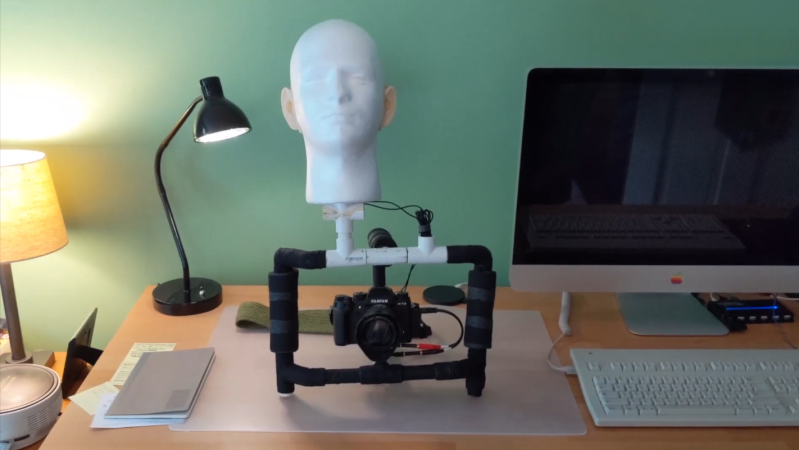
This build doesn’t just use models of human ears for recording sounds through. The silicone ears are mounted on a styrofoam mannequin head as well, which provides some sound isolation between the two microphones, much like a real human head. The ears are mounted in appropriate locations with the microphones installed inside, and the entire microphone apparatus is positioned on a PVC rig with a camera so that binaural audio will be recorded for anything [David] points it at.

Although he had some issues interfacing two microphones using 19th-century technology instead of soldering everything together, the build still eventually came together, and only for around $70 USD. However, this build is a bit dated now, so prices may have changed by now. It’s still a great way to produce realistic stereo sound without breaking the bank, but it’s not the only way of getting this job done.


Continue reading “Binaural Microphone On A Budget”

Hackaday Links Column Banner

Hackaday Links: May 10, 2026

While Artemis II was primarily a demonstration flight of the architecture NASA plans to use for future lunar missions, it was also an excellent excuse for the crew to snap some photos of the Moon and Earth with the benefit of modern camera technology. If you’ve been looking forward to seeing more of the crew’s images, you’re in luck, as thousands of new images have recently been released.

Now we don’t mean to beat up on the folks at NASA, but browsing through these images, we couldn’t help but be reminded of an article we saw on PetaPixel that discussed the space agency’s haphazard approach to sharing images online.

It’s really more like an unsorted file dump than anything, made worse by the fact that you have to access it through a government website that looks and performs like it was designed in the early 2000s. There’s even a prominent button that attempts to load a gallery feature that relies on the long-deprecated Adobe Flash. It would be nice to see the situation improved by the time astronauts actually touch down on the lunar surface, but we wouldn’t count on it.

Speaking of old tech, we’ve been following the resurgence of keyboard-equipped smartphones with great interest, as we imagine many of you have been. A recent CNBC article addresses the trend, although it didn’t quite take the nerd contingent into account. We want physical keys so we can work in the terminal and write code without fighting an on-screen keyboard, but of course, that’s not exactly what your average consumer is looking for.

It’s quite the opposite, in fact. A 20-something user referenced in the article explained how the younger generations see the physical keyboard as a way to be less connected to their phones, describing it as “an extra barrier of inconvenience that adds more steps into the thinking process.” If you need us, we’ll be collecting dust in the corner.

Continue reading “Hackaday Links: May 10, 2026”

Why Using Cardboard For A PC Case Is A Chore

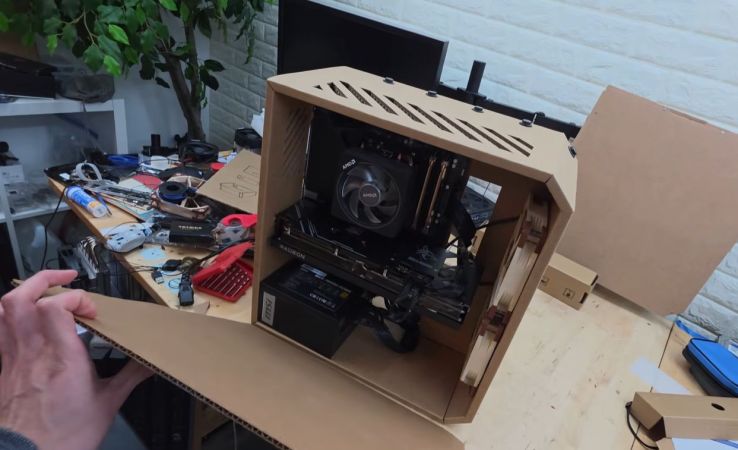
The idea of using cardboard for a sloppy PC case isn’t new; it’s a time-honored tradition dating back to at least the 1990s. That said, with today’s CNC cutters and other advanced tooling available to hobbyists, you might be curious to see how far you can push the concept. As demonstrated in a recent video by [mryeester], the answer appears to be that good planning and a solid understanding of cardboard’s limitations are as essential as ever.
After having the PC case drawn up in CAD and cut on a professional CNC cutter by a buddy who makes commercial cardboard displays, the installation procedure for the PC components showed where a bit of foresight could have saved a lot of time and effort.

Continue reading “Why Using Cardboard For A PC Case Is A Chore”

Multimaterial SLA Printer Will Make Your Head Spin

For the last few years, the must-have feature that companies are competing to show off on their filament deposition 3D printers is multi-material printing. Be it tool swapping or a material-changing system, everyone wants to show they can give you the capability to make multicoloured plastic tchotchkes. So far, that hasn’t really been the case in the world of at-home resin printing — until now. A company called Polysynth, headed by a fellow named [Eric], hopes you’ll pay a premium for the ability to make multimaterial resin prints, and they show some interesting use cases in the video below.

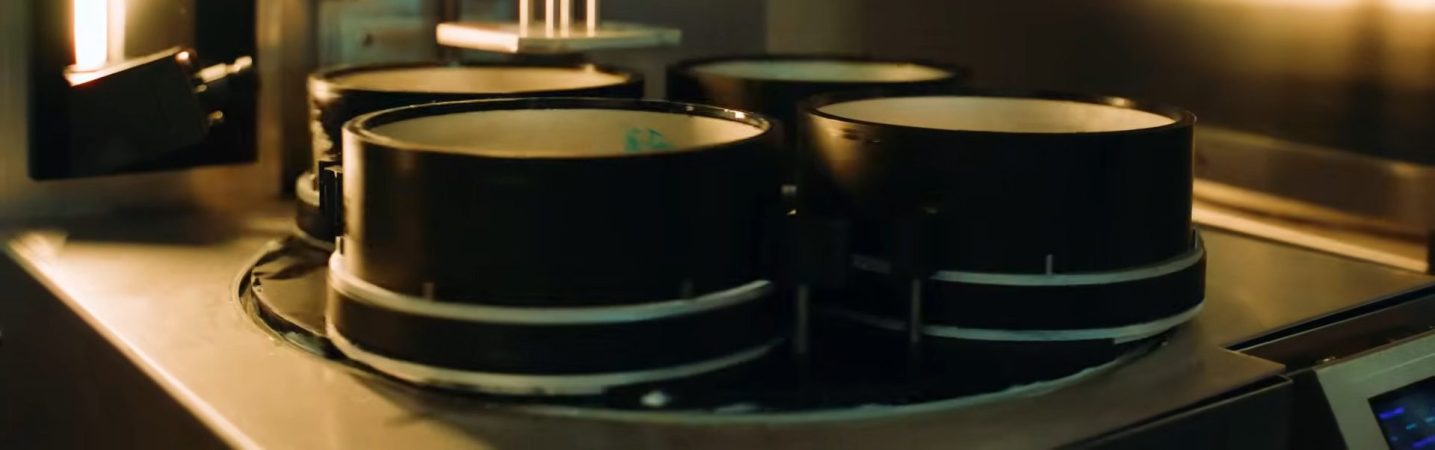
The technique is simple: instead of one resin tank underneath the dipping build plate, [Eric]’s Polysynth printer has a carousel of up to eight small circular tanks. To avoid cross-contamination from uncured resin, the print needs to be cleansed between alternating dips in the different resin vats. Rather than add a wash vat and slow the process down that way, [Eric] and his team decided to use centrifugal force: they just spin the print really, really fast to fling all the uncured resin to the sides of the vat. Yes, really.

Continue reading “Multimaterial SLA Printer Will Make Your Head Spin”

Why You Probably Shouldn’t DIY A Car Airbag

Car airbags are both a very simple concept and a marvel of engineering, replacing the bone-shattering impact of unforgiving plastic and steel with a relatively soft landing in a funky-smelling air cushion. This deceptively simple concept requires that the gas generator activates only when there is a crash and finishes filling the airbag in the milliseconds before the squishy human’s cranium with its soft filling attempts to occupy the same space as said airbag. This makes mad Aussie bloke [Turnah81]’s attempt at DIY-ing a car airbag a most daring proposition.

Rather than messing about with an IMU and microprocessors, he went low-tech with an inertial fuel cut-off switch. These are mechanical switches that hold a steel ball in place with a magnet until a sufficiently large force — like a crash — dislodges the ball and triggers an event. Usually, a switch like this cuts off the fuel pump.

After a bit of fun with a crash-test rig and the airbag of a salvaged steering wheel, a DIY airbag was assembled using a compressed-gas cylinder instead of the fancy gas generator, along with an electrically triggered valve. Here, you can already see why modern airbags use a gas generator, as it is simply far more compact.

For the bag itself, a pillow case was adapted, with the subsequent crash test — as pictured above — going about as well as you can imagine. After this, he tried a few improvements, like using a bin liner and detonating some fuel, but it seems that the gas generator is very hard to beat for producing a large amount of gas in very little time.

Meanwhile, the inertial cut-off switch turned out to be more than sufficient for this purpose, and it was also used to trigger the original airbag. Of course, with how cheap those off-the-shelf airbag units are and are tested to be fit for purpose, you’d never DIY them for actual use in a car unless you were stark raving mad.

Airbags have a checkered history. There are some places you shouldn’t try to save costs.

Continue reading “Why You Probably Shouldn’t DIY A Car Airbag”

Speech Jammer Gets Jammed Up

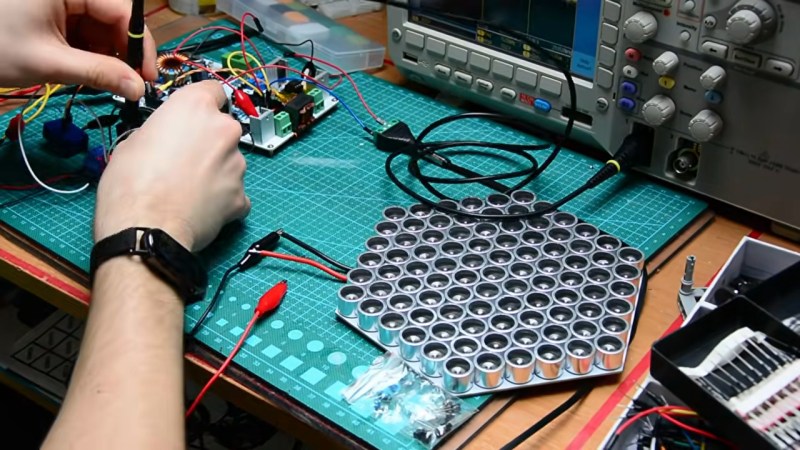
This project is perhaps the single most passive-aggressive thing we’ve ever seen on this site: rather than tell someone directly to ‘shut up’, [Blytical]’s speech jammer lets you hack their brain from across the room to stop them from speaking. It’s also a bit of an object lesson in why you shouldn’t just copy reference implementations without careful study — by his own implementation, [Blytical] was forced to learn a lot more than he intended going into this project.

The brain hack behind it is called ‘delayed auditory feedback’: by feeding their speech back to the target with a short delay — only 50 to 200 ms — it creates a confounding effect that is apparently very difficult to speak through. The array of ultrasound transducers is used to accurately aim the audio by serving as an inaudible, low-spread carrier wave, as we saw in another project this year. A shotgun mike picks up the audio from the speaker you wish to harass, and an array of audio processing circuitry takes care of the rest.

That’s where problems happen, as [Blytical] admits he just tossed some reference implementations onto a PCB without bothering to think too hard about what he was doing. It’s the datasheet version of vibe coding, and it usually goes about as well — sometimes perfectly, but rarely without a lot of troubleshooting. That troubleshooting is really, really hard when you don’t quite understand why things were laid out the way they were on the datasheet. We don’t blame [Blytical], you can learn a lot when you bite off more than you can chew. The fact that he risked this failure mode rather than do the whole thing in software with a Pi says good things about how he’s conducting his education.

It’s a shame, though, because we’ve been waiting to see another one of these speech jammers in action for quite some time. Perhaps someone will try again; the ultrasonic array portion seems solved, so if the delay circuit was the problem, perhaps a tiny tape loop would suffice. Continue reading “Speech Jammer Gets Jammed Up”

Tracing Olfactory Receptor Mapping Between The Nose And Brain

The way that the sense of smell works is that olfactory sensory neurons (OSNs) are wired up to olfactory receptors (ORs) in the nasal epithelium, from which they send signals to the brain. Once arrived there, a hierarchy of processing results in us experiencing the sensation of ‘smelling’. Exactly how the olfactory receptor-to-brain mapping works during development, and whether its physical pattern in the nasal epithelium is replicated in the brain, remained major questions until now. In a study published in Cell by [David H. Brann] and others, many of these questions have now been answered, at least for mice.

As it turns out, the mapping between OSNs and ORs isn’t performed by a random selection process, but instead creates a receptor map that’s closely matched between the nasal epithelium and the brain. What has complicated answering this question up till now is that the nasal epithelium isn’t a flat surface, but a convoluted labyrinth that maximizes surface area to smell better.

The second issue was linking the physical location of OSNs and gene expression in the nasal epithelium. Using a new approach, the researchers showed an intricate patterning in this epithelium, with the basal stem cells from which it regenerates maintaining this patterning. This makes for a system very similar to, for example, the auditory system, where the detection of frequencies in the inner ear, as a linear system, is found to be replicated in the brain.

Although it does not provide us with all the answers yet about how this genetic patterning works, it offers a glimpse at a fascinating system that would seem to be used repeatedly across sensory systems. It may also provide potential treatments for medical conditions affecting the olfactory system, whereby the sense of smell is missing, reduced, or oddly miswired, for example, after a SARS-CoV-2 infection of the olfactory nerve that leads to symptoms such as a constant sensation of a burning smell.

You have to wonder if a better understanding of the nose will revive interest in digitally creating and sending smells?