Traditionally, sockets for prostheses are created by making a plaster cast of the limb being fitted, and are then sculpted in carbon fiber. It’s an expensive and time-consuming process, and what is supposed to be a customized socket often turns out to be an uncomfortable disappointment. Though prosthetists design these sockets specifically to take pressure off of the more rigid areas of tissue, this usually ends up putting more pressure on the softer areas, causing pain and discomfort.
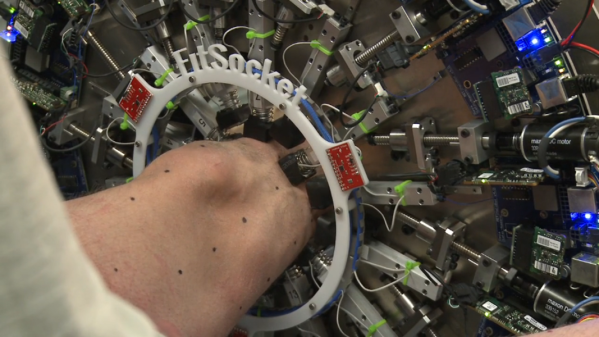
 An MIT team led by [Arthur Preton] wants to make prosthesis sockets more comfortable and better customized. They created FitSocket, a machine that assesses the rigidity of limb tissue. You can see it in motion after the break.
FitSocket is essentially a ring of 14 actuators that gently prod the limb and test how much pressure it takes to push in the tissue. By repeating this process over the entire limb, [Preton] can create a map that shows the varying degrees of stiffness or softness in the tissue.
We love to see advancements in prostheses. Here’s an electronic skin that brings feeling to artificial fingertips.
Continue reading “FitSocket Is A Portal To Better Prostheses”





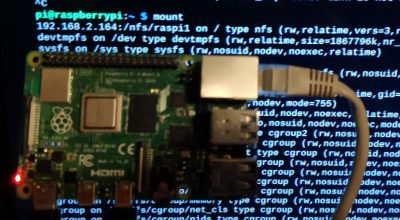 What are the downsides, I hear you ask? You might see slower speeds going across the network compared to a high quality SD card, particularly with the Pi 4 and its improved SD card slot. PXE does require an Ethernet cable; WiFi is not enough, so you have that restriction to contend with. And finally, this isn’t a portable option — you are tethered to that network cable while running, and tethered to your network to boot at all.