It’s time to announce the winners of the Trinket Everyday Carry Contest! We’ve had a great 5 weeks watching the projects come together. A team of Hackaday staffers spent their weekend watching videos and selecting their top entries based on the contest rules. We had a really hard time picking the top three – the competition was tight, and there were quite a few awesome projects.
Without further ado, here are the winners!
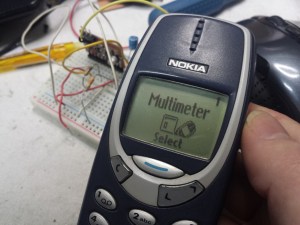 First Prize: 1337 3310 tool. [Mastro Gippo] really knocked this one out of the park. He built a swiss army knife of a tool out of the iconic Nokia 3310 candybar phone. 1337 3310 tool is a graphing voltage and current meter, an ohmmeter, a continuity tester that plays the original Nokia ringtone, and a gaming machine which can play Tetris. [Mastro Gippo] is 99% there with TV-B-Gone functionality as well. Amazingly, [Mastro Gippo] kept the Nokia look and feel in his user interface. He spent quite a bit of time grabbing data and bitmaps from the 3310’s original ROM. [Mastro Gippo] is getting a Rigol DS1054Z scope to help iron out the bugs in his future projects!
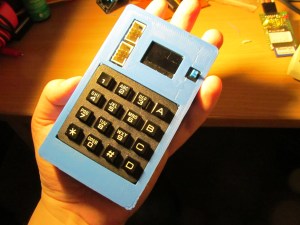 Second Prize: Pavapro – portable AVR programmer. [Jaromir] built an incredible pocket-sized microcontroller programming tool. Pavapro can read and edit text files, handle serial I/O at 9600 baud, and burn AVR microcontrollers. If that’s not enough, it can actually assemble AVR binaries from source. That’s right, [Jaromir] managed to fit an entire assembler on the Pro Trinket’s ATmega328 processor. Pavapro’s 16 button keypad won’t allow for much in the way of touch typing, but it does get the job done with T9 style text entry. The device is also extensible, we’re hoping [Jaromir] adds a few other architectures! PIC and MSP430 modes would be awesome! [Jaromir] will be receiving a Fluke 179 multimeter with a 6 piece industrial electronics tip kit! We’re sure he’ll put it to good use.
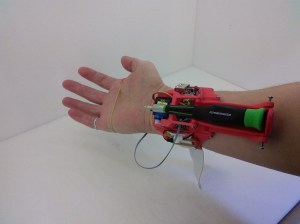 Third Prize: Robotic 3rd Hand. Let’s face it. We can’t all be Tony Stark. But [Tim] gets us a little bit closer with his awesome wearable entry. Need a tool? Just press the button, and Robotic 3rd Hand will give you a … hand. [Tim’s] creation utilizes the Pro Trinket to drive a servo which moves an incredibly well designed and 3D printed mechanism that lifts a screwdriver off the wearer’s wrist and places it into their hand. [Tim] originally was going to go with Electromyography (EMG) sensors to drive the hand, however he switched to a simple button when they proved problematic. We absolutely think this was the right decision for the contest – it’s always better to have a simpler but working project rather than a complex yet unreliable one. That said, we’d love to see him circle back and give EMG another try! [Tim’s] next project will be soldered up with the help of a Hakko FX888D with a tip kit. If things get a bit wobbly, he can use his new Panavise 324 Electronic Work center to keep everything steady.
If you didn’t make the top three in this contest, don’t give up! We’re going to be having quite a few contests this year. The top 50 entrants will receive custom Hackaday EDC Contest T-shirts. Check out the full list of 50 on Hackday.io!


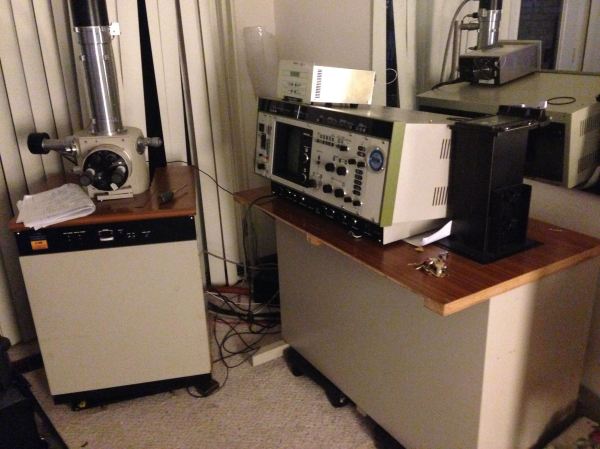
 The SEM sprang to life and gave [Macona] and a friend their first images. However, SEMs are finicky beasts. Eventually the filament burned out and needed to be replaced. New filaments are $500 US for a box of 10, which is more than [Macona] wanted to spend. It turns out filaments can be built at home. A bit of .089mm tungsten wire and a spot welder were all it took to fix the issue. Next to go bad was the scan amplifier. While SEMs use many exotic parts, the Hitachi used relatively common Sanyo STK070 audio amplifiers for the purpose – an easy fix!