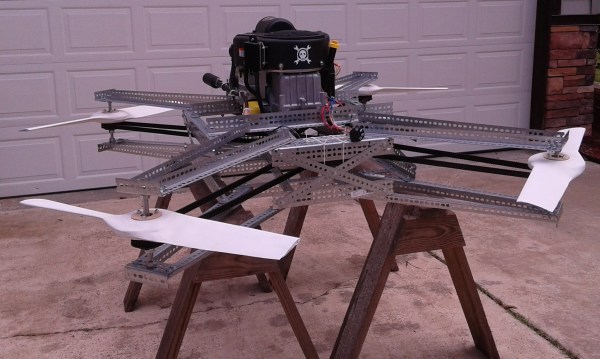
No one said the road to The Hackaday Prize would be easy. Many of us have been following [Peter McCloud] as he vies for the Hackaday Prize with Goliath – A Gas Powered Quadcopter. [Peter] literally hit a snag on Monday: his own belts.
Peter had hoped to be performing tied down hover tests by Monday afternoon. Weather and a set of fouled spark plugs conspired against him though. After fighting with engine issues for the better part of a day, [Peter’s] 30 horsepower Briggs & Stratton engine finally roared to life. Then all hell broke loose.
[Peter] only let the engine run a couple of seconds before cutting the ignition. In his own words, “Things were running good until the engine was shutoff. At this point one of the belt started losing tension.”
 While the tight new engine was quickly losing RPM, the propeller and belt system still had quite a bit of inertia. As the video after the break shows, the belts started flapping and caught on the propeller blades. The front right prop tip caught the double-sided toothed belt, pulling it up and over the propeller. The other end of that same belt lives on the right rear prop. It too caught a propeller blade, snapping the composite blade clean off its hub. The bent steel pulley axles are a testament to the forces at work when things went wrong.
[Peter] isn’t giving up though. He has a plan to add belt guides and a one way bearing to the engine’s crankshaft. The one way bearing will allow the rotor system to overspeed the engine when throttle is reduced. The same bearings are commonly used on R/C helicopters to facilitate autorotation landings.
We want to see all 50 Hackaday Prize semifinalists succeed, so if you have any ideas to help with the rebuild, head over to Goliath’s Hackaday.io page and let [Peter] know!

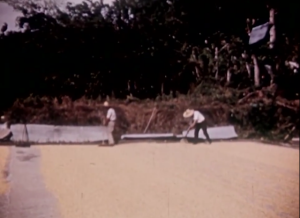 The day’s harvest is collected, weighed, and bagged for further production. The fruits are crushed to remove each bean from its red jacket. Then, the beans are washed and spread out in the sun for 8-10 days. They are frequently rotated so they dry evenly. The dried coffee is packed in bags and sent into the city.
 At a warehouse, the coffee is inspected, sorted, and graded. Bags are stamped with the coffee’s country of origin and intended destination before going to the seaport. A very important step happens here. As each bag walks by on the shoulders of a worker, another guy stabs it to get a sample of the beans. The on-site A&P officials take over at this point and do their own inspections, sending samples to the US. Here, the coffees are roasted and taste tested for both strength and flavor from a giant lazy Susan full of porcelain cups.

 This project is
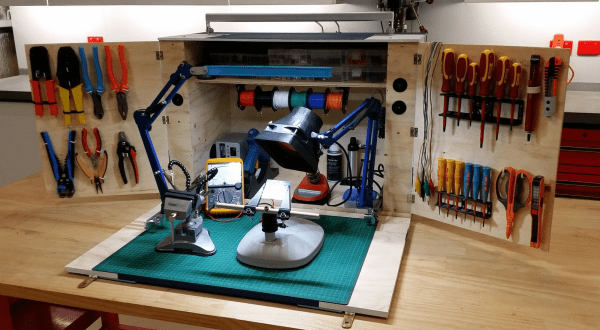
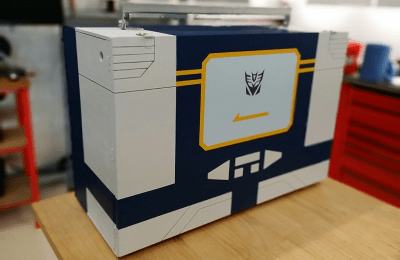 The basic box is built from a single sheet of 7mm plywood. The front work area is a smaller piece of 12mm plywood. Working with 7mm plywood did prove to be a challenge – [Tez] had to use some very small screws for his hinges. The basic box construction was easy though – [Tez] used a pneumatic nailer and PVA (wood) glue.