A Gamecube And N64 Console Mashup

gc

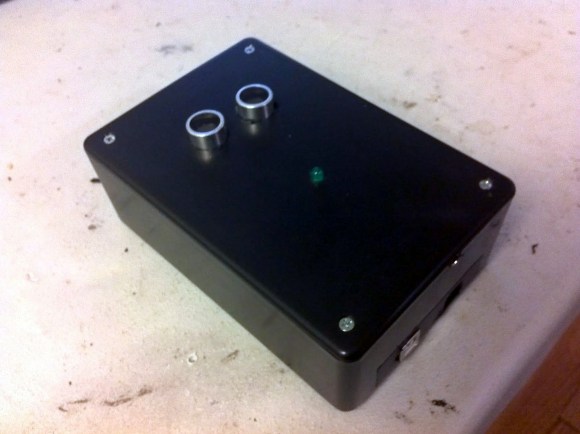
[Hailrazer] over on the Made by Bacteria forums was a bit tired of all his consoles cluttering up the space underneath his TV. No worries, though, because it’s actually fairly easy to combine a Gamecube and an N64 into one system that looks very professional.

While [Hailrazer]’s Gamecube was left reasonably complete, not including the addition of a mod chip and SD card to hold Gamecube disk images, the N64 portion of the build required quite a bit of hardware hacking. After finding a Game Boy Advance player for a Gamecube – a neat hardware add-on that allows you to play GBA games on a Game Cube – [Hailrazer] thought he found the perfect enclosure for an N64 case mod.

The guts of the GBA player were thrown out and the guts of an N64 were carefully filed down to fit inside their new home. An Everdrive 64 holds almost every US N64 release on an SD card, making access to the cartridge port unnecessary.

A switch on the side of the Gamecube toggles the video and audio output between the Gamecube and N64. It’s a neat little setup, and packs two consoles into the space of the tiny Gamecube.

Continue reading “A Gamecube And N64 Console Mashup”

Frankenstein, An All-tube Home Theater Amplifier

amp

Here’s an exercise in excess if we’ve ever seen one. While working on his undergrad at Michigan State, [Gregory] thought it would be a great idea to build an all-tube home theater system. He calls his seven-foot tall rack of amplifiers ‘Frankenstein,’ and we’ve got to agree this build is an impressive monstrosity of engineering prowess.

[Gregory]’s Frankenstein is a complete 5.1 home theater system. In the interests of sanity, the majority of the equipment in the rack is off-the-shelf gear including a CD player, surround sound processor, and a beautiful McIntosh solid state preamp. The power amps, though, are where this build really shines.

For the sub, [Gregory] built a wonderful monoblock tube amp, able to push nearly 300 watts into a subwoofer. The other channels for this home theater system are amplified with a huge four channel tube amp providing 480 watts per channel. In total, there are 23 tubes in [Gregory]’s amplifier system, enough to consume 20 amps of filament current.

You can check out [Gregory]’s demo video of his system after the break.

Continue reading “Frankenstein, An All-tube Home Theater Amplifier”

This Day In Hack A Day History: January 1st 2005

TIMEHAX

A new feature that we’re playing with is an occasional look back at this day in Hack a Day history. While we’re still hotly disputing exactly what, when, and how to show, we thought today would be a great day to introduce the idea.

So, in on this day in Hack a Day history we’re reaching back to our very first January 1, which was 2005.  There are some interesting things to consider when reading this post. At this point in time, we were still sort of  a growth off the side of engadget like [Kuato] from the 1990 version of Total Recall.  We were less than a year old and still hadn’t completely developed our style, we didn’t really share much information about the project, and yep, the very first comment is “not a hack”.

Continue reading “This Day In Hack A Day History: January 1st 2005”

Hackerspace Intro: Greenville Makers In Greenville, South Carolina

greenville-makers

If you happen to live in the Upstate of South Carolina, and your New Year’s resolution was to get involved with a hackerspace, the [Greenville Makers] are definitely worth checking out. Right now they have several projects their members are working on, including a VoIP payphone (work in progress), and of course several 3D printers and various electronics projects.

They meet at 6:00 on Mondays to discuss projects and group goals at their current location at [CoWork Greenville], and have a dedicated space to keep tools and work in progress. They’re actively recruiting new members, so if you’re a hacker, artist, or just like observing other people’s projects, you should definitely give them a look. Alternatively, you can check out their forum to introduce yourself.

Special shout out to [Chris] for getting things together originally, as well as [CoWork] for helping establish an initial space to work and meet in. We look forward to some great [HAD] material coming out of [GMG] in the future!

[Jason Scott] Throws Down A Preview Of His DEFCON Documentary

defcon-the-documentary

Let’s face it, we all love DEFCON. Even if you’ve never been there before, we think it would be a huge struggle to find a reader who hadn’t been enchanted by at least one of the many hacks and talks that come out of the conference every year. We’ll prove it to you in a second, but first let’s get to the business at hand. Internet historian and all around good-guy [Jason Scott] has set his documentarian skills on DEFCON and just published a nearly twenty minute preview of the film which will leave you with more questions than answers (that’s the point of a teaser, right?). He’s not new to this kind of work. We loved his film BBS: The Documentary and can’t wait to see what he’s managed to do when this is released in the new year.

Oh yeah… we were going to prove a point. Some things that came out of the yearly hacker conference which you probably drooled over after the fact include:

This is just a sliver of what this event offers. Should be fun to see all the stuff [Jason] got into that we never even knew about.

That’s Not Beer! A Biofuel Fermentation Controller Project

biofuel-fermentation-controller

Any home brewer will recognize the setup pictured above as a temperature controlled fermentation chamber. They wouldn’t be wrong either. But you’re not going to drink what results. This project is aimed at providing a temperature controlled environment for fermenting biofuel.

[Benjamin Havey] and [Michael Abed] built the controller as their final project in his microprocessor class. The idea is to monitor and control the mini-refrigerator so that the strain of Saccharomyces Cerevisiae yeast produce as much ethanol as possible. An MSP430 microcontroller was used. It monitors a thermister with its analog to digital converter and drives a solid state relay to switch mains power to the fridge. At 41 degrees Fahrenheit this is down below what most lager yeasts want (which is usually in the low fifties). But the nice thing about using a microcontroller is you can set a schedule with different stages if you find a program that gives the yeast the best environment but requires more than one temperature level.

Who knew all that beer making was getting you ready to produce alternative fuels?

Retrotechtacular: Fluid Coupling

retrotechtacular-fluid-coupling

We realize the transmission fluid of an automobile’s automatic transmission is used to transfer the power from the engine to the drive shaft. But after watching this Department of Defense video from 1954 we now have a full understanding of the principles involved in fluid coupling. Like us, you probably have seen a diagram of a transmission which shows the fan-like blades that are affected by the moving fluid. But it’s worth watching the 12-minute clip after the break to understand how that liquid is moving and why that matters so much in the design. The motion of the rotors, along with the design of the enclosure, causes the fluid to move in a continual corkscrew —  the shape of slinky whose ends have been attached to each other. This type of illustration leads to an intuitive understanding of how it’s possible to facilitate an efficient power transfer using a liquid.

Check out some of the comments left in the Reddit thread regarding this film. We agree with [Runxctry]; there’s something about the format of the presentation that makes these informative and engaging to an almost addictive level. But maybe it’s just the engineering geek deep inside that’s cause these feelings?

Continue reading “Retrotechtacular: Fluid Coupling”