IM-ME Plays Music In Preparation For Gaming

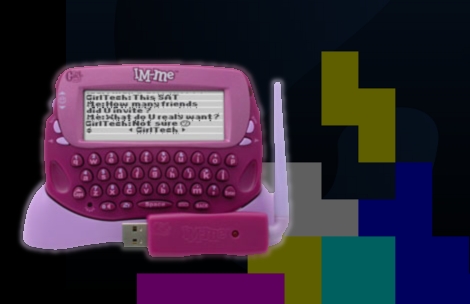
[Emmanuel Roussel] is coding a version of Tetris for the IM-ME. Before you get too excited, he hasn’t actually written the game yet, but instead started with the familiar theme music. The IM-ME has a piezo speak on board so it’s just a question of frequency and duration. [Emmanuel] developed an Open Office spread sheet that calculates each note’s frequency and the timer value needed to produce it. He then created a data type that stores a note and its duration and used an array of those structures to store the song. If you’ve ever wondered how to cleanly code music this is a wonderful example to learn from because right now the code doesn’t have anything other than that code to get in the way.

The ground work for this was established in the other hacks we’ve seen. Now we’re left wondering who will finish coding their game first. Will it be [Emmanuel’s] Tetris or [Travis’] Zombie Gotcha?
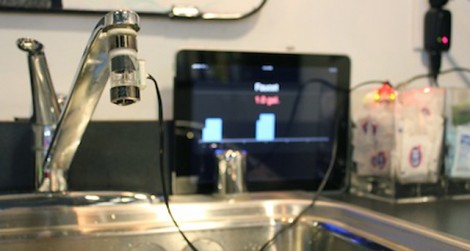

Water Use Feedback Changes Behavior

How much water do you use when showering, or washing your hands, or washing the dishes? Not how much does the average person use, but how much to you use? That’s what the team over at Teague Labs set out to find with this water usage feedback system. The sensor used is a Koolance flow meter which is intended to measure coolant flow in PC liquid cooling systems. At $20, it makes a nice low-cost sensor which was paired with a WiFi enabled Arduino. In the image above they’re using an iPad as a screen so that you can see how much water you’re using (or wasting) as you wash your hands. This resulted in saving 1/2 gallon of water every time someone washed their hands.

The project code, schematic, and board files are all available for download. Along with the hardware build there’s some nice server-side software that gathers and graphs the data over time. We’ve seen a lot of power-meter hacks, but it’s nice to have the option to track water usage, even if this is tailored to just one tap at a time.

Exploit Bait And Switch

When a new virus or other piece of malware is identified, security researchers attempt to get a hold of the infection toolkit used by malicious users, and then apply this infection into a specially controlled environment in order to study how the virus spreads and communicates. Normally, these toolkits also include some sort of management console commonly used to evaluate successfulness of infection and other factors of the malware application. In the case of the EFTPS Malware campaign however, the admin console had a special trick.

This console was actually a fake, accepting a number of generic passwords and user accounts, and provide fake statistics to whoever looked in to it. All the while, the console would “call home” with as much data about the researcher as possible. By tricking the researchers in this way, the crooks would be able to stay one step ahead of anti-virus tools that would limit the effectiveness of any exploit. Thankfully though, the researchers managed to come out on top this time.

[via boingboing]

Your Mobile Phone, Now With 100% More RFID

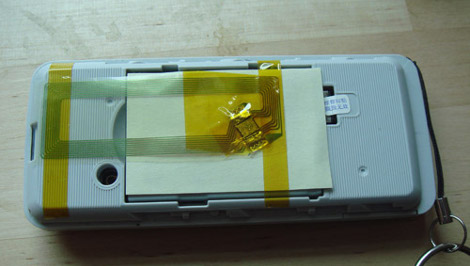
More and more today, it is becoming harder to avoid having some sort of RFID tag in your wallet. [bunnie], of bunnie:studios decided to ease the clutter (and wireless interference) in his wallet by transplanting the RFID chip from one of his subway cards into his mobile phone. Rather than the tedious and possibly impossible task of yanking out the whole antenna, he instead pulled the antenna of a much more accessible wristband with an RFID chip of similar frequency instead. Nothing too technical in this hack, just a great idea and some steady handiwork. We recommend you try this out on a card you haven’t filled yet, just in case.

The Transistor Takes On The Machine

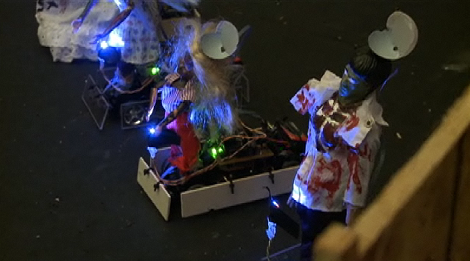
It only took 4 hackerspaces, but we finally get to see a zombie movie inspired project; hackerspace The Transistor Takes on the Machine with a Dawn/Shawn of the Dead movie theme. Race cars disguised as zombies swarm toward the players, who then use laser tag like guns to “shoot” down the approaching undead. The whole thing is a mess of Arduinos communicating with xBees to a central iMac G3, but it all comes together rather well and is promised to be released open source.

Now all that’s left is deciding which hackerspace wins the competition. Who do you have your money on?

[Thanks Deven]

Hacking Together A Sous Vide Cooker

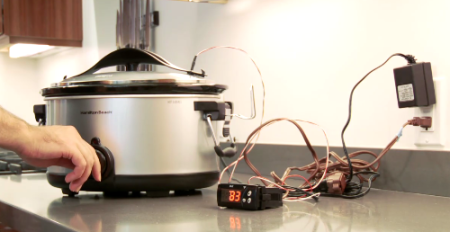
Those amongst you that are cooks won’t need this explanation, for the rest of us, lets just get this out of the way. Sous Vide is when you cook things at a temperature lower than normal, for a period of time longer than normal to attain specific results in texture. A chef can tell you more intricate details about it, but what we care about is how to impress our friends with a cheap hack and a tasty meal. This video shows how to hack your slow cooker for precise temperature control.  Well, it really shows how to splice a temperature controller into an extension cord, so we guess it could be used for a ton of things, non Sous Vide related.


[via Lifehacker]

Step By Step Antique Radio Repair And Upgrade

I actually have a 3 very similar radios. I think I need to do this.[M3talhead] takes us through a very informative repair of an old tube radio. In this case, his radio was from the late 30s. He was able to find the original data from Radiomuseum.org. He painstakingly dismantles the radio components and the cabinet. Instead of completely modernizing the internals, he replaces the bad parts and brings it back to functionality. He wanted to do an MP3 upgrade, but rather than wire directly into the radio, he built an AM transmitter for his mp3 player.