A Different Take On Electric Motor Cars

[Craig Carmichael] has been hard at work on his electric hub motor for cars. Unlike typical electrical vehicles the plan is to bypass the transmission, differential, and everything else all together by connecting directly to the hub of the wheel. The goal of giving greater thrust and still allowing the use of a gas engine if need be.

There’s really too much detail for us to even begin to try to explain the entire project in a short recap, but [Craig] builds the entire motor (from magnets to coil windings) and wires his own controller (from schematic to finished PCB), all while documenting the process thoroughly for those wishing to make their own.

Hexapod Controlled By Android And IPhone

[youtube=http://www.youtube.com/watch?v=NvEBUd_EqbQ]

This video is a blatant example of having too many high-end toys but we love it anyway. [Robert Stephenson] is controlling a rather awesome-looking hexapod via a Bluetooth connection to his HTC Hero. The app allows on-screen selections to decide which portion of the robot will move as a result of accelerometer data from the handheld. The only thing we saw that was missing is a camera feed to the phone.

But this hack doesn’t stop there. The Hero can be used to host a WiFi network while still connected to the hexapod. The second half of the video shows an iPod Touch connecting via WiFi and controlling the bot. Now head on over to the laser cutter to start that hexapod build, and finish up by getting elbow-deep into some Android development.

Hackaday Links: August 22, 2010

EL back-lit keyboard

A couple bucks worth of EL wire gives a nice green glow to [Mark Shasha’s] T400 Elite. Hopefully [Jeri Ellsworth] has some time to pull those how-to videos together so that we can make our own EL wire to replicate this hack.

Mini kaboom

This tiny cannon is right out of Night at the Museum. It works just like its much bigger brothers would; fill with powder, insert cannon ball, and light with a fuse. Both the introduction and the follow-up videos document the destruction of various objects using the diminutive weapon. [Thanks Thorsten]

Don’t close that browser

We use Google Chrome quite a bit because it tends to be more responsive when opening massive numbers of tabs while researching featured hacks. But there’s some things we don’t like about it. Lack of built-in PDF support under Ubuntu comes to mind, but a smaller thorn in our side is that closing the last tab will also close the browser window. [Ted Schaefer] got tired of the same thing so he wrote an extension called Last Tab Standing to trap that last browser tab, opening the default window instead of closing the browser.

Amiga demo winner

This 4K demo for the Amiga AGA is the top ranked submission from Breakpoint 2010. [Osgeld] tipped us off about this and made the point that although it’s four times the size of those 1K JavaScript demos, the Amiga code doesn’t get to take advantage a pre-existing framework like Java does enjoy the benefits of running inside of a browser . Is this doing more with less?

Transformers balloon sculptures

If you’re having trouble finding that art piece to fill up your dining room you should consider building transformers out of balloons. The sculpture above is a free-standing Optimus Prime but the artist has also turned out Megatron, Grimlock, and others. [Thanks W01F]


Giving An IR Transmitter Some Strength

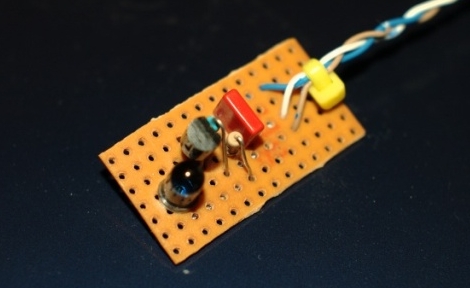
[Jkx] was using a Thomson VS360U video transmitter to make a wireless connection between a cable box and his television. The system using an RF remote, but relies on an IR transmitter to communicate between the base station and the cable box. He found the IR module that comes with the device is under-powered and set out to fix the situation. Using a scope he found the pin that drives the IR LED. The board above contains a boost circuit that patches into voltage and ground, using the pin he sniffed out to control the base of a transistor. Now the device has enough power to reliably control the cable box.

Another Home-built Laser Projector

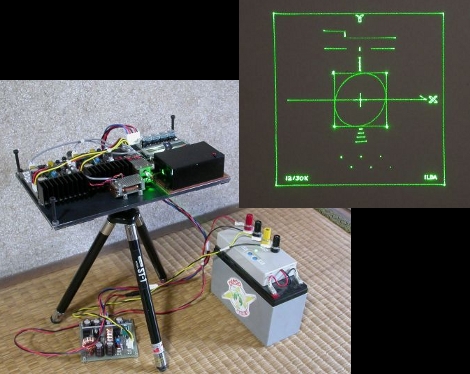
[Jarrod] sent us a link to this home-built laser projector after seeing a different projector that we featured yesterday. This system is fundamentally different. [ChaN], who finished the project several years ago, didn’t use a loudspeaker to move the mirrors, but instead build his own closed-loop Galvanometers. Two of these are controlled by an ATmega64 to produce incredibly clean and accurate vector images. It’s not just the images that are impressive, his hardware is laid-out with skill and forethought that make hiding it in a case a sacrilege.

Laminar Water Jet Explained

[youtube=http://www.youtube.com/watch?v=Ijn98G0I99E]

[Dave] has put together this laminar water jet, mainly from PVC and drinking straws. There isn’t a project page, but he does go into a little depth explaining how it works. The water enters at the bottom and is slowed down by a series of sponges, then forced through a column of drinking straws. It then pools at the top before being forced through a perfectly smooth and sharp nozzle. We did manage to find this other video, making one for $15 that has a ton of information and links. How long before we see a submission of a complete music synchronized fountain in one of our readers yard?

Vector Plotter With Lasers

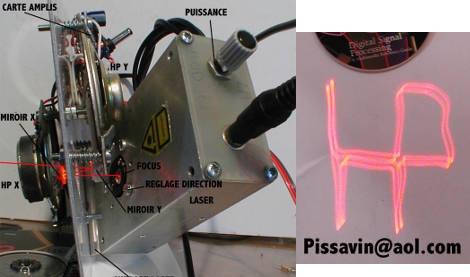
[Hubert] sent in his experiments using HDDs, CDROMs, speakers, and other components to make an XY laser plotter. Those carefully reading will note, its not all three to make one plotter, but rather three plotters each using a separate system. The setups have their advantages and disadvantages, and [Hubert] is sure to point them out; including circuit diagrams and pictures to help you on your own trials.

There is a little difficulty in reading English not so good, but considering we’ve never seen a single-laser vector plotter done before (spirographs come close, and no one wants to wait 85 seconds) it’s still very impressive.

[Thanks TJ]