Multiple Material 3D Printing

[youtube=http://www.youtube.com/watch?v=D4Yq3glEyec]

It’s no surprise that we’re wild about 3D printing, especially [Devlin]. Now we’re absolutely out of our minds for this multi-material polyjet machine that is featured in the video above. Before we go any further it’s worth mentioning that this post is not advertising, we just think this machine is unbelievable.

It is capable of printing 600 dpi in 3D using multiple materials at the same. Two types of rigid material, one like ABS and the other like polypropylene, as well as seven levels of a soft material all exist on the same print head. They can be deposited along with a support material at the same time. In the video you can see enclosures that come out of the printer with rubber-like padding already mounted in the hard plastic shell. They even show a bicycle chain that is fully assembled after printing. Cost for these machines? We don’t want to know, it’s just fun to dream about having unrestricted access to one.
Continue reading “Multiple Material 3D Printing” →

Manual Transmission Gear sensor

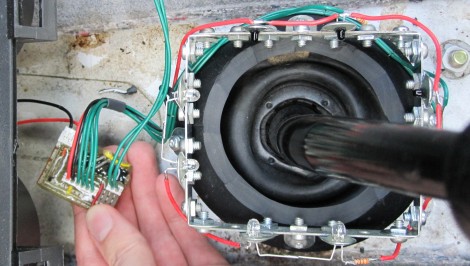
[Ben] bought a remote starter for his car but needed a way to make sure the manual transmission was in neutral when starting. He built this infrared sensor frame to detect the position of the stick. It uses four beam paths which will tell him the exact gear or neutral position of the shifter. For this project he just needs to detect neutral but exact gearing is apparently necessary information for his next hacking project. We initially were worried about sunlight interfering with the sensor readings but he’s building this to go under the collar that is used to cover up the mechanical joint at the base of the stick.

Nimbus, Portable N64

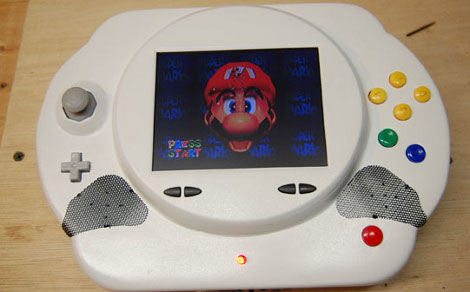
We love a beautiful and successful N64 portable mod, (In case that fact wasn’t already obvious). And today we would like to add [cndowning’s] Nimbus N64 to our list of favorites.

The base is made from vacuum formed plastic while the buttons come from a modified superpad and the screen is a Zenith 5inch. We couldn’t find word on battery life or weight, but for those that like a hunt, or have other questions, the build logs are available. Follow the jump for a video of the Nimbus in action.

[Thanks Fernando, and GaryC for our silly typo] Continue reading “Nimbus, Portable N64” →

XKCD Takes A Swipe At The Arduino

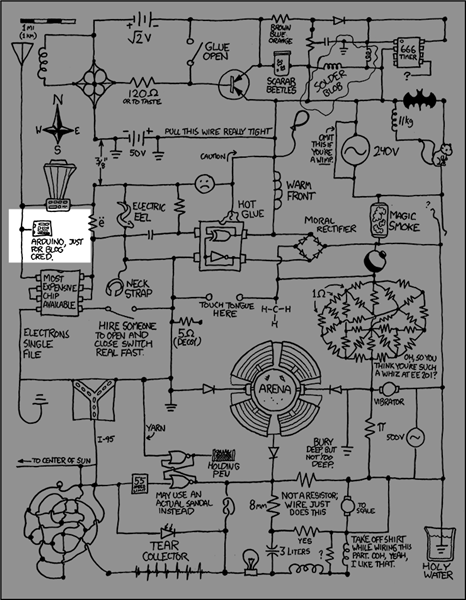
This XKCD comic takes a playful swipe and almost everything, including the Arduino. We’ve heard people claim that we have some sort of favoritism toward Arduino, and we don’t. People just submit a LOT of projects with them. But there is one point that we’ve seen a few times that should be addressed. In our categories we have an “Arduino hacks” section. That will not be going away, again, because we get so many submitted. However, shouldn’t we also add some categories for other stuff? Should there be a “pic hacks” category, or maybe just “microcontroller hacks” category?

Let’s not making this an Arduino bashing thread. Instead, give us some good ideas on other categories you would like to see for sorting.

[via littlebirdceo]

Making Magnetite Nanocrystals

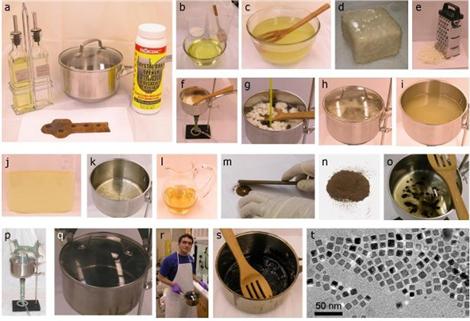
Unlike many chemistry projects we post here, making magnetite nanocrystals doesn’t require anything that can’t be found in a local grocery store. All that is required is oil, vinegar, crystal drain opener, and rust. We don’t recognize the specific brand of drain cleaner that they are using, but we’re sure that you could find one with the same ingredients. Magnetite nanocrystals  are used to remove arsenic from water. If you are in the USA or most of Europe, that’s not a big concern, but it can’t hurt can it?

[via Make]

Cornell Final Project List

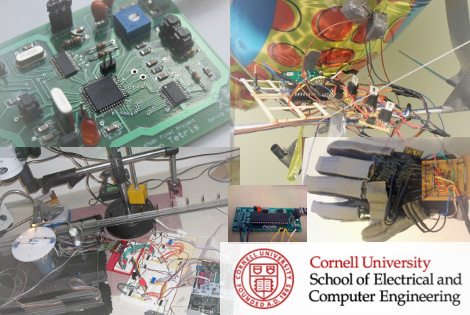
Looking for an interesting project to do using an Atmel Mega644? Students at Cornell University have got you covered. They were required to choose, design, and build a project using the microcontroller; and this year is quite promising with video object tracking, the always popular theremins, helicopters, Potentiostats, even Pavlovian conditioned mosquitoes, and more.

Of course all the previous years are included as well, making over 350 projects total.

[Thanks Bruce Land]

5×2 Patch Board

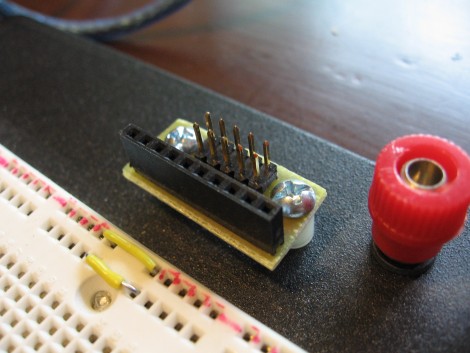
Sometimes we want to sit on the back porch, crack a beer, and do some prototyping. Other times we’d like to do the same but on the couch in the livingroom. To that end we added a 5×2 pin to 10×1 pin patch board to our solderless breadboard.

The 5×2 pin form factor is pretty common, used as an AVR programming header, on development boards like the Dragon Rider 500 and the STK 500, and in small prototyping devices like the Bus Pirate. We like the freedom of using IDC cables as interconnects and that’s where this board comes in. Now we can patch into the IDC cables yet still quickly disconnect them when moving to a different prototyping location. Check out the PCB artwork and this handy device in use after the break.

Continue reading “5×2 Patch Board” →