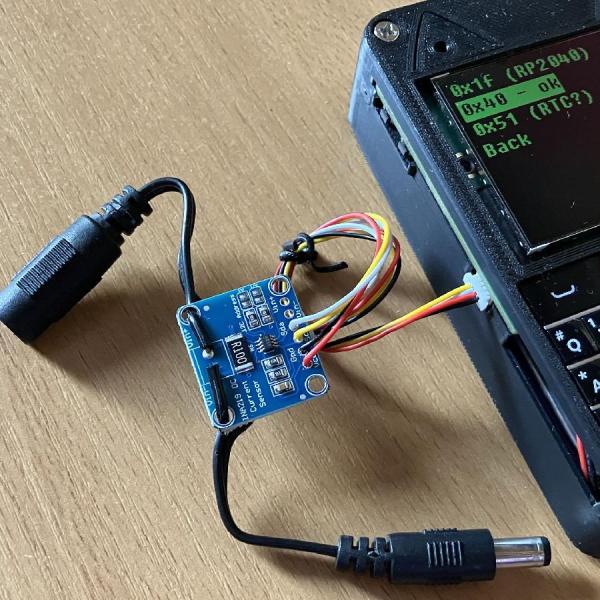
USB Isolation

[Oleg] over at Circuits@Home has made a USB isolator for his hacking needs. This isolator separates the signal, ground, and power lines of a USB host device, such as a PC, from a USB device like a USB oscilloscope or logic analyzer. This might be useful for Keyboard sniffing, ECG, EEG or diagnosing the control system on the positive ground of your autonomous Ford 8N. What other applications can you come up with for this tool?

Vintage Video: Computing Across America

roberts

in 1983, [Steve Roberts] packed up a Tandy 100 laptop and a 5-watt solar panel, fleeing suburbia on his recumbent bicycle on what would become a 17,000 mile journey that forever cemented his place in the geek pantheon…not just as a technology hacker, but as one of the preeminent “life hackers,” pursuing his own dreams on his own terms and inspiring others to do the same.

In this 1989 video, recently unearthed by Hack a Day, [Roberts] reflects on the first 16,000 miles of his voyage, detailing some of the technology that went into his then-current ride, the Winnebiko II.

Continue reading “Vintage Video: Computing Across America” →

Nintendo DS Mini USB Plug

DSCompare

Noting that so many of his electronics are using the mini USB plug for charging, [Xavier] decided to modify his Nintendo DS to charge via the same adapter. It looks like the existing adapter is basically a proprietary mini USB plug, so replacing it was actually almost a perfectly clean swap job. He has nice pictures of the process and some helpful tips as well. If you’re thinking of consolidating your charging devices, this looks like a step in the right direction.

Mail-E Email Checker

[youtube=http://www.youtube.com/watch?v=T0knvD7wx6A]

[Totoro] sent in this cool little email notification device he made. Using a paper model of Wall-E, he added some servos and connected it to his computer using a PIC. Mail-E has independent arm rotation and head rotation. He admits that the PIC processor is major overkill and plans some upgrades such as making it wireless and using a little better suited chip to control it. Not bad for a proof of concept.

Software Pulse Width Modulation

daqq_pwm_schematic

Pulse Width Modulation is a topic that tends to give a lot of beginners trouble. [Daqq], whose nixie plasma ball we covered a few days ago, has a simple but effective PWM project that you should take a look at. The circuit used 9 LEDs clustered together into 3 sets of RGB modules and connected them to an AVR ATtiny2313 through some current limiting resistors. Most of the time the PWM function of the AVR’s timers would be used to generate the signal but this application calls for 9 signals which is more than can be produced by this chip. The workaround is to generate the signals using software PWM. Continue reading “Software Pulse Width Modulation” →

Arduino Command Interpreter Shell

F77LQEPFYTCLILR.MEDIUM

A lot of people like fancy GUIs and nice graphics, but some of us just feel more at home in a command prompt. [nevdull] is one of those people. Instead of just using the Arduino dev tools that are available for download, he wanted the ability to shell into his Arduino, so he created AVR Shell. AVR Shell is a UNIX-like shell that allows you to “log in” to your Arduino/AVR and see what’s really going on; letting you read registers, scale the CPU speed, create/edit/delete variables, and even set up timers. The shell is even user-customizable! Those of you interested in Arduino shells might also check out bitlash, another open source CLI. Someone ought to hook this up to the Internet enabled Furby and get Flite compiled on there, letting us shell into a Furby from miles away to make it talk.

[Thanks Leesam]

Build Your Own Joystick

macgyver_joystick

What can you build with a ballpoint pen and some extra parts? [gzip] found himself with a bonus box of right angle switches and other miscellaneous parts and set out to build a joystick. Simple arcade joysticks use switches that are actuated by the movement of the stick and this design embraces the concept. The four tactile switches are mounted on protoboard facing each other with part of a ballpoint pen in the middle. When the pen is moved it presses against one or more switches to close, completing a circuit. For good measure he even incorporated a fire button into the top of the “stick”. Now we just need someone to make this work with a tiny Ms. Pac-Man emulator.