[bre] passed along this portrait drawing robot from the same people that brought you the chief cook robot. Like the previous project, the portrait drawing bot emphasizes man machine interaction. The subject sits down and is asked for the quill. The robot captures the subject’s image and runs it through several processing steps. One set is to determine the contours and another is to determine the fill. The robot then draws the the contours and fills returning to the ink pot each time it reaches a trajectory threshold. Quill drawing can be quite hard for novice illustrators, but the robot’s smooth trajectory calculations prevent drips and stains.
Robofish > Real Fish
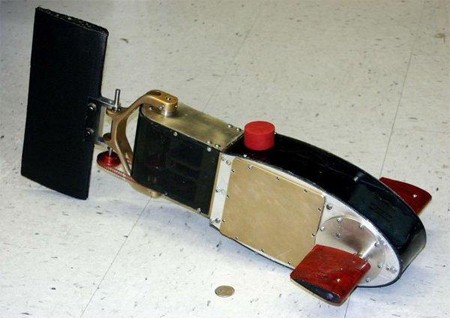
This is the kind of engineering that gets us excited, and not just because we like machines modeled on living things. Science Daily reports that Associate professor [Kristi Morgansen] from The University of Washington has developed these robofish for underwater data collection. Her technology is notable for two major reasons: the small robots use fins for locomotion instead of propellers, which reduces drag and creates greater maneuverability. The second and more important reason is that the robofish can communicate with each other via sonar, largely obviating the need for the robofish to surface for more instructions. Both design concepts were inspired by the shape and behavior of real fish. Currently the robots are only programmed to swim with or away from each other, but these are still prototypes and the technology looks promising. For more tech specs on these “Fin Actuated Autonomous Underwater Vehicles” (see why Robofish is better?), you can have a look at Morgansen’s notes.
DIY TomTom Docking Station
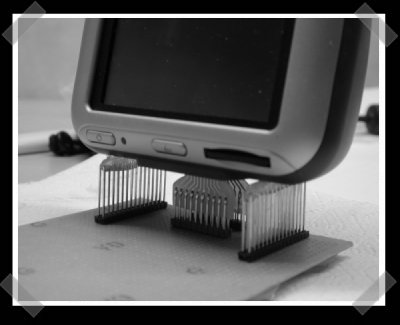
TomToms have been getting pretty cheap. We like ’em because they’re nice and hackable. This diy docking station was made from some etched PCBs, a bunch of male pin headers and a bit of hot glue.
Consumer HMD Comparison

We’ve wanted headed mounted display technology to take hold for a long time. Gizmodo recently compared two consumer models: the Zeiss Cinemizer ($400) and the Myvu Crystal ($300). Unfortunately the resolution of HMDs has gone nowhere in the last 10 years. These two devices only support 640×480 and are aimed specifically at iPod users. With computers getting smaller and higher resolution, we’re surprised that HMDs have not followed suit. Why isn’t someone going to market with a 1280×720 headset? If you really must choose one of these two, we’d recommend the Myvu. It has composite input so you can hook almost anything up to it.
DNS Spoofing With Ettercap
[IronGeek] has published his latest video how-to: DNS Spoofing with Ettercap. Ettercap is designed specifically to perform man in the middle attacks on your local network. It can do ARP poisoning, collect passwords, fingerprint OSes, and content filtering. For DNS spoofing, you just need to edit a config file that defines which domains resolve to which IP addresses. You can use wildcards for the domains. In the video, he uses Linux because the network interfaces are easier to remember. Once you’re done playing with DNS spoofing, remember to flush your local cache otherwise your browser will continue to go to the wrong IP.
[photo: mattdork]
More Hardware Music
today and tomorrow found a few more projects using computer hardware to create music like our earlier Radiohead post. Above is a rendition of The Imperial March using a 3.5 inch floppy drive. Two more projects are embedded below.
IR Controlled Relays
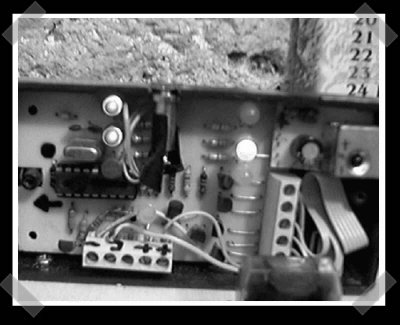
If you’re thinking of building some DIY home automation, this looks like an interesting idea. At the heart is a PIC16F84 that decodes IR signals and controls six outputs – in this case, relays to activate various appliances. The PIC is dirt cheap – if you get a deal on some relays you should be able to build a small local IR HA system for $30… This might be just the thing for my office. It’s cheap enough that it probably wouldn’t walk off.