Wiimote Missile Launcher


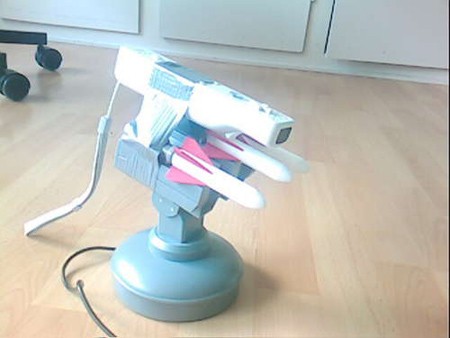
[toelle] has shown yet another use for the Wiimote by having it auto aim his USB missle launcher. The bill of materials is pretty simple: a Wiimote, a motorized USB missile launcher, some duct tape and glovepie.

Simply tape the Wiimote to the missile launcher, install glove pie and follow his instructions for some custom code and off you go. He goes in depth on how to connect the Wiimote to the PC, as well as details on how the custom code works. It only tracks IR targets right now, which is a bit of a bummer, but that would see TV remotes right?

Is there any way this could be combined with the sonar controlled missle launcher that we covered in July?

[via Hack N Mod]
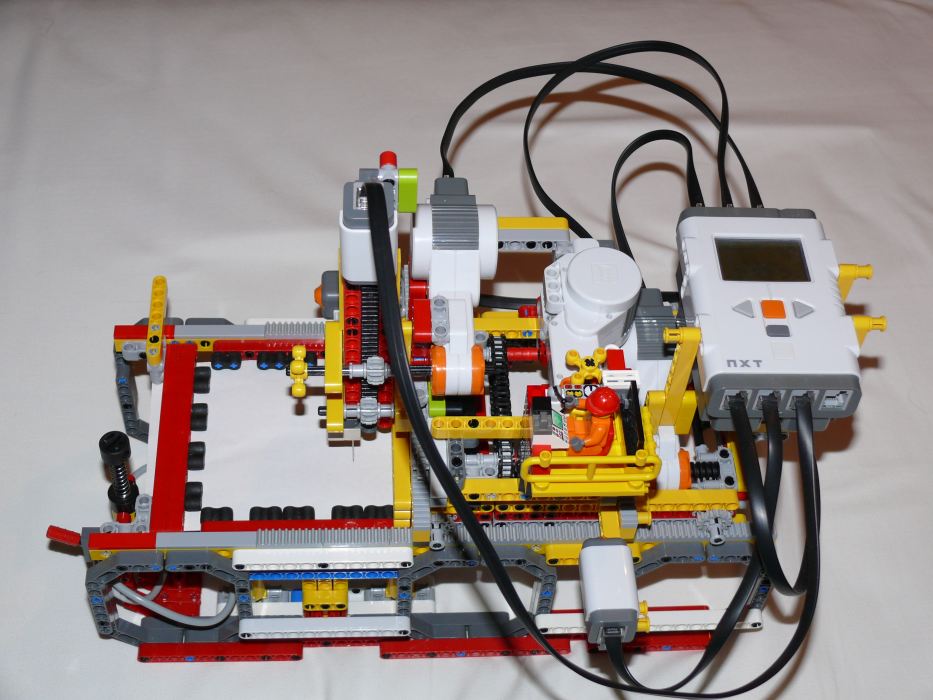
Plotter Made Entirely From Lego


Check out this awesome tool that [Alfonso Martone] built and wrote in to tell us about: a pin plotter made entirely from Lego (except for the addition of a pin in one brick). [Alfonso] has managed to get 33dpi resolution with a “printable” area of 90x70mm. The NXT device reads 1bit bitmapped images in PBM format and outputs onto a sheet of paper, which is held in place by Lego pneumatics pushing against rubber Lego bricks. Output is not what you might call speedy, though: it takes 35-40 minutes to output a drawing with 1,500 holes.

Continue reading “Plotter Made Entirely From Lego” →

Biometric Locks Turned Trojan


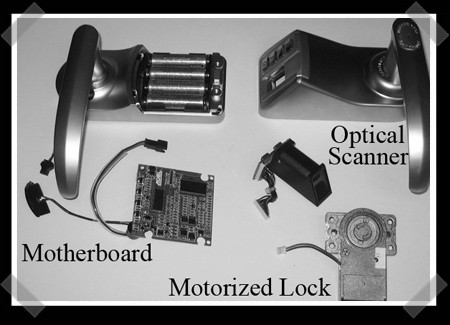
In the same vein as our recent Defcon article on biometric cloning, White Wolf Security has released this article about turning a biometric door lock into a trojan. They note that there are many common ways to break into one, from harvesting fingerprints to using gummy bears to fake a finger. This hack involves having full access to the unit so you can disassemble it.

The unit has a system built-in where you can touch a 9-volt battery to some connectors on the bottom to power it in case of a building power failure. The researchers simply routed some wires from the motorized lock to the plates used for the 9-volt and then reassembled the lock. The door can then be opened at any time without verification, even if the software on the unit is reset.

[Thanks, dwight]

Robot That Runs On Rat Brain Cells


Scientists at the University of Reading have created a robot that runs not on microprocessors, but on brain cells extracted from a rat fetus. The robot is equipped with several sensors which stimulate the rat neurons whenever the robot approaches a wall; the response of the neurons then determines whether the robot avoids the wall or crashes into it. The truly fascinating bit is that the rat brain cells don’t automatically know how to respond to the stimuli from the sensors, but instead learn to respond appropriately through repeated stimuli.

No word yet on whether the scientists will teach the robot to sing “Despite all my rage / I am still just a brain in a vat”.

Make A Stretchy Fabric USB Cable

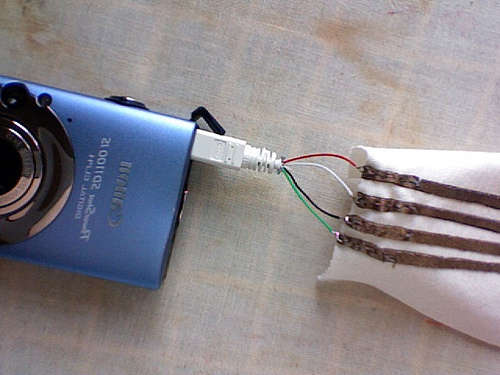
Stretchy fabric USB cable
If you’ve been puzzled over a discreet, durable way to sew wiring into your clothing, then puzzle no more: [Plusea] has put together a writeup detailing how to make a USB cable partly out of stretchy cotton fabric. Although the design as detailed doesn’t give much practical use for the invention, we can think of several very effective ways of exploiting this toy. Imagine, for example, placing a USB battery pack into one pocket of a jacket, a portable digital audio recorder in the other, and a lavalier microphone in the lining, thus enabling dozens of hours of covert audio surveillance.

Defcon 16: Biometric Cloning


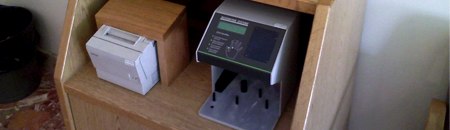
One of the more novel talks we saw at Defcon was [Zac Franken] presenting on access control systems. He covered several different types, but the real fun was his live demo of bypassing a hand geometry scanners like the one pictured above. With the help of two assistants, 4 pounds of chromatic dental alginate, and 5 liters of water, he made a mold of his hand. The box he placed his hand in had markings to show where the pegs on the scanner are located. After 2 minutes he could remove his hand from the cavity. They then filled the mold with vinylpolysiloxane, making sure to remove all bubbles. 20 minutes later the hand was solid and passed the scanner’s test. This may not be a completely practical attack, but it does defeat the overall idea of biometrics; biometrics are built on the assumption that every person is unique and can’t have their features reproduced.

[Zac] also showed an interesting magnetic card spoofer that emulated all three tracks using coils of magnet wire. We hope to see more about that in the future.

[photo: morgan.davis]