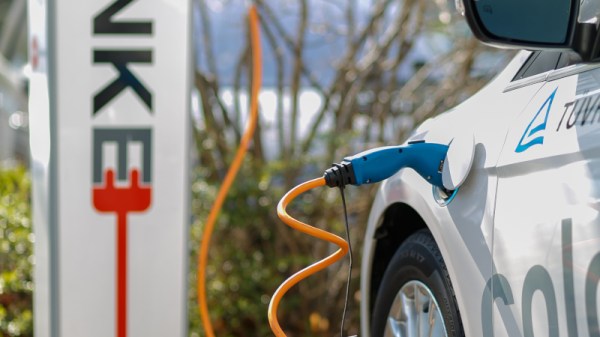
Sales of electric vehicles continue to climb, topping three million cars worldwide last year. All these electric cars need batteries, of course, which means demand for rechargeable cells is through the roof.
All those cells have to come from somewhere, of course, and many are surprised to learn that automakers don’t manufacture EV batteries themselves. Instead, they’re typically sourced from outside suppliers. Today, you get to Ask Hackaday: why aren’t EV batteries manufactured by the automakers themselves? Continue reading “Ask Hackaday: Why Don’t Automakers Make Their Own EV Batteries?”→
By any metric you care to use, this is a very exciting time for America’s space program. NASA is refocusing their efforts towards the Moon and beyond, SpaceX is launching routine crew and cargo flights to the International Space Station with reusable rockets, and if you’ve got deep enough pockets, there are now multiple companies offering suborbital pleasure trips requiring little more than a few hours worth of training. It’s taken longer than many people had hoped, but it seems we’re finally making the confident strides necessary to truly utilize space’s vast resources.
But things are just getting started. A new generation of massive reusable rockets are currently being developed, which promise to make access to space cheaper and faster than ever before. We’ve seen quite a bit of SpaceX’s Starship, thanks in no small part to the dramatic test flights that the media-savvy company has been regularly live streaming to YouTube. But Blue Origin, founded by Amazon’s Jeff Bezos, has been far more secretive about their New Glenn. That is, until now.
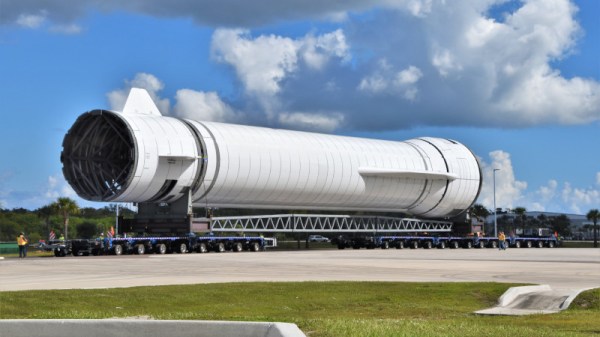
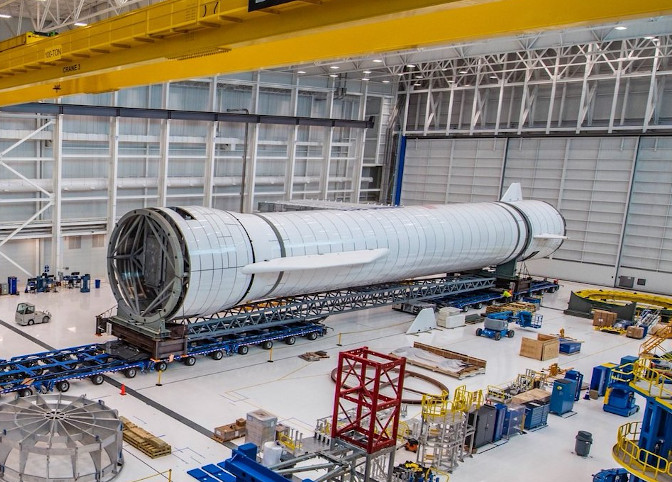
GS1 under construction in Florida.
On November 8th, Blue Origin rolled out their GS1 simulator for the New Glenn’s first stage. This stand-in for the real rocket will never fly, but it’s designed to perfectly recreate the dimensions, center of gravity, and mass, of the real thing. Ground teams will use the GS1 to practice safely transporting the booster, which is approximately half the length of the Saturn V, from their production facility to Launch Complex 36 (LC-36) at Cape Canaveral. It will also be used to test the fit and function of various pieces of ground support equipment, and eventually, the second stage stacking procedure.
For the uninitiated, it might seem like this is a lot of fuss over what’s ultimately just a hollow metal tube. But the introduction of a test article such as this has traditionally been a major milestone during the design and construction of rockets and spacecraft, dating back to the “boilerplate” test capsules used during the Mercury, Gemini, and Apollo programs; a sure sign that what was just an idea is now becoming a reality.
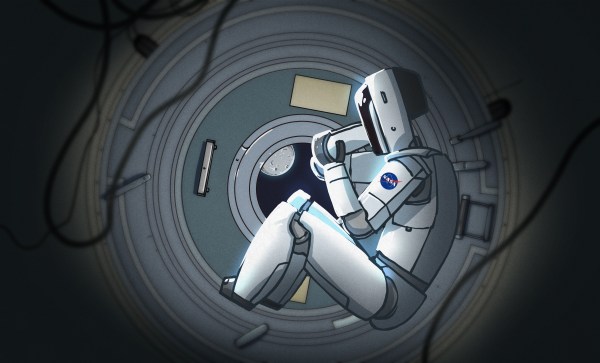
NASA first landed a human on the moon back in 1969, and last achieved the feat in December 1972. In the intervening years, there have been few other missions to Earth’s primary natural satellite. A smattering of uncrewed craft have crashed into the surface, while a mere handful of missions have achieved a soft landing, with none successful from 1976 to 2013.
However, NASA aims to resume missions to the lunar surface, albeit in an uncrewed capacity at this stage. And you won’t have to wait very long, either. The world’s premier space agency aims to once again fly to the Moon beginning in February 2022.
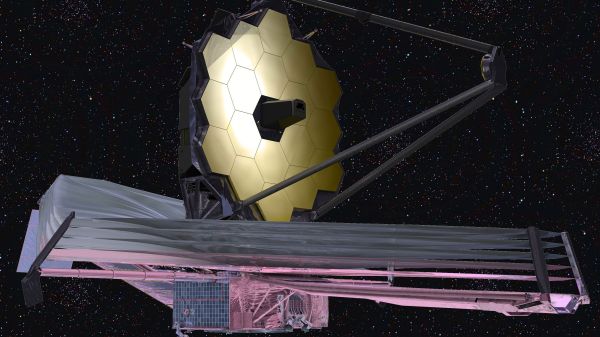
Back during the 2019 Superconference in Pasadena, I had the chance to go to Northrop Grumman’s Redondo Beach campus to get a look at the James Webb Space Telescope. There is the high-bay class 10,000+ cleanroom in building M8, my wife and I along with fellow space nerd Tom Nardi got a chance to look upon what is likely the most expensive single object ever made. The $10 billion dollar space observatory was undergoing what we thought were its final tests before being packaged up and sent on its way to its forever home at the L2 Lagrange point.
Sadly, thanks to technical difficulties and the COVID-19 pandemic, it would be another two years before JWST was actually ready to ship — not a new story for the project, Mike Szczys toured the same facility back in 2015. But the good news is that it finally has shipped, taking the very, very slow first steps on its journey to space.
Both the terrestrial leg of the trip and the trip through 1.5 million kilometers of space are fraught with peril, of a different kind, of course, but still with plenty of chances for mission-impacting events. Here’s a look at what the priceless and long-awaited observatory will face along the way, and how its minders will endure the “30 days of terror” that lie ahead.
Okay, we’re not running out. We actually have tons of the stuff. But there is a global supply chain crisis. Most of the world’s magnesium is processed in China and several months ago, they just… stopped. In an effort to hit energy consumption quotas, the government of the city of Yulin (where most of the country’s magnesium production takes place) ordered 70% of the smelters to shut down entirely, and the remainder to slash their output by 50%. So, while magnesium remains one of the most abundant elements on the planet, we’re readily running out of processed metal that we can use in manufacturing.
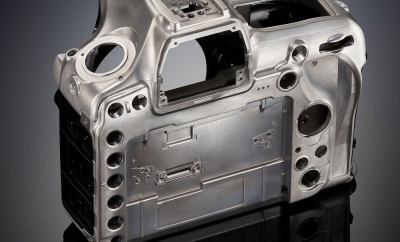
The magnesium-alloy body of a Nikon d850. Courtesy of Nikon
But, how do we actually use magnesium in manufacturing anyway? Well, some things are just made from it. It can be mixed with other elements to be made into strong, lightweight alloys that are readily machined and cast. These alloys make up all manner of stuff from race car wheels to camera bodies (and the chassis of the laptop I’m typing this article on). These more direct uses aside, there’s another, larger draw for magnesium that isn’t immediately apparent: aluminum production.
But wait, aluminum, like magnesium is an element. So why would we need magnesium to make it? Rest assured, there’s no alchemy involved- just alloying. Much like magnesium, aluminum is rarely used in its raw form — it’s mixed with other elements to give it desirable properties such as high strength, ductility, toughness, etc. And, as you may have already guessed, most of these alloys require magnesium. Now we’re beginning to paint a larger, scarier picture (and we just missed Halloween!) — a disruption to the world’s aluminum supply.
It’s an old saying with an apocryphal origin: “May you live in interesting times“. We Brits are certainly living in interesting times at the moment, as a perfect storm of the pandemic, rising energy prices, global supply chain issues, and arguably the post-Brexit departure of EU-national truck drivers has given us shortages of everything from fresh vegetables in the supermarket to carbon dioxide for the food industry. Of particular concern is a shortage of automotive fuels at the filling station, and amid sometimes-aggressive queues for the pumps it’s reported that there’s a record uptick in Brits searching online for information about electric cars.
Nothing Like A Crisis To Make You Green
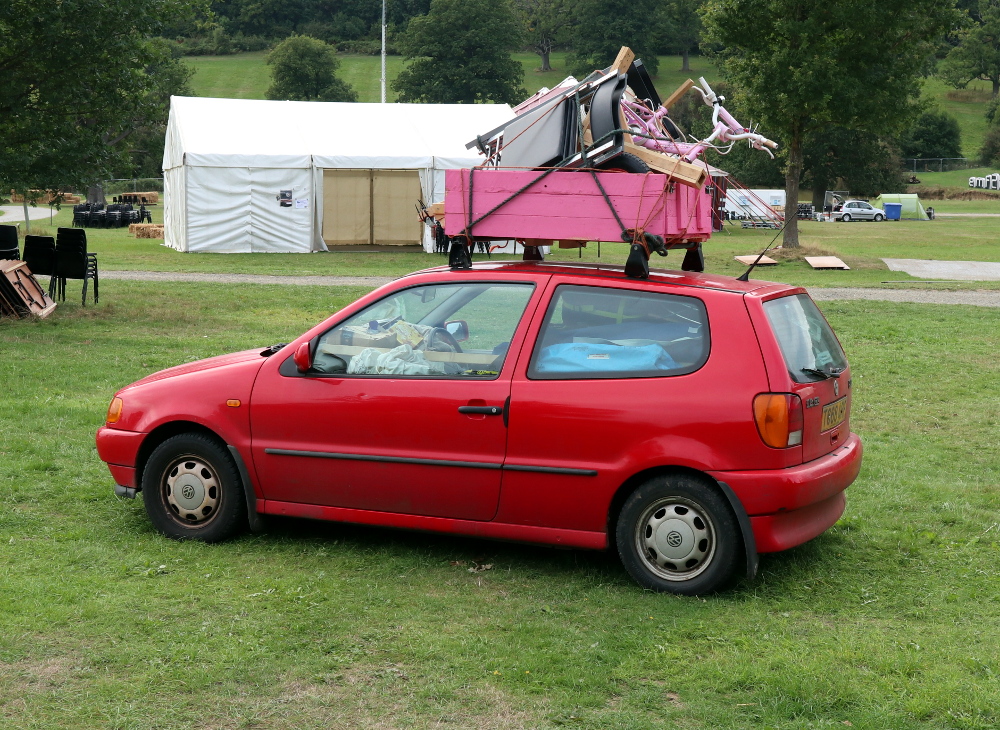
How I miss my little car, here loaded for EMF 2018.
This sudden interest in lower-carbon motoring may be driven by the queues rather than a concern for the planet, but it’s certainly true that as a culture we should be making this move if we are to have a hope of reducing our CO2 production and meeting our climate goals. A whole slew of lifestyle changes will have to be made over the coming years of which our car choices are only a part. Back to those beleaguered Brits again, a series of environmental protests have caused major disruption on the motorway network round London, not protesting against the traffic but campaigning for better home insulation.
For reasons of personal circumstance rather than principle, earlier this year I gave my trusty VW Polo to an old-Volks-nut friend and now rely on a bicycle. Living where I do within reach of everything I need it hasn’t been as challenging as I expected it to be, and aside from saving a bit of cash I know my general fitness level has gone up. Though I have less need for a car now than I used to, I intend to find myself another vehicle in due course so that I can do silly things such as throwing a Hackaday village in the back and driving halfway across Europe to a hacker camp. With an awareness that whatever I choose should be as good for the planet as I can make it then, I’ve been cruising the used-car websites to see what I can find.
It didn’t take long to realize that the 2021 Vintage Computer Festival East — returning to the InfoAge Science and History Museum in Wall, New Jersey after being held virtually last year — was a massive success. In fact, the first clue came before I even got out of my car. When a volunteer came up to my window to apologetically explain that the primary parking lot was already full and I’d have to drive down the road to an overflow lot, there was no question about it; a whole lot of folks were more than ready to shake off those pandemic blues and get back to business.
They certainly picked a great event for it. While VCF East has always been a highlight of the East Coast hacker’s year, it was obvious things were really turned up to the max for this much-anticipated return to an in-person festival. With respect to all those involved in previous events, things just felt more cohesive and better organized this time around.
Veteran attendees I spoke to all felt like they were witnessing the event going through an evolutionary change into something bigger and better, while first time fliers were impressed with the buzz of activity and breadth of what was on display. In short, admiration for the event and the people working behind the scenes to make it possible was unanimous.
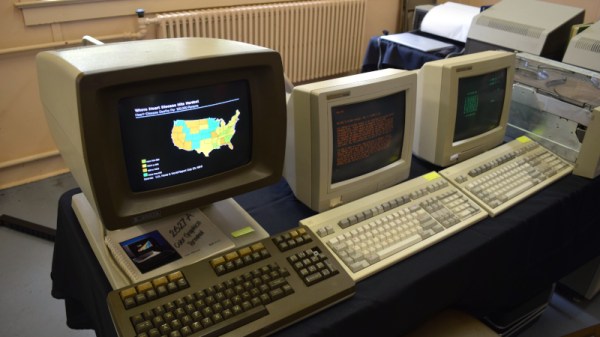
It’s simply not possible to adequately summarize a multi-day event like VCF East in a single post, so I won’t try to. This article, and the ones to follow it, serve only to document some of the highlights from my own personal time wandering through the sprawling InfoAge campus. Ultimately, there’s no real substitute for making the trip to Wall, NJ and experiencing this incredible event for yourself. But if that’s not an option for you, hopefully the following will give you a little taste of what the Vintage Computer Federation labors so hard over every year.