Friday Hack Chat: BadgeLife

For the last few years at DEF CON, we’ve seen the emergence of an entire community of badge creators. These aren’t official badges — good news, since the official DEF CON badge will probably be an unpuzzling piece of laser cut acrylic this year. Lucky for us this is the biggest year yet for independent electronic badges. This is BadgeLife, the fine art of designing and building hundreds of badges for eager conference goers.

This Friday, we’ll be hosting a Hack Chat with a few of the folks tapped into BadgeLife. [Whitney Merrill], lawyer, hacker, and overseer of the Crypto & Privacy village will be joining us talking about this year’s badge, the puzzle she designed, and what BadgeLife really means. Also joining us will be [Karl Koscher], research scientist and co-organizer of the Crypto and Privacy village.

Also on deck will be the creators of this year’s Bender Badge. Last year, AND!XOR created one of the most popular electronic conference badges in recent memory. This year, the Bender Badge is getting an upgrade with Blast Processing, a quart of tequila, and two dozen amyls.

We’re proud to note that Hackaday.io has become an unofficial repository for all the best badges from the BadgeLife community. The Hunter S. Rodriguez badge is on there, as is the Ides of DEF CON. As the creator of the most innovative and desirable badge this year, I will also be attending this Hack Chat discussing the trials and tribulations of developing and shipping hardware on a very condensed schedule.

While the focus of this BadgeLife Hack Chat is developing electronic conference badges for DEF CON, it could have easily been called ‘Electronic Design’. There’s a massive amount of work that goes into each of these badges from design to production, and all of it is highly relevant to any hardware developer.

Here’s How To Take Part:

join-hack-chatOur Hack Chats are live community events on the Hackaday.io Hack Chat group messaging. This Hack Chat will take place at noon Pacific time on Friday, July 14th. Confused about where and when ‘noon’ is? Here’s a time and date converter!

Log into Hackaday.io, visit that page, and look for the ‘Join this Project’ Button. Once you’re part of the project, the button will change to ‘Team Messaging’, which takes you directly to the Hack Chat.

You don’t have to wait until Friday; join whenever you want and you can see what the community is talking about.


Horns Across America: The AT&T Long Lines Network

A bewildering amount of engineering was thrown at the various challenges presented to the United States by the end of World War II and the beginning of the Cold War. From the Interstate Highway System to the population shift from cities to suburbs, infrastructure of all types was being constructed at a rapid pace, fueled by reasonable assessments of extant and future threats seasoned with a dash of paranoia, and funded by bulging federal coffers due to post-war prosperity and booming populations. No project seemed too big, and each pushed the bleeding edge of technology at the time.

Some of these critical infrastructure projects have gone the way of the dodo, supplanted by newer technologies that rendered them obsolete. Relics of these projects still dot the American landscape today, and are easy to find if you know where to look. One that always fascinated me was the network of microwave radio relay stations that once stitched the country together. From mountaintop to mountaintop, they stand silent and largely unattended, but they once buzzed with the business of a nation. Here’s how they came to be, and how they eventually made themselves relics.

Continue reading “Horns Across America: The AT&T Long Lines Network”

Hackaday Links: July 9, 2017

Doom is now running on the ESP32. This is some work from [Sprite_tm], and the last we heard about Doom on the ESP32 is that there was a silicon bug or something. Now we’re knee deep in the dead on a tiny WiFi and Bluetooth-enabled microcontroller.

Loading animations have a long and storied history. What originally began as an hourglass quickly turned into a hand counting to five and progress bars. There were clocks, the Great Beach Ball of Death, and now loading animations are everywhere. However, the loading animation has still not been perfected — until now, that is. This is a fidget spinner loading animation. It’s beautiful.

Just a quick reminder that a Minecraft scholarship exists. Yeah, I know what you’re thinking, but there is a scholarship from the Klingon Language Institute for studying any language, and last year’s winner built a redstone computer from scratch,

[8bit generation] recently released a documentary, about the rise of Atari. Easy to Learn, Hard to Master is about the rise of Atari under [Nolan Bushnell]. Now [8bit generation] is working on a new documentary: Firing Steve Jobs. The [Steve Jobs] story is fascinating, and no matter what you think of him, he probably knew what he was doing.

Want to build and sell some hardware? Over on Tindie, we’re taking a look at some of the most successful designers of custom crafted hardware. This time it’s [Albertas Mickėnas] of Catnip Electronics who has sold five thousand soil moisture sensors.

You can just go out and buy a CNC machine, but that doesn’t quite underscore the difficulty in getting a CNC machine running. Our ‘ol pal [Jeremy] recently picked up a Romaxx CNC machine and put together a video of its commissioning. There’s a lot of work here, from building a shelf/stand for a rather beefy machine to cutting into the bed for t-tracks, and figuring out how dust collection is going to happen.

Before there was KiCad and Eagle and a ton of web-based PCB design tools, there was Autotrax. Want to know what PCB design and GUIs look like in DOS? I did a walkthrough for designing a small PCB in the DOS version of Autotrax late last year. There are thousands of designs locked up in discontinued EDA suites, and [Erich] has a way to revive them. He’s developed an Autotrax/Easytrax layout import/export plugin for pcb-nd. Now legacy Protel designs can be imported into software released in this century. This is really cool, and you can check out some screenshots here.

Linux-Fu: Running Commands

One of the things that makes Linux and Unix-like systems both powerful and frustrating is that there are many ways to accomplish any particular goal. Take something simple like running a bunch of commands in sequence as an example. The obvious way is to write a shell script which offers a tremendous amount of flexibility. But what if you just want some set of commands to run? It sounds simple, but there are a lot of ways to issue a sequence of commands ranging from just typing them in, to scheduling them, to monitoring them the way a mainframe computer might monitor batch jobs.

Let’s jump in and take a look at a few ways you can execute sequences from bash (and many other Linux shells). This is cover the cron and at commands along with a batch processing system called task spooler. Like most things in Linux, this isn’t even close to a complete list, but it should give you some ideas on ways to control sequences of execution.

Continue reading “Linux-Fu: Running Commands”

LCaaS – Lawn Care As A Service?

As often happens while engaged in a mundane task, my mind wandered while I was mowing my small suburban plot of green this weekend. “Why, in 2017, am I still mowing the lawn?” In a lot of ways we’re living in the future  — we walk around with fantastically powerful computers in our pockets, some of us have semi-autonomous cars, and almost anything can be purchased at the touch of a finger and delivered the next day or sooner. We even have robots that can vacuum the floor, so why not a robot lawnmower?

It turns out we do have robotic lawnmowers, but unfortunately, they kind of suck: Continue reading “LCaaS – Lawn Care As A Service?”

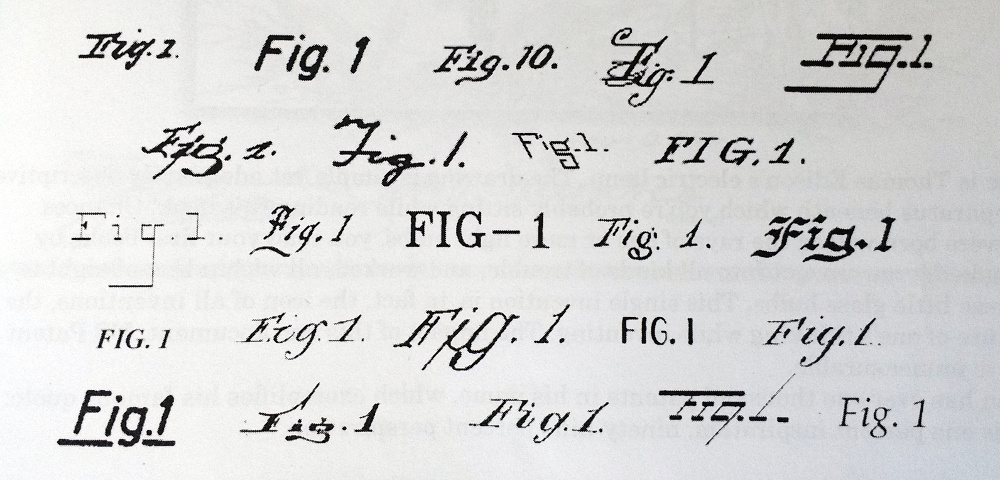
Book Review: The Art Of The Patent

In bringing suitable illustrations to our articles, we Hackaday scribes use a variety of sources that offer images featuring permissive licences. Among the usual free image libraries there is one particularly rich source, the line drawings contained within the huge archives of patents granted by the various countries around the world. These are the illustrations used as part of the patent itself to describe the working of the patent being claimed. We use them because though the items they depict are legally protected from copying by the patents they are part of, they as part of the patents themselves are in the public domain. Thus we can easily find detailed hand drawn pictures of all kinds of technical innovations from the last couple of hundred years or so, and from time to time you as our readers reap the benefit.

The beauty in hand-rendered fonts from patent artwork, collected within the book.

If you spend a while browsing old patents through a search engine such as Google Patents, you can quickly become engrossed in these beautiful images of inventions past. Though their purpose is a functional one to convey the workings of an invention, the anonymous artists have often poured all of their skill into rendering them as considerably more than mere draughtsmanship. In those dusty Government archives lurk masterpieces, just waiting to be found.

It seems we here at Hackaday are not alone in sharing a fascination with these images, for a US patent agent, [Kevin Prince], wrote a fascinating exploration of the medium in his book, The Art of the Patent. Continue reading “Book Review: The Art Of The Patent”

Friday Hack Chat: A Design Slam Challenge

Every Friday, the Hackaday.io community gathers ’round the fireplace and discusses the challenges facing the world. This is the Hack Chat, and in previous incarnations, we’ve talked about custom silicon, Arduinos, PCB fabrication, old technologies, and hardware manufacturing.

For this week’s Hack Chat, we’re opening up a design challenge. We’re asking the community for help on developing a wireless position sensor. This is a Design Slam Hack Chat, and we’re looking for contributors.

Our guest for this week’s Hack Chat will be [Naveen Nair], technology leader for GE Fuse. We’ll be discussing position sensors during this Hack Chat. If you’ve ever used a mouse, you’re using a position sensor, but for this Hack Chat we’re designing something a little more challenging. The Fuse group is attempting to build a low-cost, wireless position sensor with hand-held ultrasonic inspection units. Why is GE interested in this technology? Our guess is inspecting jet turbines, or something like that. That doesn’t mean low-cost wireless position sensors wouldn’t have other applications, though. Just imagine what a quadcopter could do if it could sense its position with 1mm resolution.

Won’t be able to make the Hack Chat? Don’t worry, we’ll be putting a transcript up here sometime after the event.

Here’s How To Take Part:

join-hack-chatOur Hack Chats are live community events on the Hackaday.io Hack Chat group messaging. This Hack Chat will take place at noon Pacific time on Friday, July 7th. Confused about where and when ‘noon’ is? Here’s a time and date converter!

Log into Hackaday.io, visit that page, and look for the ‘Join this Project’ Button. Once you’re part of the project, the button will change to ‘Team Messaging’, which takes you directly to the Hack Chat.

You don’t have to wait until Friday; join whenever you want and you can see what the community is talking about.