Contest Winners: Machine Learning On All Kinds Of Gadgets

With nearly sixty exciting entries, the Train All the Things contest, presented in partnership with Digi-Key, has drawn to a close and today we are happy to share news of the winning projects. The challenge at hand was to show off a project using some type of Machine Learning and there were plenty of takes on this theme displayed.

Perhaps the most impressive project is the Intelligent Bat Detector by [Tegwyn☠Twmffat] which claims the “ML on the Edge” award. His project, seen above, seeks not only to detect the presence of bats through the sounds they make during echolocation, but to identify the type of bat as well. Having been through a number of iterations, the bat detector, based on Nvidia Jetson Nano and a Raspberry Pi, can classify several types of bats, and a set of house keys (for a “control”). It’s also been impeccably documented and serves as a great example of how to get into machine learning.

The Soldering LIghtsaber takes the “ML Blinky” award for using machine learning in the microcontroller realm. This clever use of the concept seeks one thing: destroying the wait times for your soldering iron to heat up. It takes time to make temperature readings while the iron heats up, if you can do away with this step it speeds things up greatly. By sampling results of different voltages and heating times, machine learning establishes its own guidelines for how to pour electricity into the heating element without checking for feedback, and coming out the other side at the perfect temperature.

Rounding up our final two winners, the AI Powered Bull**** Detector claims the “ML on the Gateway” award, and
Hacking Wearables for Mental Health and More which won in the “ML on the Cloud” category.

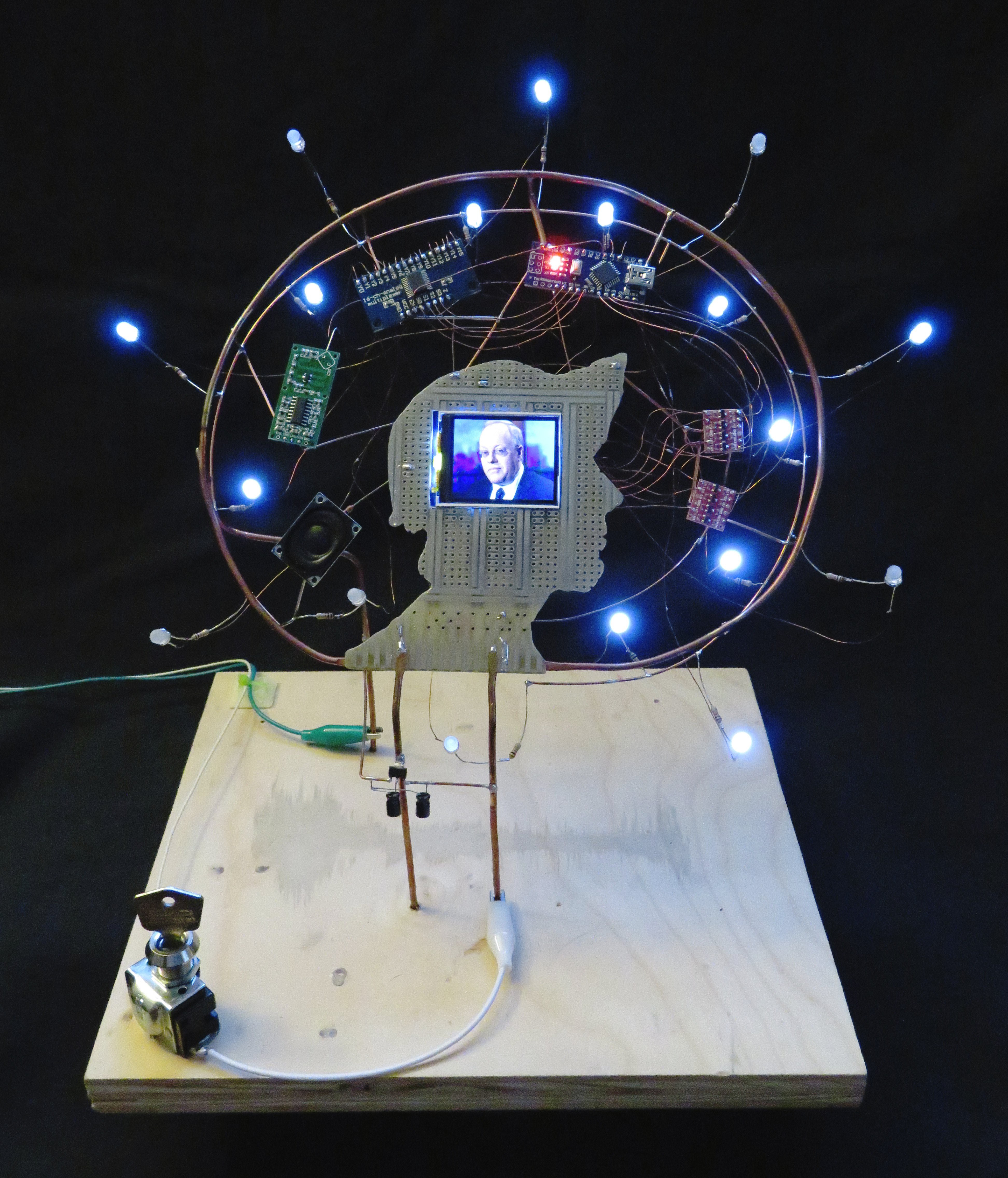
The idea behind our illuminated poop emoji project is to detect human speech and make a judgement on whether the comment is valid, or BS. It does this by leveraging a learning set of comments that have previously been identified as BS and making an association with the currently uttered words.

Wearables for mental health is a wonderful project that was previously recognized in the 2018 Hackaday Prize. Economies of scale have made these wearables quite affordable as a way to add a sensor suite to behavior analysis. But of course you need a way to process all of the sensor data, a perfect task for a cloud-based machine learning application.

All four winners received a $100 gift code to Tindie. Don’t forget to check out all of the other interesting projects that were entered in this contest!

DARPA Challenge Autonomous Robot Teams To Navigate Unfinished Nuclear Power Plant

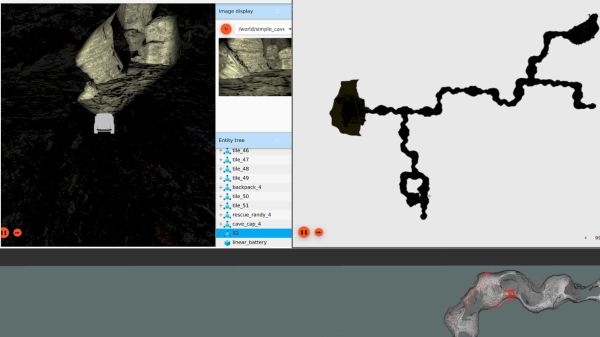
Robots might be finding their footing above ground, but today’s autonomous robots have a difficult time operating underground. DARPA wanted to give the state of the art a push forward, so they are running a Subterranean (SubT) Challenge which just wrapped up its latest round. A great review of this Urban Circuit competition (and some of the teams participating in it) has been published by IEEE Spectrum. This is the second of three underground problem subdomains presented to the participants, six months apart, preparing them for the final event which will combine all three types.

If you missed the livestream or prefer edited highlight videos, they’re all part of DARPAtv’s Subterranean Challenge playlist. Today it starts with a compilation of Urban Circuit highlights and continues to other videos. Including team profiles, video walkthrough of competition courses, actual competition footage, edited recap videos, and the awards ceremony. Half of the playlist are video from the Tunnels Circuit six months ago, so we can compare to see how teams performed and what they’ve learned along the way. Many more lessons were learned in the just-completed Urban Circuit and teams will spend the next six months improving their robots. By then we’ll have the Caves Circuit competition with teams ready to learn new lessons about operating robots underground.

Continue reading “DARPA Challenge Autonomous Robot Teams To Navigate Unfinished Nuclear Power Plant”

Train All The Things Contest Update

Back in January when we announced the Train All the Things contest, we weren’t sure what kind of entries we’d see. Machine learning is a huge and rapidly evolving field, after all, and the traditional barriers that computationally intensive processes face have been falling just as rapidly. Constraints are fading away, and we want you to explore this wild new world and show us what you come up with.

Where Do You Run Your Algorithms?

To give your effort a little structure, we’ve come up with four broad categories:

  • Machine Learning on the Edge
    • Edge computing, where systems reach out to cloud resources but run locally, is all the rage. It allows you to leverage the power of other people’s computers the cloud for training a model, which is then executed locally. Edge computing is a great way to keep your data local.
  • Machine Learning on the Gateway
    • Pi’s, old routers, what-have-yous – we’ve all got a bunch of devices laying around that bridge space between your local world and the cloud. What can you come up with that takes advantage of this unique computing environment?
  • Machine Learning in the Cloud
    • Forget about subtle — this category unleashes the power of the cloud for your application. Whether it’s Google, Azure, or AWS, show us what you can do with all that raw horsepower at your disposal.
  • Artificial Intelligence Blinky
    • Everyone’s “hardware ‘Hello, world'” is blinking an LED, and this is the machine learning version of that. We want you to use a simple microprocessor to run a machine learning algorithm. Amaze us with what you can make an Arduino do.

These Hackers Trained Their Projects, You Should Too!

We’re a little more than a month into the contest. We’ve seen some interesting entries bit of course we’re hungry for more! Here are a few that have caught our eye so far:

  • Intelligent Bat Detector – [Tegwyn☠Twmffat] has bats in his… backyard, so he built this Jetson Nano-powered device to capture their calls and classify them by species. It’s a fascinating adventure at the intersection of biology and machine learning.
  • Blackjack Robot – RAIN MAN 2.0 is [Evan Juras]’ cure for the casino adage of “The house always wins.” We wouldn’t try taking the Raspberry Pi card counter to Vegas, but it’s a great example of what YOLO can do.
  • AI-enabled Glasses – AI meets AR in ShAIdes, [Nick Bild]’s sunglasses equipped with a camera and Nano to provide a user interface to the world. Wave your hand over a lamp and it turns off. Brilliant!

You’ve got till noon Pacific time on April 7, 2020 to get your entry in, and four winners from each of the four categories will be awarded a $100 Tindie gift card, courtesy of our sponsor Digi-Key. It’s time to ramp up your machine learning efforts and get a project entered! We’d love to see more examples of straight cloud AI applications, and the AI blinky category remains wide open at this point. Get in there and give machine learning a try!

DARPA Subterranean Challenge Urban Circuit Now Livestreaming

Currently underway is the DARPA Subterranean Challenge (SubT) systems competition for urban circuits streamed live on YouTube now through Wednesday, February 26th.

The DARPA Grand Challenge of 2004 kicked research and development of autonomous vehicles into high gear. Many components on today’s self-driving vehicles can be traced back to systems developed for that competition. Hoping to spur further development, DARPA has since held several more challenges focused moving the state of the art in autonomous robotics ahead.

To succeed in this challenge, robots must handle terrain that would confuse today’s self-driving cars. Cluttered environments, uneven surfaces of different materials, even the occasional flooded section are fair game. These robots also lose access to some of the tools previously available, such as GPS. The “systems track” denotes teams building physical robot systems versus a separate “virtual track” for simulation robots. “Urban circuit” is the second of four phases in this competition, environments of this phase are focused on man-made underground structures. (Think subway station.) For more details on this competition as well as description of various phases, see our introductory post or the competition site.

Those who rather not watch robots tentatively exploring unknown territory (and occasionally failing) may choose to wait for summaries published after competition rounds are complete. The first phase (tunnel circuit) from August-October 2019 was summarized by IEEE Spectrum here. Or you can go straight to DARPA for details on the systems track and virtual track with overall results posted on the competition site.

Continue reading “DARPA Subterranean Challenge Urban Circuit Now Livestreaming”

Tell Time Contest Winners: Clocks To Knock Your Socks Off

The results are in and the Tell Time Contest was a spectacular showing of creativity. Five winners and a number of runners-up have have been chosen based on craftsmanship, functionality, and creativity.

The one that’s going to steal your heart is Fetch: A Ferrofluid Display. Pitting the force of gravity against electromagnetism, this project manages to wrangle a liquid into the segments of a display and the animations used to change between numbers are fascinating. It’s a wickedly complicated system and the gang over at Applied Procrastination did a great job of documenting the research and development that went into building this open source marvel. Has anyone tried to replicate it? We’d love to hear from you in the comments!

Mechanical movements date back to the transition away from sundials and hourglasses, but these two modern takes on “clockwork” prove there’s still plenty of room for creativity. The first is a plotter that uses two servo motors and a UV LED to draw hours and minutes on a phosphorescent material.

The second is both minimal and a stunning mastery of a traditional clock mechanism. TORLO uses the voice coil from a hard drive to move the gears. It’s 3D-printed and does it all in plain sight, superb!

Fans of the Alien franchise will immediately recognize this insect-like “facehugger”, the second stage of a developing Xenomorph. Embracing the tradition of the Cuckcoo clock, at the top of the hour a “Chestburster” pops through the chest of the bust to mark the passage of time. Creepy but well executed.

The flip-dot display uses a beautiful home-etched circuit board to keep things tidy inside of the case. Of course the question with these displays is always “where did you get the flip dots?”. This panel is on it’s second life after serving a tour of duty as a bus info sign.

Runners Up and Eight Score of Entries

Congratulations to all of our runners-up in the Tell Time contest. It was a tight field with 160 total entries, each of them a fascinating take on the simple, yet very complex practice of watching the seconds tick away. Add this to your weekend bucket list as you’ll certainly get lost in the details of many of these projects.

Winners Of The Take Flight With Feather Contest

It’s hard to beat the fidelity and durability of printed text on paper. But the e-paper display gets pretty close, and if you couple it will great design and dependable features, you might just prefer an e-reader over a bookshelf full of paperbacks. What if the deal is sweetened by making it Open Hardware? The Open Book Project rises to that challenge and has just been named the winner of the Take Flight with Feather contest.

This e-reader will now find its way into the wild, with a small manufacturing run to be put into stock by Digi-Key who sponsored this contest. Let’s take a closer look at the Open Book, as well as the five other top entries.

Continue reading “Winners Of The Take Flight With Feather Contest”

New Contest: Train All The Things

The old way was to write clever code that could handle every possible outcome. But what if you don’t know exactly what your inputs will look like, or just need a faster route to the final results? The answer is Machine Learning, and we want you to give it a try during the Train All the Things contest!

It’s hard to find a more buzz-worthy term than Artificial Intelligence. Right now, where the rubber hits the road in AI is Machine Learning and it’s never been so easy to get your feet wet in this realm.

From an 8-bit microcontroller to common single-board computers, you can do cool things like object recognition or color classification quite easily. Grab a beefier processor, dedicated ASIC, or lean heavily into the power of the cloud and you can do much more, like facial identification and gesture recognition. But the sky’s the limit. A big part of this contest is that we want everyone to get inspired by what you manage to pull off.

Yes, We Do Want to See Your ML “Hello World” Too!

Wait, wait, come back here. Have we already scared you off? Don’t read AI or ML and assume it’s not for you. We’ve included a category for “Artificial Intelligence Blinky” — your first attempt at doing something cool.

Need something simple to get you excited? How about Machine Learning on an ATtiny85 to sort Skittles candy by color? That uses just one color sensor for a quick and easy way to harvest data that forms a training set. But you could also climb up the ladder just a bit and make yourself a camera-based LEGO sorter or using an IMU in a magic wand to detect which spell you’re casting. Need more scientific inspiration? We’re hoping someday someone will build a training set that classifies microscope shots of micrometeorites. But we’d be equally excited with projects that tackle robot locomotion, natural language, and all the other wild ideas you can come up with.

Our guess is you don’t really need prizes to get excited about this one… most people have been itching for a reason to try out machine learning for quite some time. But we do have $100 Tindie gift certificates for the most interesting entry in each of the four contest categories: ML on the edge, ML on the gateway, AI blinky, and ML in the cloud.

Get started on your entry. The Train All The Things contest is sponsored by Digi-Key and runs until April 7th.