Global Radiation Montoring And Tracking Nuclear Disasters At Home

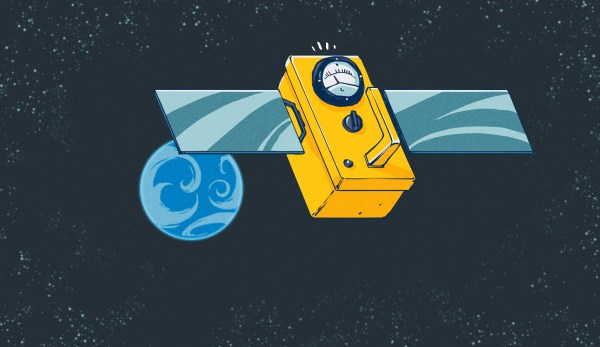
Many of us don’t think too much about radiation levels in our area, until a nuclear disaster hits and questions are raised. Radiation monitoring is an important undertaking, both from a public health perspective and as a way to monitor things like weapon development. So why is it done, how is it done, and what role can concerned citizens play in keeping an eye on things?

Continue reading “Global Radiation Montoring And Tracking Nuclear Disasters At Home”

Kilopower: NASA’s Offworld Nuclear Reactor

Here on Earth, the ability to generate electricity is something we take for granted. We can count on the sun to illuminate solar panels, and the movement of air and water to spin turbines. Fossil fuels, for all their downsides, have provided cheap and reliable power for centuries. No matter where you may find yourself on this planet, there’s a way to convert its many natural resources into electrical power.

But what happens when humans first land on Mars, a world that doesn’t offer these incredible gifts? Solar panels will work for a time, but the sunlight that reaches the surface is only a fraction of what the Earth receives, and the constant accumulation of dust makes them a liability. In the wispy atmosphere, the only time the wind could potentially be harnessed would be during one of the planet’s intense storms. Put simply, Mars can’t provide the energy required for a human settlement of any appreciable size.

The situation on the Moon isn’t much better. Sunlight during the lunar day is just as plentiful as it is on Earth, but night on the Moon stretches for two dark and cold weeks. An outpost at the Moon’s South Pole would receive more light than if it were built in the equatorial areas explored during the Apollo missions, but some periods of darkness are unavoidable. With the lunar surface temperature plummeting to -173 °C (-280 °F) when the Sun goes down, a constant supply of energy is an absolute necessity for long-duration human missions to the Moon.

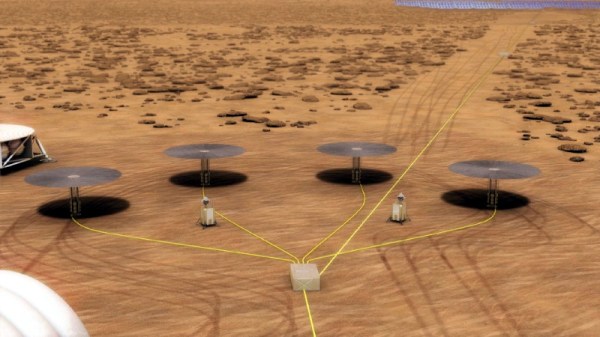
Since 2015, NASA and the United States Department of Energy have been working on the Kilopower project, which aims to develop a small, lightweight, and extremely reliable nuclear reactor that they believe will fulfill this critical role in future off-world exploration. Following a series of highly successful test runs on the prototype hardware in 2017 and 2018, the team believes the miniaturized power plant could be ready for a test flight as early as 2022. Once fully operational, this nearly complete re-imagining of the classic thermal reactor could usher in a whole new era of space exploration.

Continue reading “Kilopower: NASA’s Offworld Nuclear Reactor”

The Death Of A Weather Satellite As Seen By SDR

What is this world coming to when a weather satellite that was designed for a two-year mission starts to fail 21 years after launch? I mean, really — where’s the pride these days?

All kidding aside, it seems like NOAA-15, a satellite launched in 1998 to monitor surface temperatures and other meteorologic and climatologic parameters, has recently started showing its age. This is the way of things, and generally the decommissioning of a satellite is of little note to the general public, except possibly when it deorbits in a spectacular but brief display across the sky.

But NOAA-15 and her sister satellites have a keen following among a community of enthusiasts who spend their time teasing signals from them as they whiz overhead, using homemade antennas and cheap SDR receivers. It was these hobbyists who were among the first to notice NOAA-15’s woes, and over the past weeks they’ve been busy alternately lamenting and celebrating as the satellite’s signals come and go. Their on-again, off-again romance with the satellite is worth a look, as is the what exactly is going wrong with this bird in the first place.

Continue reading “The Death Of A Weather Satellite As Seen By SDR”

Holey Moley: Fixing The Mars InSight Mole

In the early 1990s, NASA experienced a sea change in the way it approached space exploration. Gone were the days when all their programs would be massive projects with audacious goals. The bulk of NASA’s projects would fall under the Discovery Project and hew to the mantra “faster, better, cheaper,” with narrowly focused goals and smaller budgets, with as much reuse of equipment as possible.

The idea for what would become the Mars InSight mission first appeared in 2010 and was designed to explore Mars in ways no prior mission had. Where Viking had scratched the surface in the 1970s looking for chemical signs of life and the rovers of the Explorer program had wandered about exploring surface geology, InSight was tasked with looking much, much deeper into the Red Planet.

Sadly, InSight’s primary means of looking at what lies beneath the regolith of Mars is currently stuck a few centimeters below the surface. NASA and JPL engineers are working on a fix, and while it’s far from certain that that they’ll succeed, things have started to look up for InSight lately. Here’s a quick look at what the problem is, and a potential solution that might get the mission back on track.

Continue reading “Holey Moley: Fixing The Mars InSight Mole”

A Trillion Trees – How Hard Can It Be?

Data from 2016 pegs it as the hottest year since recording began way back in 1880. Carbon dioxide levels continue to sit at historical highs, and last year the UN Intergovernmental Panel on Climate Change warned that humanity has just 12 years to limit warming to 1.5 C.

Reducing emissions is the gold standard, but it’s not the only way to go about solving the problem. There has been much research into the field of carbon sequestration — the practice of capturing atmospheric carbon and locking it away. Often times, this consists of grand plans of pumping old oil wells and aquifers full of captured CO2, but there’s another method of carbon capture that’s as old as nature itself.

As is taught in most primary school science courses, the trees around us are responsible for capturing carbon dioxide, in the process releasing breathable oxygen. The carbon becomes part of the biomass of the tree, no longer out in the atmosphere trapping heat on our precious Earth. It follows that planting more trees could help manage carbon levels and stave off global temperature rises. But just how many trees are we talking? The figure recently floated was 1,000,000,000,000 trees, which boggles the mind and has us wondering what it would take to succeed in such an ambitious program.

Continue reading “A Trillion Trees – How Hard Can It Be?”

Retrotechtacular: The OSCAR 7 Satellite Died And Was Reborn 20 Years Later

If I were to ask you what is the oldest man-made orbiting satellite still in use, I’d expect to hear a variety of answers. Space geeks might mention the passive radar calibration spheres, or possibly one of the early weather satellites. But what about the oldest communication satellite still in use?

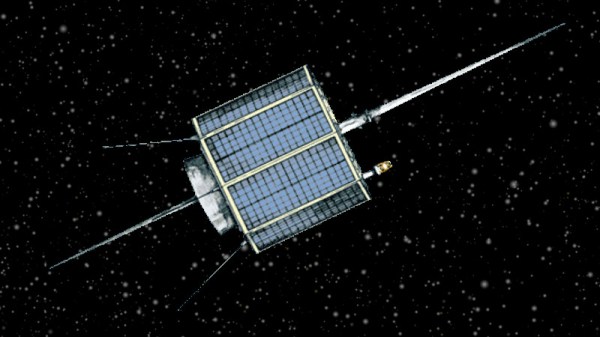
The answer is a complicated one. Oscar 7 is an amateur radio satellite launched on November 5th 1974, carrying two transponders and four beacons, all of which operate on bands available to amateur radio operators. Nearly 45 years later it still provides radio amateurs with contacts just as it did in the 1970s. But this bird’s history is anything but ordinary. It’s the satellite that came back from the dead after being thought lost forever. And just as it was fading from view it played an unexpected role in the resistance to the communist government in Poland.

Continue reading “Retrotechtacular: The OSCAR 7 Satellite Died And Was Reborn 20 Years Later”

Abraham Wald’s Problem Solving Lesson Is To Seek What’s Not There

You may not know the name Abraham Wald, but he has a very valuable lesson you can apply to problem solving, engineering, and many other parts of life. Wald worked for the Statistical Research Group (SRG) during World War II. This was part of a top secret organization in the United States that applied elite mathematical talent to help the allies win the war. Near Columbia University, mathematicians and computers — the human kind — worked on problems ranging from how to keep an enemy plane under fire longer to optimal bombing patterns.

One of Wald’s ways to approach problem was to look beyond the data in front of him. He was looking for things that weren’t there, using their absence as an additional data point. It is easy to critique things that are present but incorrect. It is harder to see things that are missing. But the end results of this technique were profound and present an object lesson we can still draw from today.

Continue reading “Abraham Wald’s Problem Solving Lesson Is To Seek What’s Not There”