Émilie Du Châtelet: An Energetic Life

Émilie du Châtelet lived a wild, wild life. She was a brilliant polymath who made important contributions to the Enlightenment, including adding a mathematical statement of conservation of energy into her French translation of Newton’s Principia, debunking the phlogiston theory of fire, and suggesting that what we would call infrared light carried heat.

She had good company; she was Voltaire’s lover and companion for fifteen years, and she built a private research institution out of a château with him before falling in love with a younger poet. She was tutored in math by Maupertuis and corresponded with Bernoulli and Euler. She was an avid gambler and handy with a sword. She died early, at 41 years, but those years that she did live were pretty amazing. Continue reading “Émilie Du Châtelet: An Energetic Life”

Hackaday guide to Lathes

A Buyer’s Guide To Lathe Options

Lathes are complicated machines, and buying one requires weighing a lot of options. We’ve already talked about buying new Asian, or old American machines (with apologies to the Germans, British, Swiss, and all the other fine 20th century machine tool making-countries). We also talked about bed length and swing, and you ain’t got nothin’ if you ain’t got that swing. Let’s talk about the feature set now. If you’re buying new, you’ll shop on these details. If you’re buying used, knowing the differences will help you pick a good project machine.

Continue reading “A Buyer’s Guide To Lathe Options”

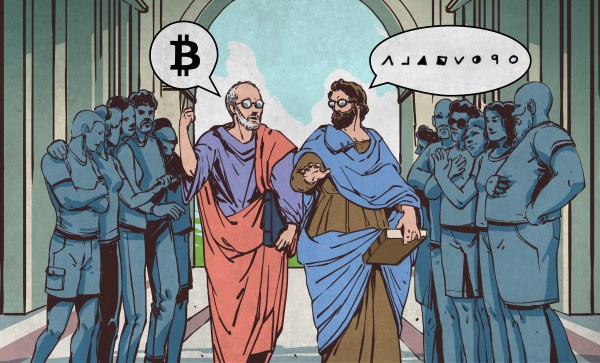
What Does ‘Crypto’ Actually Mean?

This article is about crypto. It’s in the title, and the first sentence, yet the topic still remains hidden.

At Hackaday, we are deeply concerned with language. Part of this is the fact that we are a purely text-based publication, yes, but a better reason is right there in the masthead. This is Hackaday, and for more than a decade, we have countered to the notion that ‘hackers’ are only bad actors. We have railed against co-opted language for our entire existence, and our more successful stories are entirely about the use and abuse of language.

Part of this is due to the nature of the Internet. Pedantry is an acceptable substitute for wisdom, it seems, and choosing the right word isn’t just a matter of semantics — it’s a compiler error. The wrong word shuts down all discussion. Use the phrase, ‘fused deposition modeling’ when describing a filament-based 3D printer, and some will inevitably reach for their pitchforks and torches; the correct phrase is, ‘fused filament fabrication’, the term preferred by the RepRap community because it is legally unencumbered by patents. That’s actually a neat tidbit, but the phrase describing a technology is covered by a trademark, and not by a patent.

The technical side of the Internet, or at least the subpopulation concerned about backdoors, 0-days, and commitments to hodl, is now at a semantic crossroads. ‘Crypto’ is starting to mean ‘cryptocurrency’. The netsec and technology-minded populations of the Internet are now deeply concerned over language. Cryptocurrency enthusiasts have usurped the word ‘crypto’, and the folks that were hacking around with DES thirty years ago aren’t happy. A DH key exchange has nothing to do with virtual cats bought with Etherium, and there’s no way anyone losing money to ICO scams could come up with an encryption protocol as elegant as ROT-13.

But language changes. Now, cryptographers are dealing with the same problem hackers had in the 90s, and this time there’s nothing as cool as rollerblading into the Gibson to fall back on. Does ‘crypto’ mean ‘cryptography’, or does ‘crypto’ mean cryptocurrency? If frequency of usage determines the correct definition, a quick perusal of the press releases in my email quickly reveals a winner. It’s cryptocurrency by a mile. However, cryptography has been around much, much longer than cryptocurrency. What’s the right definition of ‘crypto’? Does it mean cryptography, or does it mean cryptocurrency?

Continue reading “What Does ‘Crypto’ Actually Mean?”

Life On Contract: Lowering Your Cost Without Dropping Your Price

Last time in Life on Contract, I discussed ways to figure out a starting point on how much to charge for your services. However, sometimes you and a client may wish to work together but for some reason they cannot (or do not wish to) pay what you have decided to charge. If you are inexperienced, it can be tempting to assume you have overpriced yourself and discount down to what they are willing to pay. But if your price is a number you have chosen for reasons you can explain, dropping it is not something you should do unless you have thought about it carefully.

Instead of just agreeing to do the same work but for less money, it is often possible to offer a lower overall cost without cheapening the value of your work. I’ll share a process I use to find opportunities to make this happen.

It Should be Win-Win, Not Hard Sell

The best case scenario is a client wants your service, your cost is within their budget, and everyone agrees to work together. Tragically, the process isn’t always that smooth. If cost is an issue, the alternative to lowering your price is to fine-tune what you provide to better fit the actual needs. To do that, you will need two things:

  1. A detailed understanding of your own time and costs for the work.
  2. Knowledge of what things your client considers most important.

By intimately knowing your own costs, you can figure out where to make savings without scrimping on the things your client considers important.
Continue reading “Life On Contract: Lowering Your Cost Without Dropping Your Price”

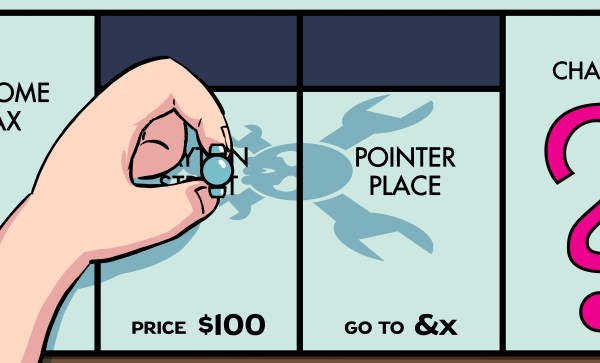
When 4 + 1 Equals 8: An Advanced Take On Pointers In C

In our first part on pointers, we covered the basics and common pitfalls of pointers in C. If we had to break it down into one sentence, the main principle of pointers is that they are simply data types storing a memory address, and as long as we make sure that we have enough memory allocated at that address, everything is going to be fine.

In this second part, we are going to continue with some more advanced pointer topics, including pointer arithmetic, pointers with another pointer as underlying data type, and the relationship between arrays and pointers. But first, there is one particular pointer we haven’t talked about yet.

The one proverbial exception to the rule that pointers are just memory addresses is the most (in)famous pointer of all: the NULL pointer. Commonly defined as preprocessor macro (void *) 0, we can assign NULL like any other pointer.

Continue reading “When 4 + 1 Equals 8: An Advanced Take On Pointers In C”

Mechanisms: Hook And Loop Fasteners

As a species, we’ve done a pretty good job at inventing some useful devices. But as clever as we think we are, given sufficient time, natural selection will beat us at our game at almost every turn. So it makes sense that many of our best inventions are inspired by nature and the myriad ways life finds to get DNA from one generation to the next.

Hook and loop fasteners are one such design cribbed from nature, and the story behind this useful mechanism is a perfect example that a prepared mind, good observation skills, and a heck of a lot of perseverance are what it takes to bring one of Mother Nature’s designs to market.

Editor’s Note: As some predicted in the comments section, we were contacted by representatives of Velcro Companies and asked to change all mentions in this article to either VELCRO® Brand Fastener or to use the generic “Hook and Loop” term. If it seems weird that we’re calling this hook and loop, now you know why.

Continue reading “Mechanisms: Hook And Loop Fasteners”

When Hackerspace Directors Burn Out

A friend of mine once suggested that there should be a support group for burned-out former hackerspace directors. We could have our own Village of the Damned at summer camps, where we’d sit moodily in the gathering twilight sipping our bourbon and Club Mate and decrying whatever misfortunes came to our space to leave such visible mental scars, or gazing hollow-eyed into the laser-tinged haze and moving gently to the pulse of the chiptune music. “See that’s Jenny over there, she don’t say much“. Hackerspace noir, where the only entry criterion is being crazy enough to stand for election to your space’s board.

You can tell [Dr. Seuss] is thinking about his next volume: <em>How The Grinch Stole Whoville Hackspace</em>. Al Ravenna, World Telegram [Public domain].
You can tell [Dr. Seuss] is thinking about his next volume: How The Grinch Stole Whoville Hackspace. Al Ravenna, World Telegram [Public domain].
There must be spaces somewhere that live in such perfect harmony, in which a happy membership support a board for whom everything falls into place. Maybe the makerspace in [Dr. Seuss]’s Whoville would have that kind of atmosphere, but the reality of life is that every group is made up of both Grinch and Who. Keeping a diverse group of people harmonious is a huge challenge, but that’s what hackerspaces are really about — the people make the space.

There are several defined periods in the gestation of a hackerspace, and at least from where I’m sitting they relate to its member count. Some spaces pass through them all as they grow, while others are lucky enough to reach an equilibrium and spare themselves some of the drama.

If you recognise yourselves in some of the following then you have my commiserations, while if your space hasn’t got there yet or has managed to dodge some of the bullets then consider yourselves lucky.

Continue reading “When Hackerspace Directors Burn Out”