Quick, what do “cloud compute engines” and goofy Raspberry Pi Internet of Things hacks have in common? Aside from all being parody-worthy buzzword-fests, they all involve administering remote headless (Linux) installations. It’s for exactly that reason that a new Ubuntu distribution flavor, Ubuntu (Snappy) Core, targets both the multi-bazillion-dollar Amazon Elastic Compute Cloud and the $55 BeagleBone Black.
The Atari Punk Console (APC) is a dual 555 (or single 556) based synth. Designed by the famous (and somewhat infamous) Forrest Mims in 1980 and originally simply named “Sound Synthesizer”, the circuit gained it’s more recent popularity when re-dubbed the “Atari Punk Console” by Kaustic Machines. The circuit however doesn’t bear much relation to the Atari 2600 which didn’t contain a 555 timer chip. However we assume the 2600 produced a similarly glitchy square wave audio output.
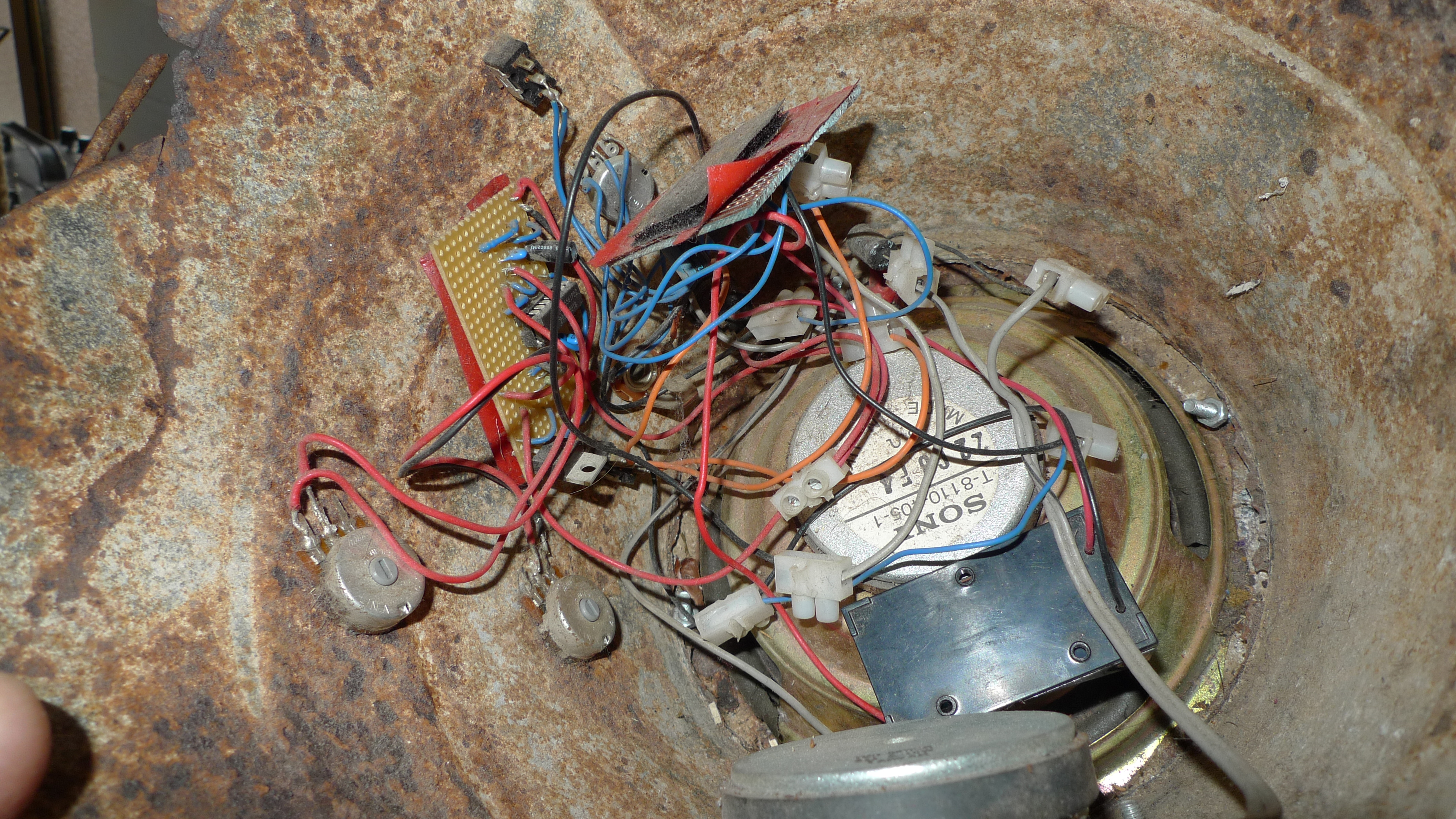
The circuits operation is easy to grasp and uses only 9 components. This ease of design and construction has allowed builders to focus more on the aesthetics of its construction, hacking it into interesting, and often unlikely enclosures and systems. One such hack is the “Atari Punk Bucket” (shown here) where the APC along with a simple amp was hacked into an old rusted bucket. The APC was built up on strip-board along with a simple amp and reclaimed speakers. [Farmer glitch] has used this as a prop in live sets and it both looks and sounds awesome. Continue reading “The Ubiquitous Atari Punk Console”→
As electronics engineer I have a mental collection of circuits that I’ve gathered over the years, much like a mechanic collects specialized tools as they work. All engineers do this and the tools in their tool boxes usually represent their project history and breadth.
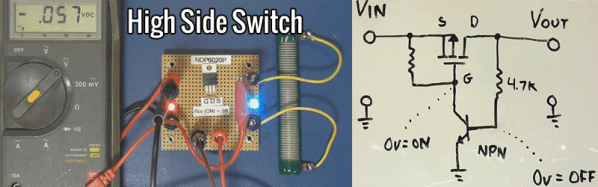
A useful circuit to have in designer’s toolbox is the “high side switch”. Like it sounds, this is a circuit that switches the “high side” or positive voltage to a load.
We usually tend to switch things to ground as seen by outputs such as an Open Collector output, the reason being that ground usually is a known entity and is usually low impedance and is at a known voltage. But there are advantages to using a high-side switch in your circuits.
In the wee hours of the late 17th century, Isaac Newton could be found locked up in his laboratory prodding the secrets of nature. Giant plumes of green smoke poured from cauldrons of all shapes and sizes, while others hissed and spat new and mysterious chemical concoctions, like miniature volcanoes erupting with knowledge from the unknown. Under the eerie glow of twinkling candle light, Newton would go on to write over a million words on the subject of alchemy. He had to do so in secret because the practice was frowned upon at that time. In fact, it is now known that alchemy was the ‘science’ in which he was chiefly interested in. His fascination with turning lead into gold via the elusive philosopher’s stone is now evident. He had even turned down a professorship at Cambridge and instead opted for England’s Director of Mint, where he oversaw his nation’s gold repository.
Not much was known about the fundamental structure of matter in Newton’s time. The first version of the periodic table would not come along for more than a hundred and forty years after his death. With the modern atomic structure not surfacing for another 30 years after that. Today, we know that we can’t turn lead into gold without setting the world on fire. Alchemy is recognized as a pseudoscience, and we opt for modern chemistry to describe the interactions between the elements. Everyone walking out of high school knows what atoms and the periodic table are. They know what the sub-atomic particles and their associated electric charges are. In this article, we’re going to push beyond the basics. We’re going to look at atomic structure from a quantum mechanical view, which will give you a new understanding of why the periodic table looks the way it does. In fact, you can construct the entire periodic table using nothing but the quantum numbers.
A 14-year-old in Dallas, Texas has been arrested for bringing a clock to his school. [Ahmed Mohamed] could be any one of us. He’s a tinkerer, pulling apart scrap appliances and building projects from the parts. He was a member of the his middle school robotics team. The clock was built from a standard four digit seven segment display and a circuit board. [Ahmed] built the circuit inside a Vaultz hard pencil case like this one. He then did what every other experimenter, inventor, hacker, or maker before him has done: He showed off his creation.
Unfortunately for [Ahmed] one of his teachers immediately leapt to the conclusion that this electronic project was a “hoax bomb” of some sort. The police were called, [Ahmed] was pulled out of class and arrested. He was then brought to a detention center where he and his possessions were searched. [Ahmed] is now serving a three-day suspension from school. His clock is considered evidence to be used in a possible criminal case against him.
If this situation doesn’t get your blood boiling, then we don’t know what does. Not only is there a glaring racial issue here, but also an issue of allowing kids to bring their projects to school. We hope you’ll join us in expressing outrage at this whole debacle, as well as supporting [Ahmed] in any way you can. Let’s join together as a community to make sure a few small-minded individuals don’t break the spirit of this budding hardware hacker.
For anyone out there who would like to support [Ahmed]’s education even when his school won’t, [Anil Dash] is will be in contact with the family later today. We’re offering a gift card for the hackaday store and we would assume other contributions would also be welcome. -Ed.
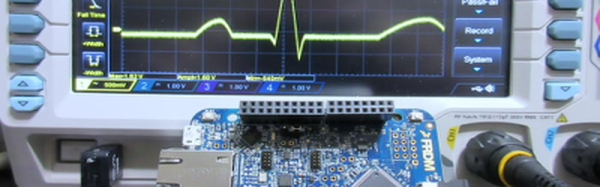
Last month, I talked about how to get started with mBed and ARM processors using a very inexpensive development board. I wanted to revisit mBed, though, and show something with a little more substance. In particular, I often have a need for a simple and portable waveform generator. It doesn’t have to be too fancy or meet the same specs as some of the lab gear I have, but it should be easy to carry, power off USB, and work by itself when required.
My requirements mean I needed a slightly more capable board. In particular, I picked up a K64F board. This is very similar to the KL25Z board but has a bit more of everything–speed, memory, etc. What I really wanted, though, was the SD card slot. I did, however, do my early testing on a KL25Z, so if you have one, you can still work through the code, although standalone operation won’t be possible. The price jumps from $13 to $35, but you get a lot more capability for the price.
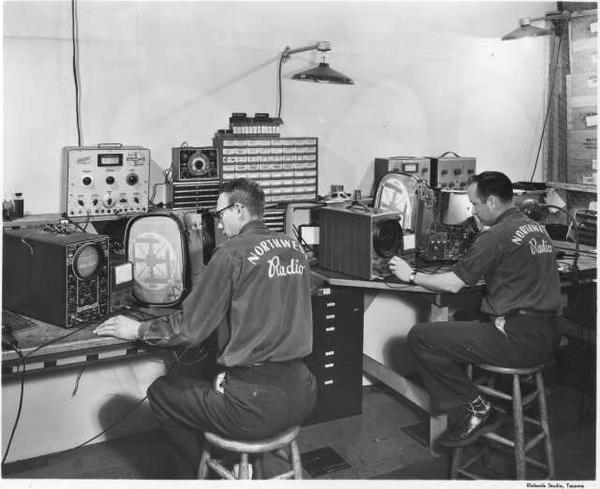
[Source: 1950s Television]My first job out of high school was in a TV shop. I was hired mainly for muscle; this was the early 1980s and we sold a lot of console TVs that always seemed to need to be delivered to the third floor of a walk up. But I also got to do repair work on TVs and stereos, and I loved it. Old TVs from the 60s and 70s would come in, with their pre-PCB construction and hand-wired chassis full of terminal strips and point to point wiring that must have been an absolute nightmare to manufacture. We’d replace dodgy caps, swap out tubes, clean the mechanical tuners, and sometimes put a new picture tube in – always the diagnosis that customers dreaded the most, like being told they’d need a heart transplant. We kept those old sets alive, and our customers felt like they were protecting their investment in their magnificent Admiral or Magnavox console with the genuine – and very, very heavy – walnut cabinet.
I managed to learn a lot from my time as a TV repairman, and I got the bug for keeping things working well past the point which a reasonable person would recognize as the time to go shopping for a new one. Fixing stuff is where I really shine, and my house is full of epic (in my mind, at least) repairs that have saved the family tens of thousands of dollars over the years. Dishwasher making a funny noise? I’ll just pull it out to take a look. You say there’s a little shimmy in the front end when you brake? Pull the car into the garage and we’ll yank the wheels off. There’s basically nothing I won’t at least try to fix, and more often than not, I succeed.
I assumed that my fix-it bug made me part of a dying breed of cheapskates and skinflints, but it appears that I was wrong. The fix-it movement seems to be pretty healthy right now, fueled in part by the explosion in information that’s available to anyone with basic internet skills.