All About USB-C: Cable Types

USB-C cables and connectors: these are controversial topics, and rightfully so – I don’t want to pull any punches. I will also show you that things don’t have to be that bad for you, as long as you’re willing to apply a few tricks and adjust your expectations.

Wild West of Wiring

You might have a bunch of USB-C cables, and they all might look exactly the same, but you’ve likely experienced that they’re not the same internally, and often there’s not a label in sight. Yes, it’s pretty bad, and one could argue it’s getting worse.

I’d like to clarify that I’m only talking about USB C male – USB C male cables here. While cables like USB-A to USB-C are popular, they are quite simple; you get USB 2.0 or USB 3.0 data and 2 A of current at most, and the USB-C plug is usually hardwired as “host, will supply five volts”, which is defined by a pullup resistor. Also, while cables like “Type-C to DisplayPort” might look like cables at a glance, they are adapters with a meaningful amount of active circuitry in them.

Purely following the specification, there used to be six types of USB-C to USB-C cables out there. Then, it became eight. Now, I’m afraid, there’s twelve of them, purely following the spec, and there’s way more when counting all the out-of-spec cables. Good news is – for most of the time, majority of these cables will be suitable for simple tasks like charging and data transfer, and situations where you need a very specific cable are going to be rare enough. Still, let’s go through it, and you’ll see that they’re easier to tell apart than it might look. Continue reading “All About USB-C: Cable Types”


Battery Engineering Hack Chat

Join us on Wednesday, December 14 at noon Pacific for the Battery Engineering Hack Chat with Dave Sopchak!

Of all the things driving technology forward, you’d have to say that the ability of chip makers to squeeze more complex circuits than ever onto silicon has to rank right up there. And while that’s no doubt true, it only tells a part of the story. For our money, though, the advancements in battery technology over the last 30 years or so are the real champ, because without compact, cheap, energy-dense batteries, almost none of the cool stuff we see today, from smartphones to electric vehicles, would be practical.

Battery technology has come a long way from the days when carbon-zinc and nickel-cadmium cells were kings. New chemistries, better materials and methods, and engineering improvements have all contributed to incredibly powerful, incredibly compact batteries that make applications nobody could have thought of just a few decades ago possible.

join-hack-chatDave Sopchak has been in the thick of battery engineering since taking a doctorate in electrochemistry from Case Western Reserve. Since then he has worked at several fuel cell start-ups, and is now working on a lithium-air battery that sounds really interesting. We’ve asked him to help us wrap up the 2022 Hack Chat series with a discussion on battery engineering, with a focus on upcoming technologies and advancements that could really put some power in your pocket.

Our Hack Chats are live community events in the Hackaday.io Hack Chat group messaging. This week we’ll be sitting down on Wednesday, December 14 at 12:00 PM Pacific time. If time zones have you tied up, we have a handy time zone converter.

Students Rebel Against Heat-Sensing Crotch Monitor Surveillance Devices

Surveillance has become a ubiquitous part of modern life. Public spaces are dotted with CCTV cameras inside and out. Recent years have seen the technology spread to the suburbs with porch cameras spreading the eye of big tech and law enforcement ever further.

Outside of mere cameras, companies are rushing to develop all manner of new devices to surveil individuals, too. One such device intended to track students quickly drew the ire of scholars at Northeastern University, and the cohort fought back.

Continue reading “Students Rebel Against Heat-Sensing Crotch Monitor Surveillance Devices”

NASA Aces Artemis I, But The Journey Has Just Begun

When NASA’s Orion capsule splashed down in the Pacific Ocean yesterday afternoon, it marked the end of a journey that started decades ago. The origins of the Orion capsule can be tracked back to a Lockheed Martin proposal from the early 2000s, and development of the towering Space Launch System rocket that sent it on its historic trip around the Moon started back in 2011 — although few at the time could have imagined that’s what it would end up being used for. The intended mission for the incredibly powerful Shuttle-derived rocket  changed so many times over the years that for a time it was referred to as the “Rocket to Nowhere”, as it appeared the agency couldn’t decide just where they wanted to send their flagship exploration vehicle.

But today, for perhaps the first time, the future of the SLS and Orion seem bright. The Artemis I mission wasn’t just a technical success by about pretty much every metric you’d care to use, it was also a public relations boon the likes of which NASA has rarely seen outside the dramatic landings of their Mars rovers. Tens of millions of people watched the unmanned mission blast off towards the Moon, a prelude to the global excitement that will surround the crewed follow-up flight currently scheduled for 2024.

As NASA’s commentators reminded viewers during the live streamed segments of the nearly 26-day long mission around the Moon, the test flight officially ushered in what the space agency is calling the Artemis Generation, a new era of lunar exploration that picks up where the Apollo left off. Rather than occasional hasty visits to its beautiful desolation, Artemis aims to lay the groundwork for a permanent human presence on our natural satellite.

With the successful conclusion of the Artemis I, NASA has now demonstrated effectively two-thirds of the hardware and techniques required to return humans to the surface of the Moon: SLS proved it has the power to send heavy payloads beyond low Earth orbit, and the long-duration flight Orion took around our nearest celestial neighbor ensured it’s more than up to the task of ferrying human explorers on a shorter and more direct route.

But of course, it would be unreasonable to expect the first flight of such a complex vehicle to go off without a hitch. While the primary mission goals were all accomplished, and the architecture generally met or exceeded pre-launch expectations, there’s still plenty of work to be done before NASA is ready for Artemis II.

Continue reading “NASA Aces Artemis I, But The Journey Has Just Begun”

Hackaday Links Column Banner

Hackaday Links: December 11, 2022

“They paved paradise and put up a parking lot.” That might be stretching things a bit, especially when the “paradise” in question is in New Jersey, but there’s a move afoot to redevelop the site of the original “Big Bang Antenna” that has some people pretty upset. Known simply as “The Horn Antenna” since it was built by Bell Labs in 1959 atop a hill in Holmdel, New Jersey, the antenna was originally designed to study long-distance microwave communications. But in 1964, Bell Labs researchers Arno Penzias and Robert Wilson accidentally discovered the microwave remnants of the Big Bang, the cosmic background radiation, using the antenna, earning it a place in scientific history. So far, the only action taken by the township committee has been to authorize a study to look into whether the site should be redeveloped. But the fact that the site is one of the highest points in Monmouth County with sweeping views of Manhattan has some people wondering what’s really on tap for the site. A petition to save the antenna currently has about 3,400 signatures, so you might want to check that out — after all, you don’t know what you’ve got ’til it’s gone.

Continue reading “Hackaday Links: December 11, 2022”

Fossil Files: My .Emacs

Last week, I wrote about cargo culting in a much more general context, so this week I’m going to come clean. The file that had me thinking about the topic was the worst case you’ve probably ever seen: I have a .emacs file kicking around that I haven’t really understood since I copied it from someone else – probably Ben Scarlet whose name is enshrined therein – in the computer lab in 1994! Yes, my .emacs file is nearly 30, and I still don’t really understand it, not exactly.

Now in my defence, I switched up to vim as my main editor a few years ago, but this one file has seen duty on Pentiums running pre-1.0 versions of Linux, on IBM RS/6000 machines in the aforementioned computer lab, and on a series of laptops and desktops that I’ve owned over the years. It got me through undergrad, grad school, and a decade of work. It has served me well. And if I fired up emacs right now, it would still be here.

For those of you out there who don’t use emacs, the .emacs file is a configuration file. It says how to interpret different files based on their extensions, defines some special key combos, and perhaps most importantly, defines how code syntax highlighting works. It’s basically all of the idiosyncratic look-and-feel stuff in emacs, and it’s what makes my emacs mine. But I don’t understand it.

Why? Because it’s written in LISP, for GNU’s sake, and because it references all manner of cryptic internal variables that emacs uses under the hood. I’m absolutely not saying that I haven’t tweaked some of the colors around, or monkey-patched something in here or there, but the extent is always limited to whatever I can get away with, without having to really learn LISP.

This ancient fossil of a file is testament to two things. The emacs codebase has been stable enough that it still works after all this time, but also that emacs is so damn complicated and written in an obscure enough language that I have never put the time in to really grok it – the barriers are too high and the payoff for the effort too low. I have no doubt that I could figure it out for real, but I just haven’t.

So I just schlep this file around, from computer to computer, without understanding it and without particularly wanting to. Except now that I write this. Damnit.

Featured image: “A Dusty Old Book” by Marco Verch Professional.

Ask Hackaday: Will Your 2030 Car Have AM Radio?

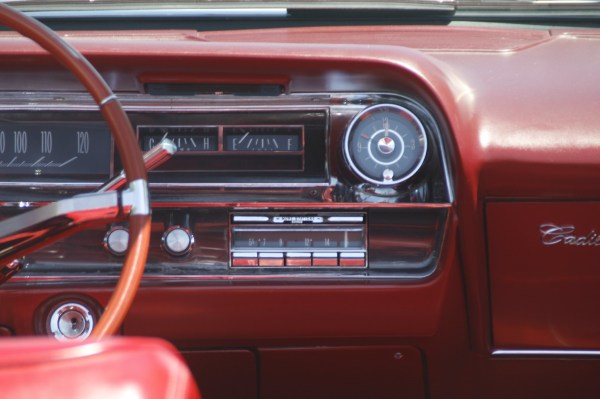
Car makers have been phasing out AM radios in their cars for quite some time. Let’s face it, there isn’t much on AM these days, and electric vehicles have been known to cause interference with AM radios. So why have them? For that matter, many aftermarket head units now don’t even have radios at all. They play digital media or stream Bluetooth from your phone. However, a U.S. Senator, Edward J. Markey, has started a letter-writing campaign to the major car makers urging them to retain the AM radio in their future vehicles.

So does that mean AM lives? Or will the car makers kill it off? The letter requests that the companies answer several questions, including if they plan to discontinue AM or FM radios in the near future and if they support digital broadcast radio.

Continue reading “Ask Hackaday: Will Your 2030 Car Have AM Radio?”