This Car Lets You Fistbump To Unlock

In the dark ages, you had to use a key to lock and unlock your car doors. Just about every car now has a remote control on the key that lets you unlock or lock with the push of a button. But many modern cars don’t even need that. They sense the key on your person and usually use a button to do the lock or unlock function. That button does nothing if the key isn’t nearby.

[Pierre Charlier] wanted that easy locking and unlocking, so he refitted his car with a Keyduino to allow entry with an NFC ring. What results is a very cool fistbump which convinces your car to unlock the door.

Keyduinio is [Pierre’s] NFC-enabled project, but you can also use a more conventional Arduino with an NFC and relay shield. The demo also works with a smartphone if you’re not one for wearing an NFC ring. Going this round, he even shows how to make it work with Bluetooth Low Energy (BLE).

Continue reading “This Car Lets You Fistbump To Unlock” →

Local Hacker Discovers Card Edge Connectors

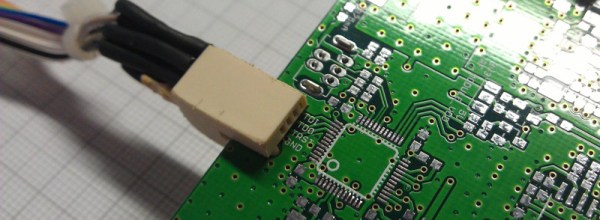
When [turingbirds] was looking around for the absolute minimum connector for a JTAG adapter, he wanted something small, that didn’t require expensive adapters, and that could easily and reliably connect a few JTAG pins to a programmer. This, unsurprisingly, is a problem that’s been solved many times over, but that doesn’t mean there isn’t room for improvement. [turingbirds] found his better solution by looking at some old card edge connectors.

Instead of 0.1″ pitch pin headers, weirder and more expensive connectors, the Tag Connect, or even pogo pins, [turingbirds] came up with a JTAG adapter that required no additional parts, had a small footprint, and could be constructed out of trash usually found behind any busy hackerspace or garage. The connector is based on the venerable PCI connector, chopped up with a Dremel and soldered to a JTAG or ISP programmer.

This is simply a card edge connector, something the younglings seem to have forgotten. Back in the day, card edge connectors were a great way to connect peripherals, ports, and anything else to the outside world. They were keyed, and you could only put them in one way. They were relatively cheap, and with a big coil of ribbon cable, you could make custom adapters easily. For low-speed connections that will only be used a few times, it’s very hard to beat a card edge connector.

Of course the connector itself is only half of the actual build. To turn a chopped up PCI connector into a JTAG adapter, [turingbirds] made footprint and part files for his favorite PCB design tool. In this case it’s Eagle, and the libraries that will plop one of these connectors down are available on GitHub.

Is this the latest and greatest way to plug a programmer into a board? No, because this has been around for 30 or 40 years. It does, however, put a programming port on a PCB with zero dollars in components, a minimum of board footprint, and uses parts that can be salvaged from any pile of old computers.

The Coming Age Of 3D Integrated Circuits

The pedagogical model of the integrated circuit goes something like this: take a silicone wafer, etch out a few wells, dope some of the silicon with phosphorous, mask some of the chip off, dope some more silicon with boron, and lay down some metal in between everything. That’s an extraordinarily basic model of how the modern semiconductor plant works, but it’s not terribly inaccurate. The conclusion anyone would make after learning this is that chips are inherently three-dimensional devices. But the layers are exceedingly small, and the overall thickness of the active layers of a chip are thinner than a human hair. A bit of study and thought and you’ll realize the structure of an integrated circuit really isn’t in three dimensions.

Recently, rumors and educated guesses coming from silicon insiders have pointed towards true three-dimensional chips as the future of the industry. These chips aren’t a few layers thick like the example above. Instead of just a few dozen layers, 100 or more layers of transistors will be crammed into a single piece of silicon. The reasons for this transition range from shortening the distance signals must travel, reducing resistance (and therefore heat), and optimizing performance and power in a single design.

The ideas that are influencing the current generation of three-dimensional chips aren’t new; these concepts have been around since the beginnings of the semiconductor industry. What is new is how these devices will eventually make it to market, the challenges currently being faced at Intel and other semiconductor companies, and what it will mean for a generation of chips several years down the road.

Continue reading “The Coming Age Of 3D Integrated Circuits” →

Greased Lightning Shows 360 Degrees

A lot of people got drones for Christmas this year (and many Hackaday readers already had one, anyway). A lot of these drones have cameras on them. The expensive ones beam back live video via RF. The cheaper ones just record to an SD card that you can download later.

If you are NASA, of course, this just isn’t good enough. At the Langley Research Center in Virginia, they’ve been building the Greased Lightning (also known as the GL-10) which is a 10-engine tilt-prop unmanned aerial vehicle. The carbon fiber drone is impressive, sure, but what wows is the recent video NASA released (see below).

Continue reading “Greased Lightning Shows 360 Degrees” →

Graphene Batteries Appear, Results Questionable

If you listen to the zeitgeist, graphene is the next big thing. It’s the end of the oil industry, the solution to global warming, will feed and clothe millions, cure disease, is the foundation of a space elevator that will allow humanity to venture forth into the galaxy. Graphene makes you more attractive, feel younger, and allows you to win friends and influence people. Needless to say, there’s a little bit of hype surrounding graphene.

With hype comes marketing, and with marketing comes products making dubious claims. The latest of which is graphene batteries from HobbyKing. According to the literature, these lithium polymer battery packs for RC planes and quadcopters, ‘utilize carbon in the battery structure to form a single layer of graphene… The graphene particles for a highly dense compound allowing electrons to flow with less resistance compared to traditional Lipoly battery technologies” These batteries also come packaged in black shrink tubing and have a black battery connector, making them look much cooler than their non-graphene equivalent. That alone will add at least 5mph to the top speed of any RC airplane.

For the last several years, one of the most interesting potential applications for graphene is energy storage. Graphene ultracapacitors are on the horizon, promising incredible charge densities and fast recharge times. Hopefully, in a decade or two, we might see electric cars powered not by traditional lithium batteries, but graphene supercapacitors. They’ll be able to recharge in minutes and drive further, allowing the world to transition away from a fossil fuel-based economy. World peace commences about two weeks after that happens.

No one expected graphene batteries to show up now, though, and especially not from a company whose biggest market is selling parts to people who build their own quadcopters. How do these batteries hold up? According to the first independent review, it’s a good battery, but the graphene is mostly on the label.

[rampman] on the RCgroups forums did a few tests on the first production runs of the battery, and they’re actually quite good. You can pull a lot of amps out of them, they last through a lot of charging cycles, and the packaging – important for something that will be in a crash – is very good. Are these batteries actually using graphene in their chemistry? That’s the unanswered question, isn’t it?

To be fair, the graphene batteries shipped out to reviewers before HobbyKing’s official launch do perform remarkably well. In the interest of fairness, though, these are most certainly not stock ‘graphene’ battery packs. The reviewers probably aren’t shills, but these battery packs are the best HobbyKing can produce, and not necessarily representative of what we can buy.

It’s also doubtful these batteries use a significant amount of graphene in their construction. According to the available research, graphene increases the power and energy density of batteries. The new graphene batteries store about as much energy as the nano-tech batteries that have been around for years, but weigh significantly more. This might be due to the different construction of the battery pack itself, but the graphene battery should be lighter and smaller, not 20 grams heavier and 5 mm thicker.

In the RC world, HobbyKing is known as being ‘good enough’. It’s not the best stuff you can get, but it is cheap. It’s the Wal-Mart of the RC world, and Wal-Mart isn’t introducing bleeding edge technologies that will purportedly save the planet. Is there real graphene in these batteries? We await an in-depth teardown, preferably with an electron microscope, with baited breath.


Build Yourself An Awesome Modular Power Supply

You may think you’ve built a power supply for your bench. Heck, we all do. But until you check out [Denis]’s bench power supply build, you may not even know what you’re missing.

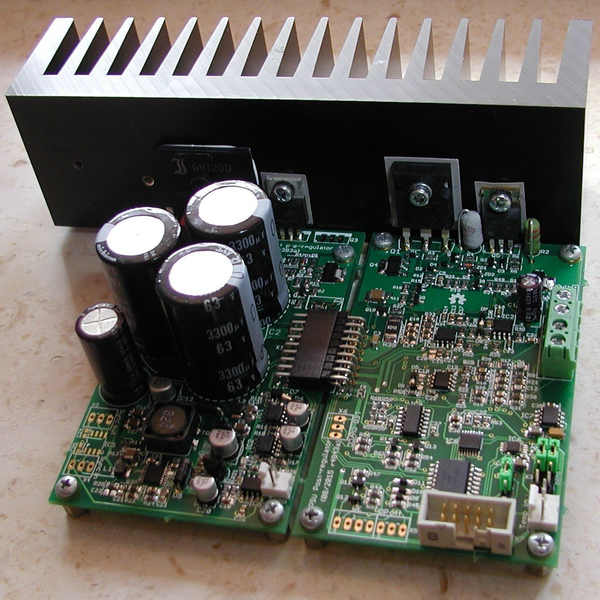
[Denis]’s design is nearly entirely modular and targeted to the intermediate builder. It’s built on easily available parts and through-hole components. It’s got an Arduino running as the brains, so you’re going to be able to hack on the code when you feel like tweaking it. But easy doesn’t mean light on features. Let’s walk through the build together.

6203871454520455862_thumbnail

It starts off with a pre-regulator: a switching MOSFET that gets the voltage down to just a couple volts above the target value. Then it’s off to the post-regulator that includes all of the fine adjustments, the DAC and ADC interfacing to the microcontroller, and some fancy features like a “down-programmer” that turns the output off extra quickly.

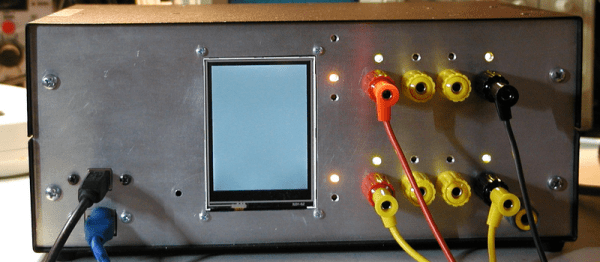
On the user end of things, [Denis] made a very sleek board that incorporates a TFT touchscreen for the controls, Arduino connections, and the obligatory banana plug outputs. There’s opto-isolation on the SPI bus, a real-time clock, and a bunch more goodies on board. He’s in his third revision of this module, and that level of refinement shows. It’s even SCPI compliant, meaning you can control remotely using an industry-standard protocol.

So what would you do with a ridiculously fancy power supply under microcontroller control? Test out battery charging algorithms? Program test routines to see how your devices will work as their batteries drain out? We have no idea, but we know we want one!

New Angle On Raspberry Pi Zero Hub

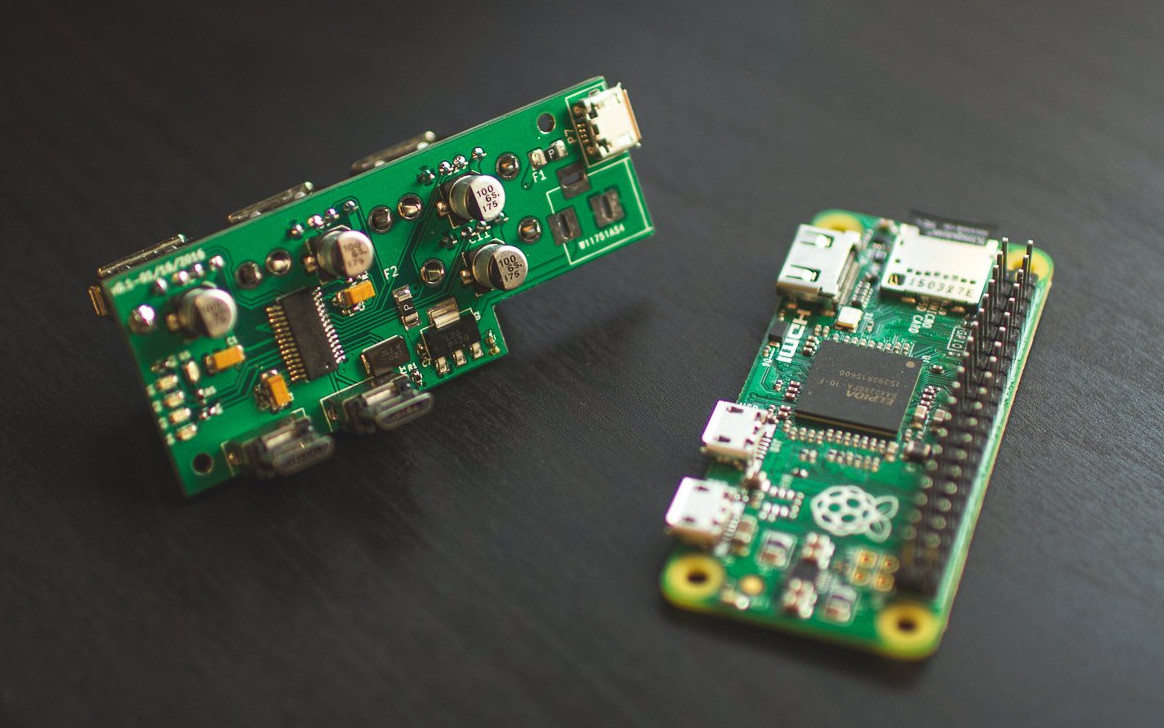
Collectively, the Hackaday readers sigh, “Not another Pi Zero hub!!!”. But [Sean Hodgins’] hub is different. It has a new angle, literally. Besides, it’s an entry in the Hackaday and Adafruit Pi Zero Contest .

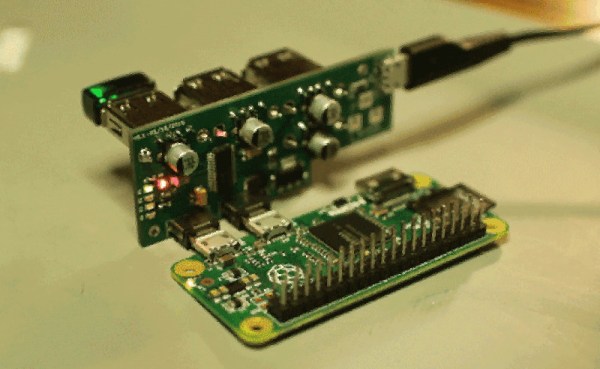
1514291454445337873[Sean Hodgins’] acute approach is orthogonal to most of the other hubs we’ve seen. He’s mating the hub at right angles to the Zero. The hub plugs into both the on-the-go USB port and the USB power port. No extra cables or wiring needed. [Sean] plans to release the design on GitHub after his Kickstarter campaign ends. He’s supplying bare boards for those who like the smell of solder paste.

This project nicely triangulates the issues of adding a hub to the Zero. The physical connection is solid with the boards connecting via the USB connectors. Power is supplied through the hub the way the Pi expects, which means all the protections the Pi Foundation built into the onboard conditioning are left in place. This also reduces surge problems that might occur when back powering through a hub and hot swapping USB devices. Another neat feature is the notched corner leaving the HDMI port accessible. Similarly, the Pi’s GPIO pins are free of encumbrance. One drawback is the hub is fused at 2 amps, just like the Pi. It would be nice to have a little more headroom for power hungry USB devices. Maybe another 0.5 amp to allow for the Zero’s usage.

[Sean] snaps the two together after the break.

Continue reading “New Angle On Raspberry Pi Zero Hub” →