Ask Hackaday: Help Me Pick A CAD Package

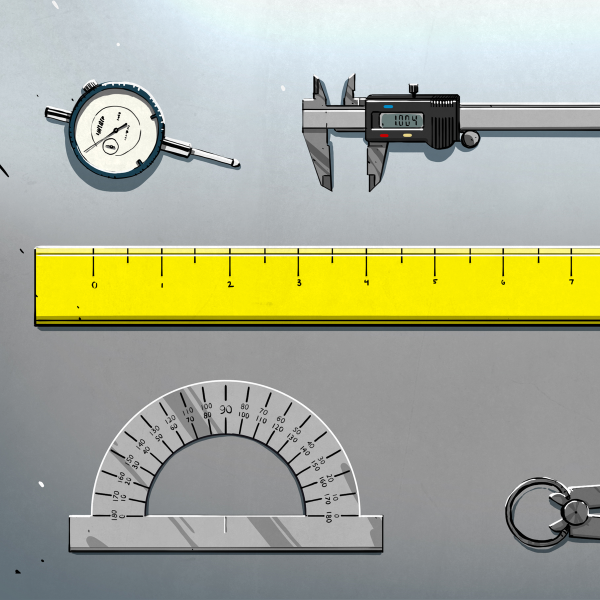
Of all the skills that I have picked up over the years as an engineer, there is one that has stayed with me and been a constant over the last three decades. It has helped me work on electronic projects, on furniture, on car parts, robots, and even garments, and it is likely that I will continue using it periodically for the rest of my career. You see, I am a trained PAD expert.

Don't build this, it's fundamentally flawed! Sometimes the front of an envelope is as effective as its back.
Don’t build this, it’s fundamentally flawed! Sometimes the front of an envelope is as effective as its back.

PAD, you ask? OK, it’s an acronym of my own coinage, it stands for Pencil Aided Design, and it refers to the first-year undergraduate course I sat many years ago in which I learned technical drawing to the old British standard BS308. If I’m making something then by far the quickest way for me to visualise its design is to draw it, first a freehand sketch to get a feel of how everything will sit, then a series of isometric component drawings on graph paper with careful attention to dimensions and angles. Well, maybe I lied a little there, the graph paper only comes in when I’m doing something very fancy; the back of an envelope is fine as long as the dimensions on the diagram are correct.

Continue reading “Ask Hackaday: Help Me Pick A CAD Package”

Adventures In Automating A Candle Factory

Have you ever considered the manufacture of candles? Not necessarily manufacturing them yourself, but how they are manufactured in a small-scale industrial setting? It’s something that has been of great concern to Michael Schuldt as he grappled with the task of automating a simple manual candle production process.

It’s not just an interesting subject, but the topic of manufacturing automation is something we can all learn from. This was the subject of his Adventures in Manufacturing Automation talk at the recent Hackaday Superconference which you’ll find below the break. Let’s dive in and see what this is all about!

Continue reading “Adventures In Automating A Candle Factory”

35C3: Biggest Communication Congress, Yet Little Chaos

Every year for the past 35 years, the German Chaos Computer Club has met just after Christmas for a few days of “Spaß am Gerät” — having fun with the machines. And that’s everything from trying to bring an old PDP-8 back into running condition to forging new software to replace the old and busted social media platforms that permeate our lives. The sum total of around 17,000 people doing the nerdy stuff that they love, and sharing it together, is both amazing and inspiring. Four days of little sleep and much socializing later, I bet there was still another four days’ worth of stuff to see.

The official theme this year was “Refreshing Memories” which honestly sounds a bit too much like a cola slogan, but was a great opportunity to think back on the hacks of the past that got us where we are. Assemblies put up shrines to their hacker heroes of the past. Retro computers were everywhere, in the talks and on the floor. This year’s Congress was a great time to look back and remember, but also to create new memories for the future. On that front, it was a total success.

But the unofficial theme this year was “Smooth Running”. Everything went very well, which is no small feat considering that the infrastructure, decoration, security, and even the medical response teams are from the Chaos community. It’s the depth of engagement that makes this work: of the 17,000 people who showed up, just over 4,000 of them volunteered for “angel” shifts — meaning they helped guard the doors, staff the info desks, or build up or tear down. It was the largest ever CCC, and you could feel it, but they pulled it off, and then some.

The angels are geeks just like you and me, and since everything went so smoothly, they had time to play. For instance, the phone operations people offer DECT phone service so that attendees can bring in their home phones and use them at Congress. In years past, the lines to register and enroll phones were painfully long. This year, it all happened online, and the result is that the phone ops crew got bored. That explains how they had time to establish roaming home-phone wireless service in some of the normal Leipzig city trams. Wait, what?

Continue reading “35C3: Biggest Communication Congress, Yet Little Chaos”

Linux Fu: The Kitchen Sync

One of the great things about Linux and similar operating systems is they are configurable. If you don’t like something, there’s a great chance you can change it easily with a few entries in a file somewhere. For example, take bash — a very popular shell by any measure. If you want a different style of command line editing, there’s an option. You want the tab key to match files regardless of case? Another option. Usually, these are set in one of your so-called profile files like .bashrc in your home directory.

As long as you are sitting in front of your single computer working, this is great. You customize your .bashrc and other files to your heart’s content and then you work in an environment that acts the way you want it to. The problem is when you have a lot of computers. Maybe you have a web server, a desktop, a firewall machine, and a few dozen Raspberry Pi computers. How do you keep all the configurations the same? Then once they are the same, how do you keep them up to date?

Continue reading “Linux Fu: The Kitchen Sync”

Morse Code Keyboard 1939 Style!

If you want to learn Morse code and you don’t have a teacher, you’d probably just head over to a website or download a phone app. Before that, you probably bought a cassette tape or a phonograph record. But how did you learn Morse if you didn’t have any of that and didn’t know anyone who could send you practice? Sure, you could listen to the radio, but in 1939 that might be difficult, especially to find people sending slow enough for you to copy.

Wireless World for August 3rd, 1939, has the answer in an article by [A. R. Knipe] on page 109. While you probably wouldn’t use it today, it is a great example of how ingenious you can be when you don’t have an Arduino and all the other accoutrements we take for granted today.

Continue reading “Morse Code Keyboard 1939 Style!”

CES 1996 Las Vegas Convention Center

Retrotechtacular: HGTV, The Place For Everything CES 1996

It’s January, and that means it’s time once again for the Consumer Electronics Show. CES is the place where electronic manufacturers from all across the globe to show off their future products and make promises they probably can’t keep. Of course there is no better indicator of a company’s future than looking at the past, and thanks to [Home & Garden Television] we have a comprehensive look at what CES was twenty three years ago. The cable channel aired a special, “Plugged In with Wil Shriner”, covering CES 1996 and it is certainly illuminating to see in hindsight. Plus it even comes complete with “cable money” tier mid 90s motion graphics.

Over on YouTube, user [videoholic] has uploaded the HGTV CES ’96 special into five separate segments (links provided below). Some of the highlights include:

Part 1 – Home Video

  • Canon introduces IR eye tracking (akin to the New 3DS) in their camcorder line
  • Dual recording VCR from Sharp on one VHS tape provided you can fix the tracking with the remote.
  • The term “I triple E 1394” may just have been said for the first (and last) time ever on cable television.

Part 2 – Audio

  • A digital alarm clock from Oregon Scientific (called the Time Machine) that will tell you the weather.
  • Magellan thought, “Who needs a cell phone when you can have a satellite phone for $8000”.
  • Soundtube, the fashionable beer cozy for your gigantic speakers as seen on MTV Beach House.

Part 3 – Games & Multimedia

  • Noise Cancellation Technologies INC wanted to turn your cars headliner into a big ol’ speaker.
  • Cyber Pong promised online multiplayer a full decade before Rockstar’s Table Tennis on Xbox 360.
  • The Simpsons Cartoon Studio helps create fan fiction on multimedia CD-ROM.

Part 4 – Home & Office

  • Compaq’s PC keyboard with an integrated fax machine.
  • Norris Communication’s handheld voice recorder full of flash memory to offload to your PDA.
  • Crestron’s idea of home automation involved a touchscreen to operate a light switch (some things never change).

Part 5 – Digital Video

Irène Joliot-Curie And Artificial Radioactivity

When Marie and Pierre Curie discovered the natural radioactive elements polonium and radium, they did something truly remarkable– they uncovered an entirely new property of matter. The Curies’ work was the key to unlocking the mysteries of the atom, which was previously thought to be indivisible. Their research opened the door to nuclear medicine and clean energy, and it also led to the development of nuclear weapons.

Irène Joliot-Curie, her husband Frédéric, and many of their contemporaries were completely against the use of nuclear science as a weapon. They risked their lives to guard their work from governments hell-bent on destruction, and most of them, Irène included, ultimately sacrificed their health and longevity for the good of society. Continue reading “Irène Joliot-Curie And Artificial Radioactivity”