This excellent content from the Hackaday writing crew highlights recurring topics and popular series like Linux-Fu, 3D-Printering, Hackaday Links, This Week in Security, Inputs of Interest, Profiles in Science, Retrotechtacular, Ask Hackaday, Teardowns, Reviews, and many more.
Getting a project off the ground often means an up-front investment in parts. Hackaday is upping our efforts to smooth out that obstacle for those who want to Build Something That Matters. Seed funding for the 2018 Hackaday Prize is simple, enter your Open Hardware design, share it far and wide so that a lot of people will show their admiration with a ‘like’ on the project page. If you’re in the Prize competition, you get a dollar for each like to help jump-start the build phase. If you haven’t entered, you get to encourage and reward the projects that inspire you most.
This year has started off like a rocket. We’ve already passed the $4,000 seed funding limit and you still have until a week from Monday to take part in this seed funding. With so much excitement around this first challenge, Supplyframe, Hackaday’s parent company, is raising the pot to a total of $6,000. That means there’s more up for grabs. Enter your project now. If you’ve already done that, polish up your presentation and show it around to your friends and on social media. Entries with the most likes will get a dollar for every like up to $200 max, or until we undoubtedly reach the new limit once again. Don’t delay, it’s time to Build Something that Matters!
Seed funding is a big deal as we found out with Alex Williams, the 2018 Grand Prize Winner. He mentioned that the money really helped him with early build costs, and the interest from the community inspired him to keep up development throughout the contest. Help us give away this extra funding and inspire the next generation of finalists by commenting on and upvoting great entries!
We recently posted about a spectacular 3D-printer fire that was thankfully caught and extinguished before spreading to the hacker’s house or injuring his family. Analyzing the remains of the printer, the hacker determined that the fire was caused when a loose grub screw let the extruder’s heater cartridge fall out and touch the ABS fan shroud. It ran full-on and set things on fire.
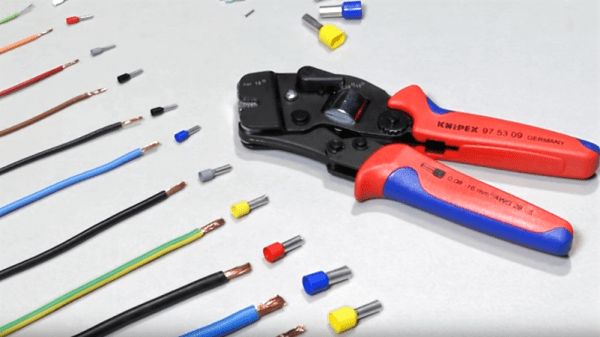
A number of us have similar 3D printers, so the comments for this article were understandably lively, but one comment stood out by listing a number of best practices for wiring, including the use of ferrules. In particular, many 3D printers connect the heated bed, which draws a lot of current, with screw terminals to the motherboard. While not the cause of the fire in the original post, melted terminal blocks are a common complaint with many DIY 3D printer kits, and one reason is that simply jamming thick stranded wire into a screw terminal and hoping for the best can result in increased resistance, and heat, at the joint. In such situations, the absolutely right thing to do is to crimp on a ferrule. So let’s talk about that.
Judging by the number of compilations that have been put online, one of the not-so-secret vices of the YouTube generation must be the watching of crash videos. Whether it is British drivers chancing their luck on level crossings, Russians losing it at speed on packed snow, or Americans driving tall trucks under low bridges, these films exert a compelling fascination upon the viewing public intent on deriving entertainment from the misfortunes of others. The footage is often peripheral or grainy, having inevitably been captured by a dashcam or a security camera rather than centre-stage on a broadcast quality system with professional operation. You can’t predict when such things will happen.
There was one moment, back in 1984, when predicting a major crash was exactly what you could do. It was a national event, all over the TV screens, and one which was watched by millions. The operators of British nuclear power stations wished to stage a public demonstration of how robust their transport flasks for spent nuclear fuel rods were, so after all the lab tests they could throw at one they placed it on a railway test track and crashed a 100mph express train into it.
Water escaping during drop test.
This was as much a PR stunt as it was a scientific endeavour, and they lost no time in promoting it across all media. The film below the break was part of this effort, and takes us through the manufacture of the flask forged in one piece from huge billets of steel, before showing us the tests to which it was subjected. The toughest of these, a drop-test onto a corner of a fully laden flask, resulted in a small escape of the water contained within it. It was thus decided to conduct the ultimate test to ensure full public confidence in nuclear transport.
The Old Dalby test track is a section of a closed-to-passengers line in the English Midlands that was retained by British Railways as a proving ground for new locomotives. In the ultimate test of rail transport for nuclear waste, a flask was placed on its side across a piece of the track, and a train formed of a withdrawn 1960s locomotive and a short rake of 1950s carriages was accelerated without a driver over several miles to 100mph.
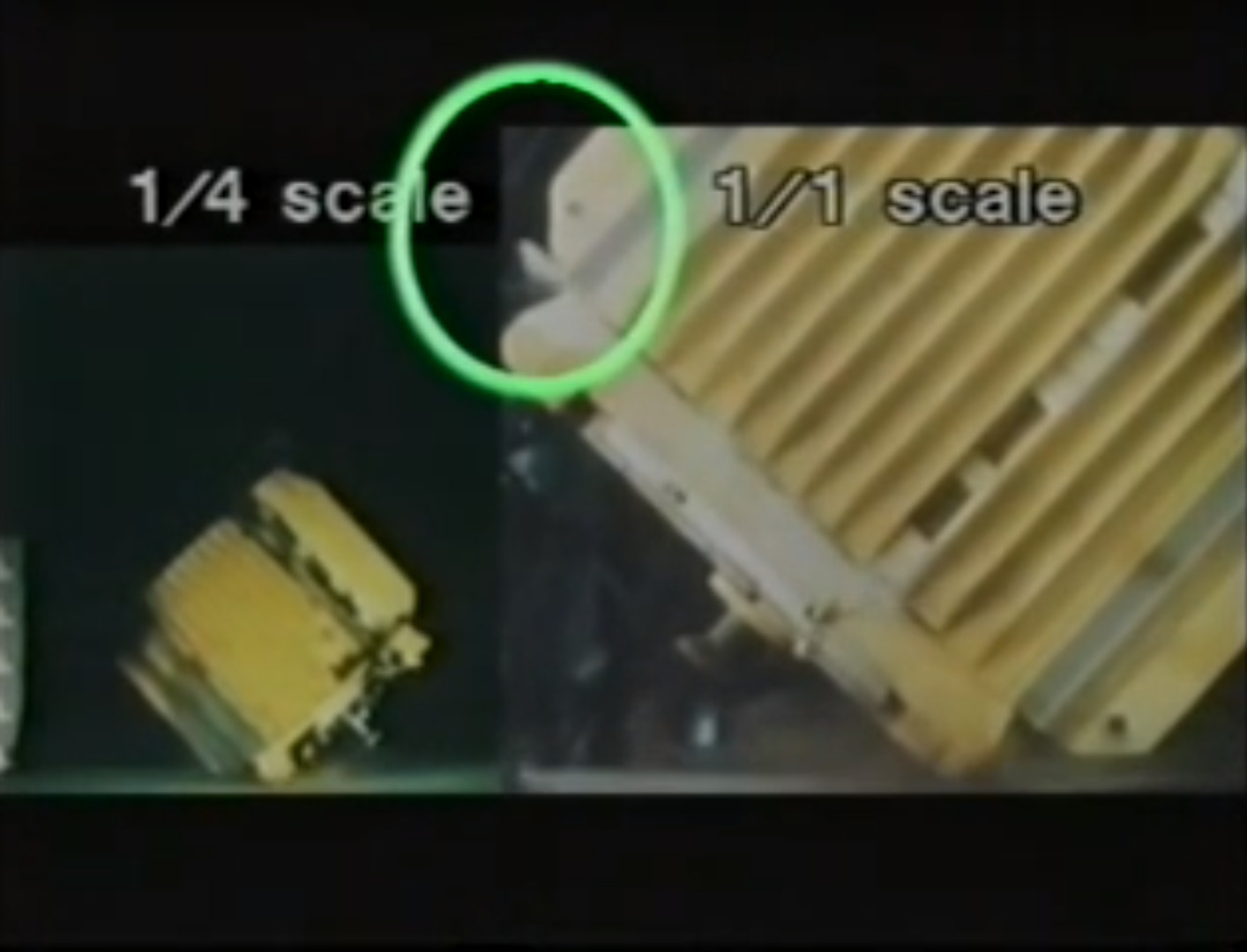
An instant before impact, we see the underside of the derailed car. The flask is between it and the locomotive.
[Nigel Harris] for Rail magazine wrote an almost funerial description of the destruction of locomotive 46009 25 years later in 2009, and as he reported the flask survived with only superficial damage and a tiny loss in pressure. The event was hailed as a success by the nuclear industry, before fading from the public consciousness as nuclear power station operators prefer to remain out of the news.
It is questionable how much the Old Dalby crash was for the cameras and the public, and how much it was for the scientists and engineers. But such destructive tests do serve as a means to gain vital test data that could not be harvested any other way, and have been performed more than once in the aviation industry. Later in the same year a Boeing 720 was crashed for science in the USA, while more recently in 2012 a Boeing 727 was crashed in Mexico.
Crashing an express train into a nuclear flask is something not likely to be seen again, it was a one-off event. But one thing’s for sure, our inability to turn away from watching a train wreck is nothing new. YouTube and ubiquitous cameras certainly make crashes available with a few keystrokes. But from the 1984 cask crash test, to the the spectacle of Crush, Texas back in 1896, the sheer power shown in these crashes seems to have a siren song effect on us.
The Internet of Things is just around the corner, and somehow or another, all these bits of intelligent dust and juice bag squeezers will have to talk to one another. One of the better ways to get IoT bits talking to each other is MQTT, Message Queuing Telemetry Transport, a protocol designed for small code footprints and limited network bandwidth. It gets a lot of IoT hype, but it’s a great alternative to HTTP for your own small projects, so that’s what we’re talking about during this week’s Hack Chat.
MQTT is a machine-to-machine connectivity protocol, very useful in remote locations, where a small code footprint is required, where bandwidth is at a premium, or for turning a lamp on and off from your phone, while sitting in the same room. It’s ideal for mobile applications, and in the twenty or so years since its creation, MQTT has made inroads into all those ‘smart’ devices around your house.
For this week’s Hack Chat, we’re going to be discussing MQTT with the entire Hackaday.io community. There are dozens of people who have built MQTT-based projects that frequent the Hack Chat, and hundreds more that want to learn. Want to get in on the ground floor of the Internet of Things? This is the Hack Chat you want to check out. It’s a community pow-wow around connected devices.
Our Hack Chats are live community events on the Hackaday.io Hack Chat group messaging. This week the crew is going to sit down around the campfire around noon, Pacific time, Friday, April 13th (oooh, spooky). Want to know what time this is happening in your neck of the woods? Have a countdown timer!
Click that speech bubble to the right, and you’ll be taken directly to the Hack Chat group on Hackaday.io.
You don’t have to wait until Friday; join whenever you want and you can see what the community is talking about.
If you were to create a short list of women who influenced software engineering, one of the first picks would be Margaret Hamilton. The Apollo 11 source code lists her title as “PROGRAMMING LEADER”. Today that title would probably be something along the line of “Lead software engineer”
Margaret Hamilton was born in rural Indiana in 1936. Her father was a philosopher and poet, who, along with grandfather, encouraged her love of math and sciences. She studied mathematics with a minor in philosophy, earning her BA from Earlham College in 1956. While at Earlham, her plan to continue on to grad school was delayed as she supported her husband working on his own degree from Harvard. Margaret took a job at MIT, working under Professor Edward Norton Lorenz on a computer program to predict the weather. Margaret cut her teeth on the desk-sized LGP-30 computer in Norton’s office.
Hamilton soon moved on to the SAGE program, writing software which would monitor radar data for incoming Russian bombers. Her work on SAGE put Margaret in the perfect position to jump to the new Apollo navigation software team.
The Apollo guidance computer software team was designed at MIT, with manufacturing done at Raytheon. To say this was a huge software project for the time would be an understatement. By 1968, over 350 engineers were working on software. 1400 man-years of software engineering were logged before Apollo 11 touched down on the lunar surface, and the project was lead by Margaret Hamilton. Continue reading “Margaret Hamilton Takes Software Engineering To The Moon And Beyond”→
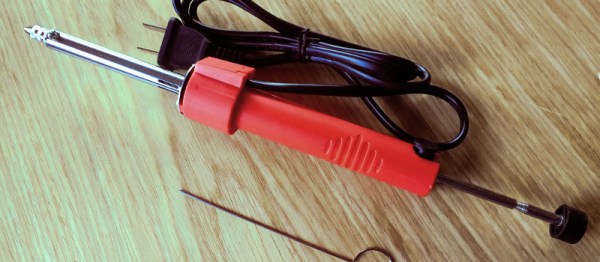
This unholy lovechild of a cheap solder sucker and an even cheaper soldering iron is the HBTool HB-019 desoldering iron. It came to me for the princely sum of five pounds ($7). So for somewhere between the cost of a pint of foaming ale and the pub’s pie and mash I’d eat alongside it, what had I got?
Regular Hackaday readers will be familiar with my penchant for ordering cheap tools and other electronic gizmos from the usual suppliers of Far Eastern tech, and subjecting them to review for your entertainment and edification. Sometimes the products are so laughably bad as to be next-to-worthless, other times they show enough promise to be of use, and just occasionally they turn out to be a genuine diamond in the rough, a real discovery. This is no precious stone, but it still makes for an entertaining review. Continue reading “Reviewing The HBTool HB-019 Desoldering Iron: It Probably Won’t Shock You”→
Your eyes pop open in the middle of the night, darting around the darkened bedroom as you wonder why you woke up. Had you heard something? Or was that a dream? The matter is settled with loud pounding on the front door. Heart racing as you see blue and red lights playing through the window, you open the door to see a grim-faced police officer standing there. “There’s been a hazardous materials accident on the highway,” he intones. “We need to completely evacuate this neighborhood. Gather what you need and be ready to leave in 15 minutes.”
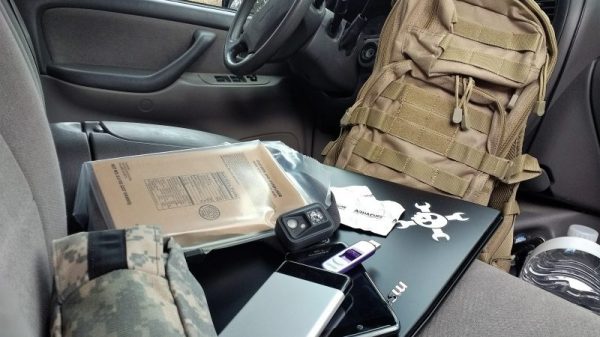
Most people will live their entire lives without a scenario like this playing out, but such things happen all the time. Whether the disaster du jour is man-made or natural, the potential to need to leave in a big hurry is very real, and it pays to equip yourself to survive such an ordeal. The primary tool for this is the so-called “bugout bag,” a small backpack for each family member that contains the essentials — clothing, food, medications — to survive for 72 hours away from home.
A bugout bag can turn a forced evacuation from a personal emergency into a minor inconvenience, as those at greatest risk well know — looking at you, Tornado Alley. But in our connected world, perhaps it pays to consider updating the bugout bag to include the essentials of our online lives, those cyber-needs that we’d be hard-pressed to live without for very long. What would a digital bugout bag look like?











 Hamilton soon moved on to the SAGE program, writing software which would monitor radar data for incoming Russian bombers. Her work on SAGE put Margaret in the perfect position to jump to the new Apollo navigation software team.