Game Boy Advance SP in ECG device

Game Boy Advance Hiding In A Medical Device

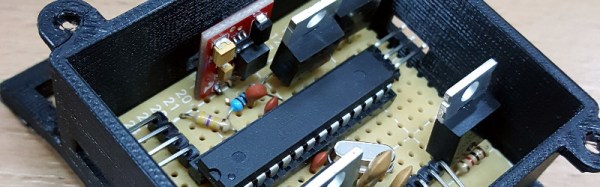
It turns out that medical manufacturers also do hacking once in a while. [Jana Marie Hemsing] recently tweeted a photo of an ECG-Trigger-Unit that she’d opened up. Inside she found that the LCD screen was that of a Game Boy Advance (GBA) and the reason she could tell was that the screen’s original case was still there, complete with GAME BOY ADVANCE SP written on it.

In the manufacturer’s defense, this device was likely made around the year 2000 when gaming products were some of the best sources for high speed, high quality, small LCDs displays.  This design document for a portable ECG measurement instrument from as recently as 2013 cites reasons for using a GBA as:

  • impressive plotting results,
  • no serious transmission delays, and
  • fine graphics processing capability.

The Verge had even turned up this US patent from 1997 that has the diagnostic medical device be a cartridge for plugging into a Game Boy. At the time, PCs were frequently used for medical displays but this patent cites issues such as the higher cost of PCs, software installation issues, and crashing. However, they talk about the crashing being due to running word processing and spreadsheet software on the same PC, something not likely to happen if the PC is dedicated to bedside monitoring.

But despite all those pros, wouldn’t you feel surprise and alarm when you first glimpse the Game Boy inside the device that’s monitoring your heart? We also have to wonder what licensing these products went through in the countries in which they were used. This particular device was made by German company Medical Imaging Electronics.

Game Boy hacks aren’t limited to the medical industry though. Here on Hackaday, we’ve seen them turned into remote controls for flying drones and we’ve seen Game Boy cartridge emulators that use STM32. Finally, if you’re wondering where you saw [Jana Marie]’s name before, she was one of the two hackers driving the motorized armchair in a photo in our [Jenny List]’s SHACamp 2017 write-up.

Our thanks to [geonomad] for the tip!

Synthesizing Daraprim To Beat Price Gougers

Drugs are used the world over to treat disease. However, from time to time, the vagaries of market economics, or unscrupulous action, can radically increase the price of otherwise cheap pharmaceuticals far beyond the reach of the average person. This was the case with Pyrimethamine (sold as Daraprim), which is used to treat toxoplasmosis and malaria, among other users. With the price skyrocketing from $13 to $750 a tablet in the US in 2015, [NurdRage] decided to synthesize the drug on their own. (If you missed the background hubbub, search for “Martin Shkreli”.)

The video linked covers the final synthesis, though [NurdRage] has previously covered the synthesis of the required precursor chemicals. Budding chemists may grow excited, but there are significant hurdles to attempting this synthesis yourself. Chemicals involved are carcinogenic, toxic, acidic, or otherwise dangerous, and a fume hood is a necessity if working inside. Outside of this, there are immense risks in homebrewing pharmaceuticals. Performing the synthesis of an important drug is one thing, but to do so at a medical-grade level where the products are safe for human consumption is on an entirely different level.

Overall, [NurdRage] has put out a series of videos that have strong educational value, showing us what really goes into the production of a common pharmaceutical compound. There’s also something to be said about taking the production of life-saving medicines into one’s own hands in the face of prohibitive treatment costs. In a similar vein, perhaps you’ve considered producing your own insulin in an emergency?

[Thanks to jwrm22 for the tip]

Magnet Implants, Your Cyborg Primer

What would you do to gain a sixth sense? Some of us would submit to a minor surgical procedure where a magnet is implanted under the skin. While this isn’t the first time magnet implants have been mentioned here on Hackaday, [The Thought Emporium] did a phenomenal job of gathering the scattered data from blogs, forum posts, and personal experimentation into a short video which can be seen after the break.

As [The Thought Emporium] explains in more eloquent detail, a magnet under the skin allows the implantee to gain a permanent sense of strong magnetic fields. Implantation in a fingertip is most common because nerve density is high and probing is possible. Ear implants are the next most useful because oscillating magnetic fields can be translated to sound.

For some, this is merely a parlor trick. Lifting paper clips and messing with a compass are great fun. Can magnet implants be more than whimsical baubles?

Continue reading “Magnet Implants, Your Cyborg Primer”

Hackaday Prize Entry: Remote Control By Head Gestures

Some people may think they’re having a bad day when they can’t find the TV remote. Yet there are some people who can’t even hold a remote, let alone root around in the couch cushions where the remote inevitably winds up. This entry in the Assistive Technologies phase of the 2017 Hackaday Prize seeks to help such folks, with a universal remote triggered by head gestures.

Mobility impairments can range from fine motor control issues to quadriplegia, and people who suffer from them are often cut off from technology by the inability to operate devices. [Cassio Batista] concentrated on controlling a TV for his project, but it’s easy to see how his method could interface with other IR remotes to achieve control over everything from alarm systems to windows and drapes. His open-source project uses a web cam to watch a user’s head gestures, and OpenCV running on a CHIP SBC looks for motion in the pitch, yaw, and roll axes to control volume, channel, and power. An Arduino takes care the IR commands to the TV. The prototype works well in the video below; with the power of OpenCV we can imagine mouth gestures and even eye blinks adding to the controller’s repertoire.

The Assistive Tech phase wraps up tomorrow, so be sure to get your entries in. You’ll have some stiff competition, like this robotic exoskeleton. But don’t let that discourage you.

Continue reading “Hackaday Prize Entry: Remote Control By Head Gestures”

Hackaday Prize Entry: Fighting Dehydration One Sip At A Time

Humans don’t survive long without water, and most people walk around in a chronic state of mild dehydration even if they have access to plenty of drinking water. It’s hard to stay properly hydrated, and harder still to keep track of your intake, which is the idea behind this water-intake monitoring IoT drinking straw.

Dehydration is a particularly acute problem in the elderly, since the sense of thirst tends to diminish with age. [jflaschberger]’s Hackaday Prize entry seeks to automate the tedious and error-prone job of recording fluid intake, something that caregivers generally have to take care of by eyeballing that half-empty glass and guessing. The HydrObserve uses a tiny turbine flowmeter that can mount to a drinking straw or water bottle cap. A Hall sensor in the turbine sends flow data to a Cypress BLE SoC module, which totalizes the volume sipped and records a patient identifier. A caregiver can then scan the data from the HydrObserve at the end of the day for charting and to find out if anyone is behind on their fluids.

There are problems to solve, not least being the turbine, which doesn’t appear to be food safe. But that’s a small matter that shouldn’t stand in the way of an idea as good as this one. We’ve seen a lot of good entries in the Assistive Technology phase of the 2017 Hackaday Prize, like a walker that works on stairs or sonic glasses for the blind. There are only a couple of days left in this phase — got any bright ideas?

Detecting Dire Diseases – With A Selfie?

They say the eyes are the windows to the soul. But with a new smartphone app, the eyes may be a diagnostic window into the body that might be used to prevent a horrible disease — pancreatic cancer. A research team at the University of Washington led by [Alex Mariakakis] recently described what they call “BiliScreen,” a smartphone app to detect pancreatic disease by imaging a patient’s eyes.

Pancreatic cancer is particularly deadly because it remains asymptomatic until it’s too late. One early symptom is jaundice, a yellow-green discoloration of the skin and the whites of the eyes as the blood pigment bilirubin accumulates in the body. By the time enough bilirubin accumulates to be visible to the naked eye, things have generally progressed to the inoperable stage. BiliScreen captures images of the eyes and uses image analysis techniques to detect jaundice long before anyone would notice. To control lighting conditions, a 3D-printed mask similar to Google’s Cardboard can be used; there’s also a pair of glasses that look like something from [Sir Elton John]’s collection that can be used to correct for ambient lighting. Results look promising so far, with BiliScreen correctly identifying elevated bilirubin levels 90% of the time, as compared to later blood tests. Their research paper has all the details (PDF link).

Tools like BiliScreen could really make a difference in the early diagnosis and prevention of diseases. For an even less intrusive way to intervene in disease processes early, we might also be able to use WiFi to passively detect Parkinson’s.

Continue reading “Detecting Dire Diseases – With A Selfie?”

Hackaday Prize Entry: CPAP Humidifier Monitor Alarm

CPAP (Continuous Positive Airway Pressure) machines can be life-changing for people with sleep apnea. [Scott Clandinin] benefits from his CPAP machine and devised a way to improve his quality of life even further with a non-destructive modification to monitor his machine’s humidifier.

With a CPAP machine, all air the wearer breathes is air that has gone through the machine. [Scott]’s CPAP machine has a small water reservoir which is heated to humidify the air before it goes to the wearer. However, depending on conditions the water reservoir may run dry during use, leading to the user waking up dried out and uncomfortable.

To solve this in a non-invasive way that required no modifications to the machine itself, [Scott] created a two-part device. The first part is a platform upon which the CPAP machine rests. A load cell interfaced to an HX711 Load Cell Amplifier allows an Arduino Nano to measure the mass of the CPAP machine plus the integrated water reservoir. By taking regular measurements, the Arduino can detect when the reservoir is about to run dry and sound an alarm. Getting one’s sleep interrupted by an alarm isn’t a pleasant way to wake up, but it’s much more pleasant than waking up dried out and uncomfortable from breathing hot, dry air for a while.

The second part of the device is a simple button interfaced to a hanger for the mask itself. While the mask is hung up, the system is idle. When the mask is removed from the hook, the system takes measurements and goes to work. This makes activation hassle-free, not to mention also avoids spurious alarms while the user removes and fills the water reservoir.

Non-invasive modifications to medical or other health-related devices is common, and a perfect example of nondestructive interfacing is the Eyedriveomatic which won the 2015 Hackaday Prize. Also, the HX711 Load Cell Amplifier has an Arduino library that was used in this bathroom scale refurb project.