
When you create logic circuits using ICs or FPGAs, you can’t easily visualize their operation without special tools. But if you’ve ever seen a mechanical computer (like the Computer History Museum’s Babbage engine) operate, you know you don’t have that problem. Just like it is fascinating to watch a 3D printer or CNC machine, watching mechanical logic gates work can be addictive.
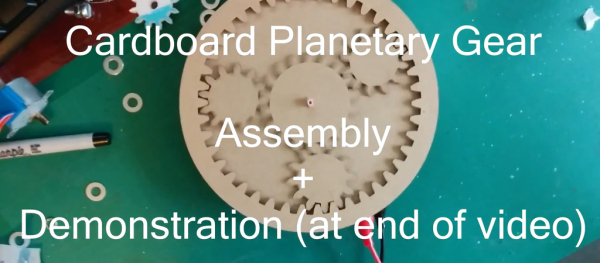
[Anthony] wanted to build some mechanical logic gates and set out designing them using Inkscape. Unlike some common mechanical gate schemes, [Anthony’s] gates use gears to implement the logic operations. He sent the designs off to a laser cutter service and got back parts cut from 3mm acrylic.

 Wanting to send a message to at least a few people in China, the members of the hackerspace had to think laterally. Metalab member [amir] came up with a way to encode data that could be printed on t-shirts. These bright, colorful squares featured in all of the interviews with Metalab members carried messages like, “free tibet!”, “remember tian’anmen 1989” and “question the government. dont trust the propaganda”