Engineering For The Long Haul, The NASA Way

The popular press was recently abuzz with sad news from the planet Mars: Opportunity, the little rover that could, could do no more. It took an astonishing 15 years for it to give up the ghost, and it took a planet-wide dust storm that blotted out the sun and plunged the rover into apocalyptically dark and cold conditions to finally kill the machine. It lived 37 times longer than its 90-sol design life, producing mountains of data that will take another 15 years or more to fully digest.

Entire careers were unexpectedly built around Opportunity – officially but bloodlessly dubbed “Mars Exploration Rover-B”, or MER-B – as it stubbornly extended its mission and overcame obstacles both figurative and literal. But “Oppy” is far from the only long-duration success that NASA can boast about. Now that Opportunity has sent its last data, it seems only fitting to celebrate the achievement with a look at exactly how machines and missions can survive and thrive so long in the harshest possible conditions.

Continue reading “Engineering For The Long Haul, The NASA Way”

Car Alarm Hacks 3 Million Vehicles

Pen testing isn’t about evaluating inks. It is short for penetration testing — someone ensuring a system’s security by trying to break in or otherwise attack it. A company called Pen Test Partners made the news last week by announcing that high-end car alarm systems made by several vendors have a critical security flaw that could make the vehicles less secure. They claim about three million vehicles are affected.

The video below shows how alarms from Viper/Clifford and Pandora have a simple way to hijack the application. Once they have access, they can find the car in real time, control the door locks, and start or stop the car engine. They speculate a hacker could set off the alarm from a nearby chase car. You’d probably pull over if your alarm started going off. They can then lock you in your car, approach, and then force you out of the car.

Continue reading “Car Alarm Hacks 3 Million Vehicles”

Tech Imitates Life: Fireflies Make Better Light Bulbs

While we often think we are clever designers, living things often meet or beat the best human designs. It is easy to forget that nature even has living lightbulbs, among them the firefly. Researchers from Penn State decided to compare how fireflies create light and found that they deal with a problem similar to LEDs. The insight may lead to an increase in efficiency for LEDs, which is currently about 50%.

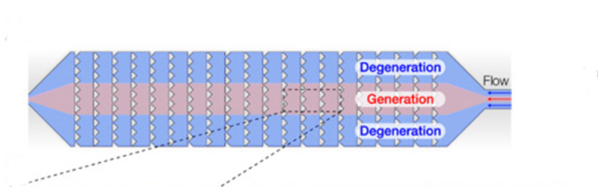
The problem is that some light generated never gets out of the LED (or the firefly’s body). Some light inevitably reflects back into the device. One known mitigation for this is creating a tiny texture pattern on the LED surface which allows more light to escape. These are typically a V-shaped structure etched into the surface. This isn’t news to the firefly, however, which has similar structures on their lanterns as do some other light-generating animals (apparently glowing cockroaches are a thing). However, the organic structures differ from LED textures in an important way.

Continue reading “Tech Imitates Life: Fireflies Make Better Light Bulbs”

Google Launches AI Platform That Looks Remarkably Like A Raspberry Pi

Google has promised us new hardware products for machine learning at the edge, and now it’s finally out. The thing you’re going to take away from this is that Google built a Raspberry Pi with machine learning. This is Google’s Coral, with an Edge TPU platform, a custom-made ASIC that is designed to run machine learning algorithms ‘at the edge’. Here is the link to the board that looks like a Raspberry Pi.

This new hardware was launched ahead of the TensorFlow Dev Summit, revolving around machine learning and ‘AI’ in embedded applications, specifically power- and computationally-limited environments. This is ‘the edge’ in marketing speak, and already we’ve seen a few products designed from the ground up to run ML algorithms and inference in embedded applications. There are RISC-V microcontrollers with machine learning accelerators available now, and Nvidia has been working on this for years. Now Google is throwing their hat into the ring with a custom-designed ASIC that accelerates TensorFlow. It just so happens that the board looks like a Raspberry Pi.

Continue reading “Google Launches AI Platform That Looks Remarkably Like A Raspberry Pi”

Does Tesla’s Autosteer Make Cars Less Safe?

In 2016, a Tesla Model S T-boned a tractor trailer at full speed, killing its lone passenger instantly. It was running in Autosteer mode at the time, and neither the driver nor the car’s automatic braking system reacted before the crash. The US National Highway Traffic Safety Administration (NHTSA) investigated the incident, requested data from Tesla related to Autosteer safety, and eventually concluded that there wasn’t a safety-related defect in the vehicle’s design (PDF report).

But the NHTSA report went a step further. Based on the data that Tesla provided them, they noted that since the addition of Autosteer to Tesla’s confusingly named “Autopilot” suite of functions, the rate of crashes severe enough to deploy airbags declined by 40%. That’s a fantastic result.

Because it was so spectacular, a private company with a history of investigating automotive safety wanted to have a look at the data. The NHTSA refused because Tesla claimed that the data was a trade secret, so Quality Control Systems (QCS) filed a Freedom of Information Act lawsuit to get the data on which the report was based. Nearly two years later, QCS eventually won.

Looking into the data, QCS concluded that crashes may have actually increased by as much as 60% on the addition of Autosteer, or maybe not at all. Anyway, the data provided the NHTSA was not sufficient, and had bizarre omissions, and the NHTSA has since retracted their safety claim. How did this NHTSA one-eighty happen? Can we learn anything from the report? And how does this all align with Tesla’s claim of better-than-average safety line up? We’ll dig into the numbers below.

But if nothing else, Tesla’s dramatic reversal of fortune should highlight the need for transparency in the safety numbers of self-driving and other advanced car technologies, something we’ve been calling for for years now.

Continue reading “Does Tesla’s Autosteer Make Cars Less Safe?”

Hack My House: Raspberry Pi As A Touchscreen Thermostat

Your thermostat is some of the oldest and simplest automation in your home. For years these were one-temperature setting and nothing more. Programmable thermostats brought more control; they’re alarm clocks attached to your furnace. Then Nest came along and added beautiful design and “learning features” that felt like magic compared to the old systems. But we can have a lot more fun. I’m taking my favorite single-board computer, the Raspberry Pi, and naming it keeper of heat (and cool) by building my own touchscreen thermostat.

Mercury thermostats started it all, and were ingenious in their simplicity — a glass capsule containing mercury, attached to a wound bi-metal strip. As the temperature changes, the contraption tilts and the mercury bead moves, making or breaking contact with the wiring. More sophisticated thermostats have replaced the mercury bead with electronics, but the signaling method remains the same, just a simple contact switch.

This makes the thermostat the prime target for an aspiring home automation hacker. I’ve had this particular project in mind for quite some time, and was excited to dive into it with simple raw materials: my Raspberry Pi, a touchscreen, and a mechanical relay board.

Continue reading “Hack My House: Raspberry Pi As A Touchscreen Thermostat”

The FAA Mandates External Registration Markings For Drones

Drone fliers in the USA must soon display their registration markings on the exterior of their craft, rather than as was previously acceptable, in accessible interior compartments. This important but relatively minor regulation change has been announced by the FAA in response to concerns that malicious operators could booby-trap a craft to catch investigators as they opened it in search of a registration. The new ruling is effective from February 25th, though they are inviting public comment on it.

As airspace regulators and fliers across the world traverse the tricky process of establishing a safe and effective framework for multirotors and similar craft we’ve seen a variety of approaches to their regulation, and while sometimes they haven’t made complete sense and have even been struck down in the courts, the FAA’s reaction has been more carefully considered than that in some other jurisdictions. Rule changes such as this one will always have their detractors, but as an extension of a pre-existing set of regulations it is not an unreasonable one.

It seems inevitable that regulation of multirotor flight will be a continuing process, but solace can be taken at the lower end of the range. A common theme across the world seems to be a weight limit of 250 g for otherwise unrestricted and unregistered craft, and the prospects for development in this weight category in response to regulation are exciting. If a smaller craft can do everything our 2 kg machines used to do but without the burden of regulation, we’ll take that.