FCC Gets Complaint: Proposed Ham Radio Rules Hurt National Security

On November 10th, [Theodore Rappaport] sent the FCC an ex parte filing regarding a proposed rule change that would remove the limit on baud rate of high frequency (HF) digital transmissions. According to [Rappaport] there are already encoded messages that can’t be read on the ham radio airwaves and this would make the problem worse.

[Rappaport] is a professor at NYU and the founding director of NYU Wireless. His concern seems to relate mostly to SCS who have some proprietary schemes for compressing PACTOR as part of Winlink — used in some cases to send e-mail from onboard ships.

Continue reading “FCC Gets Complaint: Proposed Ham Radio Rules Hurt National Security”

Five Year Old Bug Spawns Router Botnet Monster

In the news has been yet another router botnet. [Hui Wang] and [RootKiter] of 360Netlab announced their discovery of what they call the “BCMUPnP_Hunter” rootkit. They estimate this botnet to be running on over 100,000 routers worldwide.

There are two elements of this story that I found particularly baffling. First, this botnet infects routers using a vulnerability that was first reported by Defensecode over five years ago, in 2013! The second oddity is the wide range of devices that are vulnerable and are now part of the botnet. Dozens of brands and at least 116 models have been found to be infected.

One of the details of this story hasn’t been reported entirely accurately. The bug is not built into the Broadcom chipset. Unlike Spectre and Meltdown, it’s not actually a hardware fault. Broadcom distributes a Software Development Kit (SDK) that enables device manufacturers like D-Link, TP-Link, and Linksys to quickly develop firmware for routers using Broadcom chips. The vulnerability lies in this code, rather than part of the hardware itself.

Continue reading “Five Year Old Bug Spawns Router Botnet Monster”

Kind Of The Opposite Of A Lightsaber

Lightsabers are an elegant weapon for a more civilized age. Did you ever consider that cutting people’s hands off with a laser sword means automatically cauterized wounds and that lack of blood results in a gentler rating from the Motion Picture Association? Movie guidelines aside, a cauterizing pen is found in some first aid kits, but at their core, they are a power source and a heating filament. Given the state of medical technology, this is due for an upgrade, and folks at Arizona State University are hitting all the marks with a combination of near-infrared lasers, gold particles, and protein matrix from silk.

Cauterizing relies on intense heat, or chemicals, to burn flesh but this process uses less power by aiming the near-IR laser at only the selected areas, and since near-IR can penetrate soft-tissue it goes deep without extra heating. The laser heats the gold, and that activates the silk proteins. Early results are positive but lots of testing remains and it still will not belong in the average first aid kit for a while, lasers and all, but surgery for beloved pets and tolerable humans could have recovery time reduced with this advance.

If this doesn’t sate your need for magical space knight weaponry, we have options aplenty.

Via IEEE Spectrum. Image: starwars.com

Linux As A Library: Unikernels Are Coming

If you think about it, an operating system kernel is really just a very powerful shared library that offers services to many programs. Of course, it is a very powerful library, but still — its main purpose is to provide services to programs. Your program probably doesn’t use all of the myriad services the kernel provides. Even a typical system might not fully use all the things that are in a typical kernel. Red Hat has a new initiative to bring a technology called unikernels to the forefront. A unikernel is a single application linked with just enough of the kernel for it to execute. As you might expect, this can result in a smaller system and better security.

It can also lead to better performance. The unikernel doesn’t have to maintain devices and services that are not used. Also, the kernel and the application can run in the same privilege ring. That may seem like a security hole, but if you think about it, the only reason a regular kernel runs at a higher privilege is to protect itself from a malicious application modifying the kernel to do something bad to another application. In this case, there is no other application.

Continue reading “Linux As A Library: Unikernels Are Coming”

Restoring An Apollo Guidance Computer

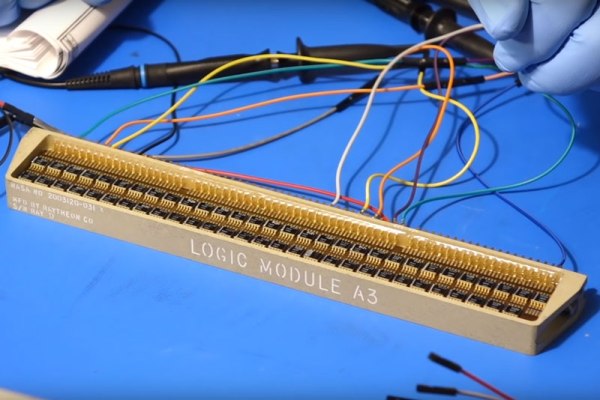
The Apollo Guidance Computer is a remarkably important piece of computing history. It’s the computer that guided the Apollo lander to land on the moon. We’ve seen a few replica builds over the years, but [CuriousMarc] got a closer look at one of the real things. In this video, [Marc] gets a look inside as his colleagues take apart one of the original AGCs and get a closer look at the insides of this piece of computer history.  Continue reading “Restoring An Apollo Guidance Computer”

Smell Tech over Internet Wide

Researchers Seek To Create The Digital Smell Interface

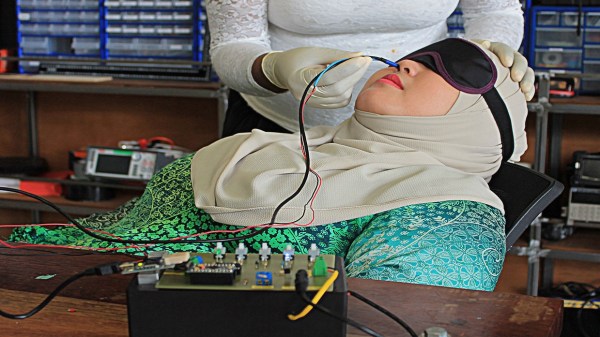
We hear digital audio, we see digital video, and we feel digital haptic feedback. However, we don’t have an analog for the sense of smell. [Kasun] and his team of researchers from the Imagineering Institute in Malaysia are in the midst of changing that reality. Their project aims to transmit fragrances via electronic stimulation. Though it’s really more of a step toward creating a multi-sensory internet.

The team’s “electric smell machine” consists of a variable power supply connected to silver electrodes wrapped around an endoscopic camera. The camera is necessary to ensure contact with the user’s olfactory bulb as electric current pulses through the electrodes. The current values vary based upon the scent being replicated and are in the 0.2mA neighborhood. Early trials of the machine have revealed that around one-quarter of test subjects are able to identify the smells being replicated. They reported smells being fruity, sweet, and woody though all had a chemical-like odor attached.

The concept of “smell-o-vision” is not a new one, as it has been around longer than motion pictures with sound. Previous attempts at accompanying film and television with scent have been a result of chemical reactions. Devices from these types of experiments typically involved cartridges that would need to be replaced when the chemical substances were depleted. [Kasun]’s team approach is to avoid the chemical approach in favor of directly stimulating the olfactory receptors. Those interested in the gritty details can read the research paper on digitizing smell.

[Kasun] and his team uploaded a video on the project that you can view below. It’s all a work in progress at this point, but sign me up for a trial when they pinpoint the true essence of new car smell.

Continue reading “Researchers Seek To Create The Digital Smell Interface”

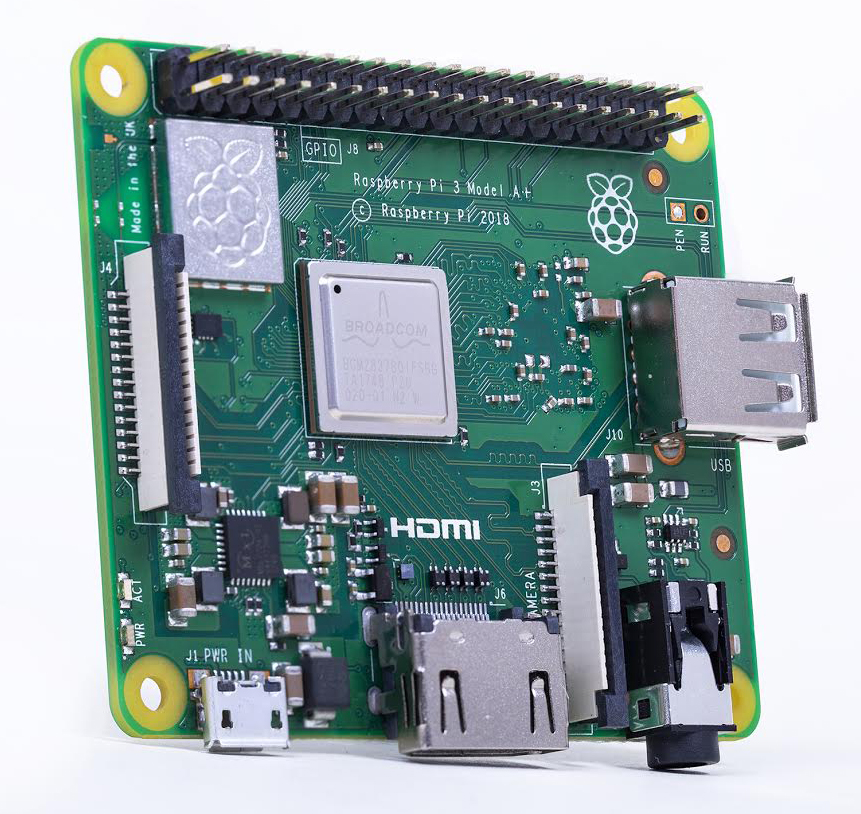
The Smaller, More Powerful Raspberry Pi 3 Model A+

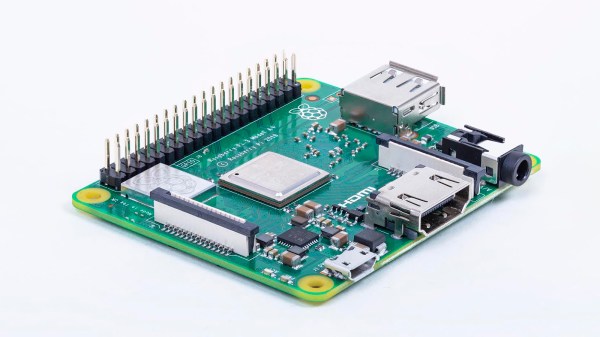
It’s that time of year again, and the Raspberry Pi Foundation has some new hardware for you. This time, it’s an improved version of the Raspberry Pi Model A, bringing it the speed and power of its bigger brother, the Raspberry Pi Model 3 B+.
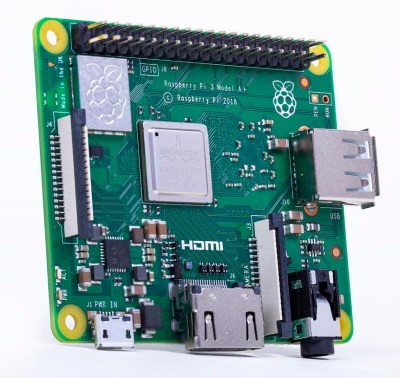
The Raspberry Pi Model A is the weird middle child of the Raspberry Pi lineup, or maybe it’s the Goldilocks choice. It’s not as powerful and doesn’t have the USB ports or Ethernet jack found in the latest revision of the family, the Raspberry Pi Model 3 B+, and it’s not as small or as cheap as the Raspberry Pi Zero W. If you’re running a Pi as just something that takes in power and spits out data on the GPIO pins, the Model A might be all you need.

The full specs include:

  • Broadcom BCM2837B0 Cortex A-53 running at 1.4GHz
  • 512 MB of LPDDR2 SRAM
  • 2.4 GHz and 5 GHz 802.11 b/g/n/ac wireless LAN, Bluetooth 4.2/BLE
  • Full size HDMI
  • MIPI DSI display port / CSI camera port
  • Stereo Output and composite video port

In short, we’re looking at a cut-down version of the Raspberry Pi Model 3 B+ released earlier this year, without an Ethernet port and only one USB port. The wireless chipset is hidden under a lovely embossed can, and until we get our hands on this new model and a pair of pliers, we’re assuming this is a CYW43455, the Cypress chipset found in the Pi 3 B+.

The price of the Raspberry Pi 3 Model A+ will be $25 USD, with availability soon at the usual retailers. Since there’s no such thing as a Pi Zero 3 yet, if you’re looking for a powerful Linux computer, with wireless, in a small form factor, you’re not going to do much better than this little guy. You could of course desolder a Pi 3 B+, but for now this is the smallest, most powerful single board computer with good software support.