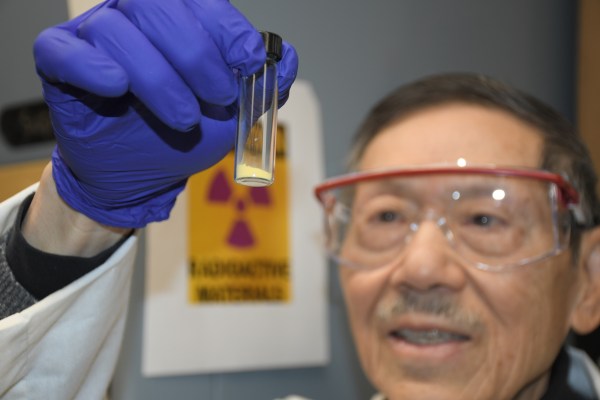
Helium Recovery System Saves Costs

Helium is the most common element in the universe besides hydrogen, but despite this universal abundance it is surprisingly difficult to come across on Earth. Part of the problem is that it is non-renewable, so unless it is specifically captured during mining its low density means that it simply escapes the atmosphere. For that reason [Meow] maintains a helium recovery system for a lab which is detailed in this build.

The purpose of the system is to supply a refrigerant to other projects in the lab. Liquid helium is around 4 Kelvin and is useful across a wide variety of lab tests, but it is extremely expensive to come across. [Meow]’s recovery system is given gaseous helium recovered from these tests, and the equipment turns it back into extremely cold liquid helium in a closed-cycle process. The post outlines the system as a whole plus goes over some troubleshooting that they recently had to do, and shows off a lot of the specialized tools needed as well.

Low-weight gasses like these can be particularly difficult to deal with as well because their small atomic size means they can escape fittings, plumbing, and equipment quite easily compared to other gasses. As a result, this equipment is very specialized and worth a look. For a less lab-based helium project, though, head on over to this helium-filled guitar instead.

Glass: Classic, But Mysterious

For a large part of human history, people made things from what they could find. Some stones make arrowheads. Others make sparks. Trees can turn into lumber. But the real power is when you can take those same materials and make them into something with very different properties. For example, plant fibers turning into cloth, or rocks giving up the metals inside. One of the oldest engineered materials is glass. You’d think as old as glass is (dating back at least 4,500 years), we’d understand all there is to know about it by now. According to an interesting post by [Jon Cartwright] writing in Physics World, we don’t. Not by a long shot.

According to [Jon] there are at least five “glassy mysteries” that we still don’t understand. Sure, it is easy to just melt sand, soda, and lime — something we’ve talked about before — but, in fact, many materials can turn glassy when cooled quickly from liquid to solid. The problem is, we don’t really understand why that happens. Continue reading “Glass: Classic, But Mysterious”

How To Make A Difference Through Plant Metabolism

Generally when we consider the many plants around us, we imagine them efficiently using the electromagnetic radiation from the Sun via photosynthesis in their leaves — pulling carbon-dioxide from the air, as well as water from the soil via their roots, and grow as quickly as they reasonably can. In reality, the efficiency of this process is less than 10% of the input energy, and the different types of plant metabolisms that have formed over the course of evolution aren’t all the same.

Among the plant metabolisms in use today, some use significantly more efficient carbon fixation pathways, while others end up wasting a lot of the energy they obtained from photosynthesis with unnecessarily complicated processes, especially to deal with waste. How fast plants can grow if they had all evolved the most efficient carbon fixation pathway has been the subject of a number of studies these past decades, involving everything from crop plants to trees.

As these studies are showing us, more than a scientific and evolutionary biological curiosity, these genetically engineered plants offer real opportunities in everything from food production to reforestation.

Continue reading “How To Make A Difference Through Plant Metabolism”

Laser Propulsion Could Satisfy Our Spacecraft’s Need For Speed

There are many wonderful places we’d like to visit in the universe, and probably untold numbers more that we haven’t even seen or heard of yet. Unfortunately…they’re all so darn far away. A best-case-scenario trip to Mars takes around six months with present technology, meanwhile, if you want to visit Alpha Centauri it’s a whole four lightyears away!

When it comes to crossing these great distances, conventional chemical rocket technology simply doesn’t cut the mustard. As it turns out though, lasers could hold the key to cutting down travel times in space!

Continue reading “Laser Propulsion Could Satisfy Our Spacecraft’s Need For Speed”

This $4 Desalination Device Provides Drinking Water For The Whole Family

Researchers at MIT and in China have improved the old-fashioned solar still with a new inexpensive device that harnesses the sun to remove salt from water. Traditionally, these kinds of systems use a wick to draw water, but once the wick becomes fouled with salt, the device needs cleaning or other maintenance. Not exactly what you want in a survival situation. You can read the paper in Nature if you want more details.

The key to this new technique is black paint and polyurethane with 2.5-millimeter holes drilled in it. The idea is that warmer water above the insulating medium causes the salt to concentrate in the cooler water beneath the insulator allowing efficient vaporization of the water.  As the water evaporates, it causes the salt concentration at the top to rise, which then sinks due to the higher density and lower-concentration salt water rises to the top to evaporate.

Because the materials are commonplace, the team says a one-meter-square system costs about $4 to produce. A system that size could provide a family’s daily drinking water.

So far, the prototype system has worked in the lab for at least a week without accumulating salt. The next challenge is to scale it to something more practical, but due to the low cost and simplicity of the system, it seems it would be easy enough to make that happen or to reproduce the device for your own testing.

Desalination is a problem you can approach from many different angles. You can also harvest clean water from fog, something else that started at MIT.

3D Printing With Sound, Directly

Canadian researchers at Concordia University want to change how you do 3D printing. Instead of using light or thermal mechanisms, they propose using ultrasound-activated sonochemical reactions. Sounds wild? You can see a video about it below, or read the paper in Nature.

The idea is that sound causes bubbles of cavitation. This requires a focused ultrasonic beam which means you can actually print through items that are transparent to ultrasonic energy. Wherever the cavitation bubbles form, liquid polymer turns solid.

Continue reading “3D Printing With Sound, Directly”

Rogue Waves Are Mysterious And Big

Stand by the shore and watch the waves roll in, and you’ll notice that most come in at roughly the same size. There’s a little variation, but the overwhelming majority don’t stand out from the crowd. On all but the stormiest of days, they have an almost soothing regularity about them.

Every so often though, out on the high seas, a rogue wave comes along. These abnormally large waves can strike with surprise, and are dangerous to even the largest of ships. Research is ongoing as to what creates these waves, and how they might be identified and tracked ahead of time.

Continue reading “Rogue Waves Are Mysterious And Big”