Genetically Modified Mosquitos: Biohacking For Disease Prevention

Many years ago, I took a summer trip to the Maryland shore with some friends. One of my buddies and I got bored with playing football on the beach, so we decided to take a hike on one of the many trails back into the wooded area behind the dunes. At the trailhead we noticed a prominent sign, warning about the presence of “very aggressive mosquitos” and not to enter without first applying ample insect repellent. We scoffed at the warning as only young idiots could and soldiered on, bare-legged and confident that we’d be fine.

About three minutes into our hike, a small group came pelting down the trail in a panic. “It’s true! Turn back!” they shouted as they flew past us. Undeterred, or at least unwilling to appear that way to each other, we pressed on, only to discover a few minutes later that we were making a substantial blood sacrifice to the next generation of mosquitos on Assateague Island. We couldn’t bear more than a few seconds before turning tail and running back to the beach and jumping into the ocean to get rid of the last few dozen bloodsuckers.

I learned a valuable lesson from that experience, as well as developing a deep and abiding hatred of mosquitos. It turns out I’m in good company — pretty much everyone hates mosquitos, which are not just a nuisance but can be downright dangerous to be around. But if tests with genetically engineered mosquitos currently underway in Florida turn out well, we may be able to finally turn the tide against mosquito-borne diseases, simply by killing all the females before they ever reach adulthood.

Continue reading “Genetically Modified Mosquitos: Biohacking For Disease Prevention”
Mice Develop Inside An Artificial Womb

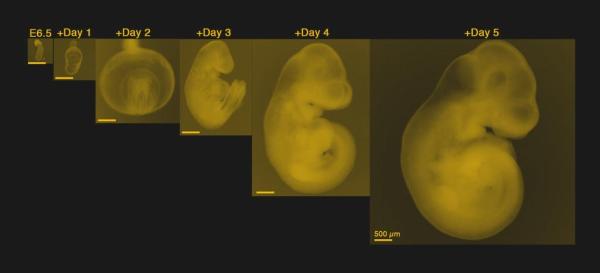
Well, it looks like those fetus fields from The Matrix (1999) just became a little bit more plausible. Although people-growing is probably a long way off, mice can now mostly develop inside an artificial uterus (try private window if you hit a paywall) thanks to a breakthrough in developmental biology. So far, the mice can only be kept alive halfway through gestation. There’s a point at which the nutrient formula provided to them isn’t enough, and they need a blood supply to continue growing. That’s the next goal. For now, let’s talk about that mechanical womb setup.

Carousel of Care

The mechanical womb was developed to better understand how various factors such as gene mutations, nutrients, and environmental conditions affect murine fetuses in development. Why do miscarriages occur, and why do fertilized eggs fail to implant in the first place? How exactly does an egg explode into 40 trillion cells when things do work out? This see-through uterus ought to reveal a few more of nature’s gestational secrets.

Continue reading “Mice Develop Inside An Artificial Womb”

Measuring An Atom

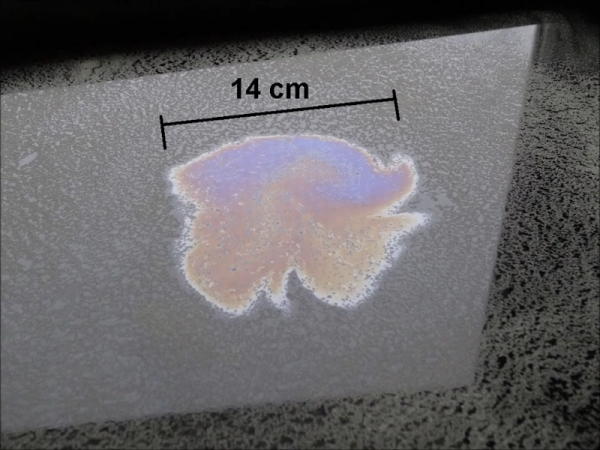
Do you need a well-equipped lab to measure the size of an atom (German, machine translation)? According to [stoppi], no. You need sunflower oil, some bear moss spores, and a bit of gasoline. You’ll also need some common things like a syringe, a baking sheet, and a jar. You can see the whole process in the video below. The measurement isn’t really for a specific atom, but it is an average for a lipid molecule, which is still impressive.

You essentially measure the diameter of an oil drop spread over water. Since the oil is mostly oleic acid, the height of the layer is known as 167 atoms. After that, it is some simple measurements and math to get the height and find the average atom height.

Continue reading “Measuring An Atom”

Supersized Van De Graaff Generator Packs A Punch

The Van de Graaff generator is a staple of science museums, to the point that even if the average person might not know its name, there’s an excellent chance they’ll be familiar with the “metal ball that makes your hair stand up” description. That’s partly because they’re a fairly safe way to show off high voltages, but also because they’re surprisingly cheap and easy to build.

In his latest Plasma Channel video [Jay Bowles] builds a large Van de Graaff generator that wouldn’t look out of place in a museum or university, which he estimates is producing up to 500,000 volts. It can easily throw impressive looking (and sounding) sparks 10 inches or more, and as you can see in the video below, is more than capable of pulling off those classic science museum tricks.

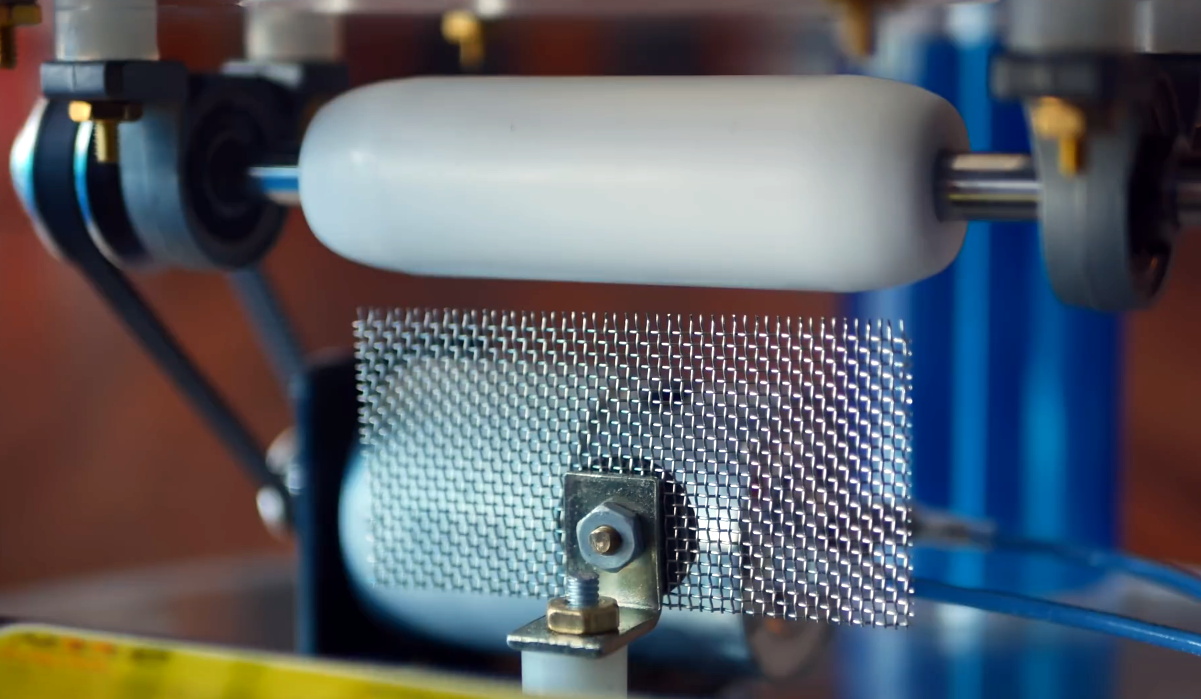
Lower pulley assembly.

It’s really quite amazing to see just how little it takes to generate these kinds of voltages with a Van de Graaff. In fact there’s nothing inside that you’d immediately equate with high voltage, the only electronic component in the generator’s base beyond the battery pack is a motor speed controller. While everything else might look suspiciously like magic, our own [Steven Dufresne] wrote up a properly scientific explanation of how it all works.

In this particular case, the motor spins a nylon pulley in the base of the generator, which is connected to a Teflon pulley in the top by way of a neoprene rubber belt. Combs made from fine metal mesh placed close to the belt at the top and bottom allow the Van de Graaff to build up a static charge in the sphere. Incidentally, it sounds like sourcing the large metal sphere was the most difficult part of this whole build, as it took [Jay] several hours to modify the garden gazing ball to fit atop the acrylic tube that serves as the machine’s core.

In the past we’ve seen Van de Graaff generators built out of literal trash, and back in 2018, [Jay] himself put together a much smaller and more simplistic take on the concept. But this beauty certainly raises the bar beyond anything we’ve seen previously.

Continue reading “Supersized Van De Graaff Generator Packs A Punch”

Blocking Out The Sun: Viable Climate Countermeasure Or Absolute Madness?

If there’s one thing humans hate, it’s exercising willpower. Whether its abstaining from unhealthy foods, going to bed early, or using less energy and reducing greenhouse gas emissions, we’re famously bad at it. Conversely, if there’s one thing humans love, it’s a workaround. Something that lets us live our lives as the carefree hedonists we are, and deals with the sticky consequences so we don’t have to.

One such workaround for the issue of climate change is a doozy, though — blocking out the sun’s rays in order to cool our warming planet.

Continue reading “Blocking Out The Sun: Viable Climate Countermeasure Or Absolute Madness?”

The Fascinating World Of Fasciation

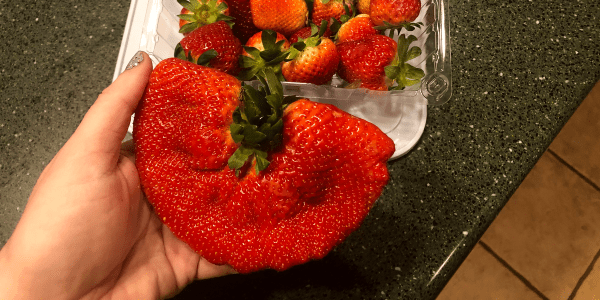
The other day, I saw this gigantic mutant strawberry on reddit that looked like it had either been growing in a radiation zone, hitting the gym regularly, or sprinkled with magic dust. I immediately felt more than mildly interested in this phenomenon, which is called fasciation.

As it turns out, fasciation is fairly rare occurrence that nonetheless occurs in a wide variety of vascular plants. These mutant strawberries may be a bit unnerving to look at, but they are totally safe to eat. The only problem is that you’re more likely to come across a fasciated dandelion or daisy out in the wild than a strawberry or pineapple at the grocery store because the so-called ugly produce tends to be weeded out.

Fasciation is essentially unregulated tissue growth that occurs when the apical meristem, better known as the growing tip of the plant strays from shooting upward in cylindrical fashion and instead splays out flat, resulting in ribbon-like plant stems, elongated or multiple flower heads, and semi-circular strawberries.

Regular and fasciated mule’s ears from Wikipedia

Although fasciation tends to present as a flattened main stem, the phenomenon can occur nearly anywhere in the plant — the root, stem, leaves, flower heads, or fruit. It can be localized to just one area, or it affect the entire plant.

Fasciation gets compared to cancer because it has a number of causes and ways of expression, but it’s not quite as harmful or scary. Some races of plants exhibit extreme expression of fasciation. While it’s not fatal, it’s also not ideal, because the condition can result in broken tissues, distorted organization, and a decrease in fertility.

Fasciation: How does it work?

One absolute unit of dandelion. Image via Wild Yorkshire

Fasciation has many causes both internal and external. Internally, it happens because of a hormonal imbalance in the growth cells, a bacterial or viral infection, or a random genetic mutation. There are also environmental causes, like chemical exposure, cold and frost exposure, or fungi, mite, and insect attacks.

The wonder of fasciation knows no geographical, climatic, ecological, or taxonomical bounds among vascular plants. It equally affects annuals, biennials, and perennials; woody and herbaceous plants; shrubs, trees, and vines. Although fasciation can occur in any vascular plant, it is quite common in the rose (includes strawberries), legume, sunflower, and cactus families, and is often found among dandelions and snapdragons.

Some vascular plants are prone to fasciation and prized for it, like the cockscomb (Celosia cristata) flower. A few fasciated flora have even become objects of reverence, like the Virgin Mary appearing on a slice of toast. There was once a fasciated pumpkin vine growing in South India. The twenty-foot-long fasciated portion drew huge crowds of people to worship it, believing the vine to be an incarnation of King Cobra or Naga Sarpa, messenger of the god Vishnu.

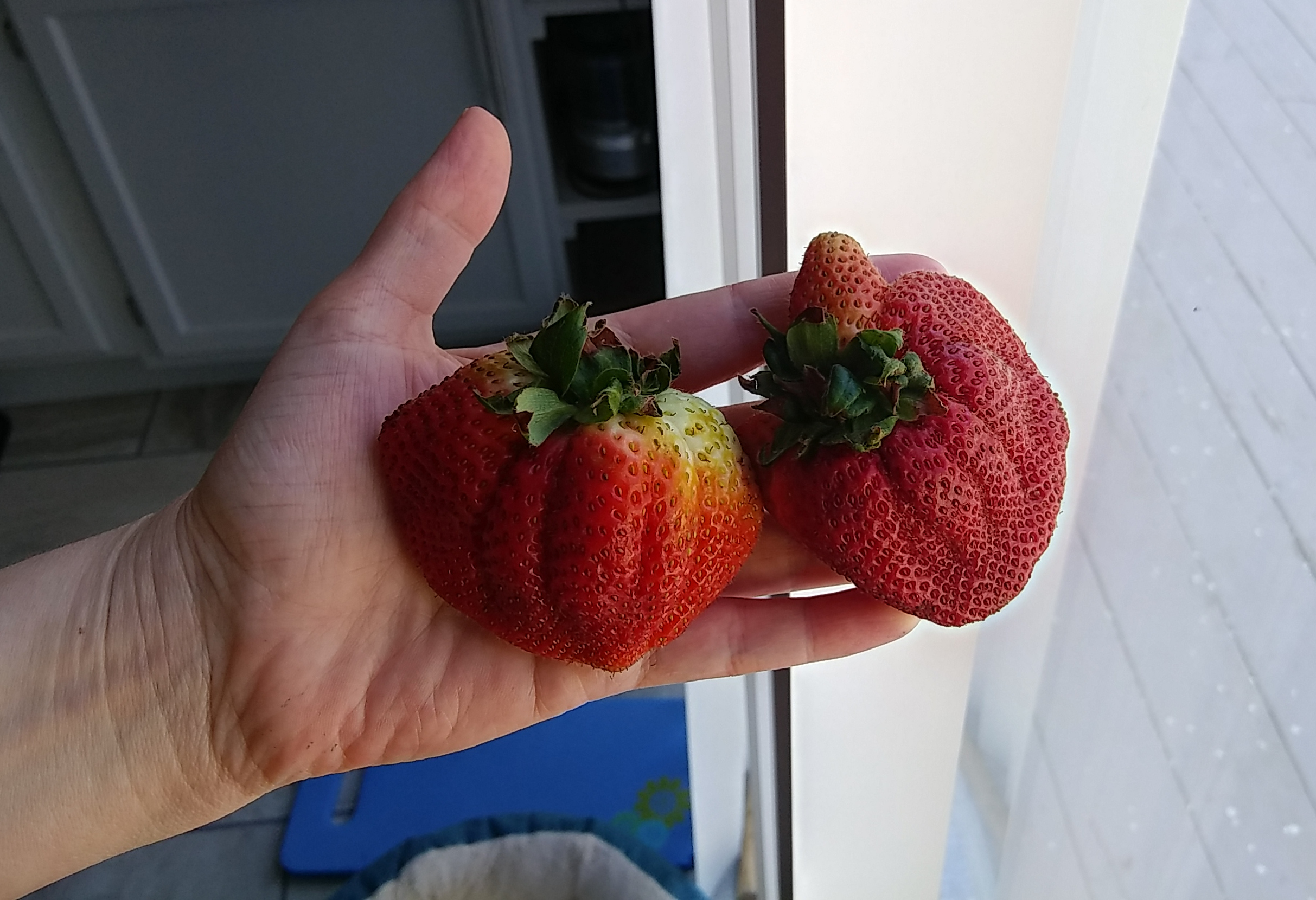
This spring, I’ll be looking high and low for abnormal dandelions and daisies. I’ve already started scouting the produce at the grocery store for giant strawberries and found these two in the same box. Won’t you join me? We’re probably more likely to find fasciated fruits or flowers than four-leaf clovers.

Space Propulsion: Separating Fact From Science Fiction

An unfortunate property of science-fiction is that it is, tragically, fiction. Instead of soaring between the stars and countless galaxies out there, we find ourselves hitherto confined to this planet we call Earth. Only a handful of human beings have ever made it as far as the Earth’s solitary moon, and just two of our unmanned probes have made it out of the Earth’s solar system after many decades of travel. It’s enough to make one despair that we’ll never get anywhere near the fantastic future that was seemingly promised to us by science-fiction.

Yet perhaps not all hope is lost. Over the past decades, we have improved our chemical rockets, are experimenting with various types of nuclear rockets, and ion thrusters are a common feature on modern satellites as well as for missions within the solar system. And even if the hype around the EMDrive vanished as quickly as it had appeared, the Alcubierre faster-than-light drive is still a tantalizing possibility after many years of refinements.

Even as physics conspires against our desire for a life among the stars, what do our current chances look like? Let’s have a look at the propulsion methods which we have today, and what we can look forward to with varying degrees of certainty.

Continue reading “Space Propulsion: Separating Fact From Science Fiction”