Adding Space Music To The Astronomy Toolbox

Astronomy fans were recently treated to the Great Conjunction, where Jupiter and Saturn appear close together from the perspective of our planet Earth. Astronomy has given us this and many other magnificent sights, but we can get other senses involved. Science News tells of explorations into adapting our sense of hearing into tools of astronomical data analysis.

Data visualization has long been a part of astronomy, but they’re not restricted to charts and graphs that require a trained background to interpret. Every “image” generated using data from radio telescopes (like the recently-lost Arecibo facility) are a visualization of data from outside the visible spectrum. Visualizations also include crowd pleasing false-color images such as The Pillars of Creation published by NASA where interstellar emissions captured by science instruments are remapped to colors in the visible spectrum. The results are equal parts art and science, and can be appreciated from either perspective.

Data sonification is a whole other toolset with different strengths. Our visual system evolved ability to pick out edges and patterns in spatial plots, which we exploit for data visualization. In contrast our aural system evolved ability to process data in the frequency domain, and the challenge is to figure out how to use those abilities to gain scientifically relevant data insight. For now this field of work is more art than science, but it does open another venue for the visually impaired. Some of whom are already active contributors in astronomy and interested in applying their well-developed sense of hearing to their work.

Of course there’s no reason this has to be restricted to astronomy. A few months ago we covered a project for sonification of DNA data. It doesn’t take much to get started, as shown in this student sonification project. We certainly have no shortage of projects that make interesting sounds on this site, perhaps one of them will be the key.
Did ET Finally Call Us?

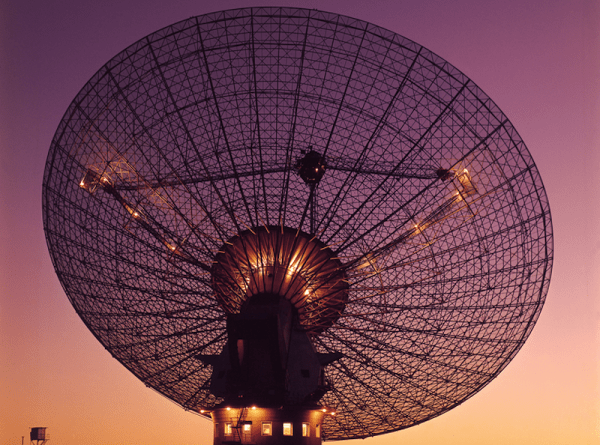
An Australian radio telescope picked up unusual signals back in 2019 and thinks they originated from Proxima Centauri, a scant 4.3 light years from our blue marble. Researchers caution that it almost certainly is a signal of human or natural origin and that more analysis will probably show it didn’t come from Proxima Centauri. But they can’t yet explain it.

The research is from the Breakthrough Listen project, a decade-long SETI project. The 980 MHz BLC-1 signal, as it’s called, meets the tests that identify the signal as interesting. It has a narrow bandwidth, it drifts in frequency consistent with a signal moving away or towards the Earth, and it disappears when the radio telescope points elsewhere.

Continue reading “Did ET Finally Call Us?”

How Researchers Used Salt To Give Masks An Edge Against Pathogens

Masks are proven tools against airborne diseases, but pathogens — like the COVID-19 virus — can collect in a mask and survive which complicates handling and disposal. [Ilaria Rubino], a researcher at the University of Alberta, recently received an award for her work showing how treating a mask’s main filtration layer with a solution of mostly salt and water (plus a surfactant to help the wetting process) can help a mask inactivate pathogens on contact, thereby making masks potentially re-usable. Such masks are usually intended as single-use, and in clinical settings used masks are handled and disposed of as biohazard waste, because they can contain active pathogens. This salt treatment gives a mask a kind of self-cleaning ability.

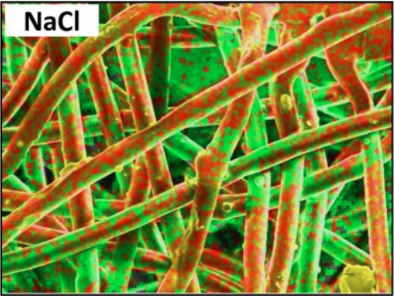
Analysis showing homogenous salt coating (red and green) on the surface of fibers. NaCl is shown here, but other salts work as well.

How exactly does salt help? The very fine salt coating deposited on the fibers of a mask’s filtration layer first dissolves on contact with airborne pathogens, then undergoes evaporation-induced recrystallization. Pathogens caught in the filter are therefore exposed to an increasingly-high concentration saline solution and are then physically damaged. There is a bit of a trick to getting the salt deposited evenly on the polypropylene filter fibers, since the synthetic fibers are naturally hydrophobic, but a wetting process takes care of that.

The salt coating on the fibers is very fine, doesn’t affect breathability of the mask, and has been shown to be effective even in harsh environments. The research paper states that “salt coatings retained the pathogen inactivation capability at harsh environmental conditions (37 °C and a relative humidity of 70%, 80% and 90%).”

Again, the salt treatment doesn’t affect the mask’s ability to filter pathogens, but it does inactivate trapped pathogens, giving masks a kind of self-cleaning ability. Interested in the nuts and bolts of how researchers created the salt-treated filters? The Methods section of the paper linked at the head of this post (as well as the Methods section in this earlier paper on the same topic) has all the ingredients, part numbers, and measurements. While you’re at it, maybe brush up on commercially-available masks and what’s inside them.

Stacked Material Makes Kitchen Temperature Superconductors

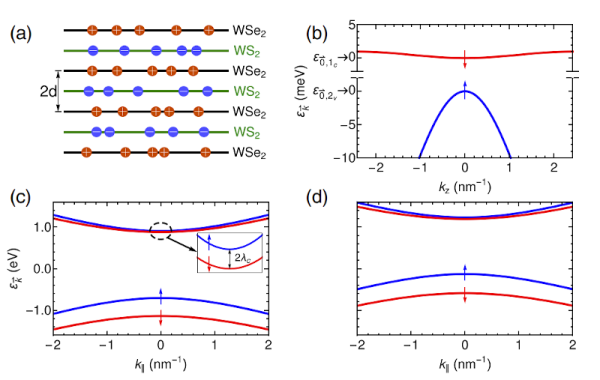
Belgian, Italian, and Australian researchers are proposing that by stacking semiconductor sheets, they should be able to observe superconducting behavior at what is known as “kitchen temperature” or temperatures you could get in a household freezer. That’s not quite as good as room temperature, but it isn’t bad, either. The paper is a bit technical but there is a very accessible write-up at Sci-Tech Daily that gives a good explanation.

Superconductors show no loss but currently require very cold temperatures outside of a few special cases. The new material exploits the idea that an electron and a hole in a semiconducting material will have a strong attraction to each other and will form a pair known as an exciton. Excitons move in a superfluid state which should exhibit superconductivity regardless of the temperature. However, the attraction is so strong that in conventional materials, the excitons only exist for the briefest blip of time before they cancel each other out.

Continue reading “Stacked Material Makes Kitchen Temperature Superconductors”

Space Is Radioactive: Dealing With Cosmic Rays

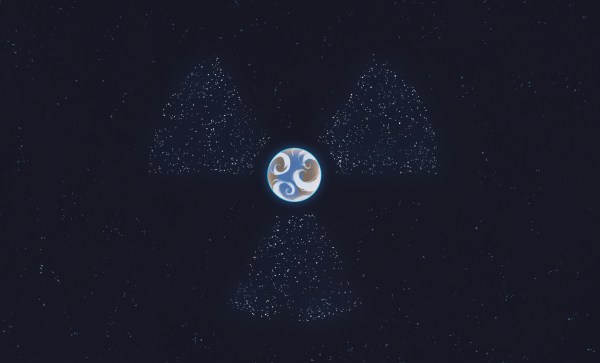
Outer space is not exactly a friendly environment, which is why we go through great lengths before we boost people up there. Once you get a few hundred kilometers away from our beloved rocky planet things get uncomfortable due to the lack of oxygen, extreme cold, and high doses of radiation.

Especially the latter poses a great challenge for long-term space travel, and so people are working on various concepts to protect astronauts’ DNA from being smashed by cosmic rays. This has become ever more salient as NASA contemplates future manned missions to the Moon and Mars. So let’s learn more about the dangers posed by galactic cosmic rays and solar flares. Continue reading “Space Is Radioactive: Dealing With Cosmic Rays”

Smart Screen Heal Thyself

The Korea Institute of Science and Technology (KIST) have announced a transparent, self-healing polyimide material designed for smart phone screens. A KIST team from the Composite Materials Applications Research Center led by Dr Yong-chae Jung and a team at Yonsei University’s Electronics Materials Lab led by Dr Hak-soo Han collaborated on this project. While the goal was to improve the material used in folding smart phone screens, the results seem applicable to all glass screens that are prone to cracks and scratches.

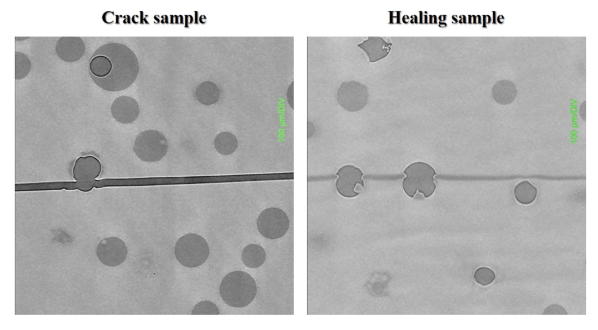
This new material can heal itself in 12 hours at room temperature, even faster under UV light. As we understand it, many micro-balloons of flaxseed oil are impregnated on the surface and break open if the material is damaged. Thus liberated, the oil is now free to flow into and fill up the cracks. We imagine it’s like repairing windshield cracks, but on a much smaller scale.

The idea is to eliminate the need for user-added screen protection films and increase the life of your phone screen. But cynical people might wonder if smart phone manufacturers will embrace this new technology with much enthusiasm — after all, if people use their phones longer it might cut into sales. Those with access to academic journals can read the report here.

Eulogy To Arecibo: With Demise Of A Unique Scientific Facility, Who Will Carry The Torch?

Few telescopes will get an emotional response from the general public when it is ultimately announced that they will be decommissioned. In the case of the Arecibo Observatory in Arecibo, Puerto Rico, the past months has seen not only astronomers but also countless people across the world wait with bated breath after initial reports of damage to the radio telescope’s gigantic dish.

When the National Science Foundation announced that they would be decommissioning the telescope, there was an understandable outpouring of grief and shock. Not only is Arecibo a landmark in Puerto Rico, it is the telescope from iconic movies such as GoldenEye (1995) and Contact (1997). Its data fed public programs such as the Seti@Home and Einstein@Home projects.

Was Arecibo’s demise truly unavoidable, and what does this mean for the scientific community?

Continue reading “Eulogy To Arecibo: With Demise Of A Unique Scientific Facility, Who Will Carry The Torch?”