Books You Should Read: The Perfectionists

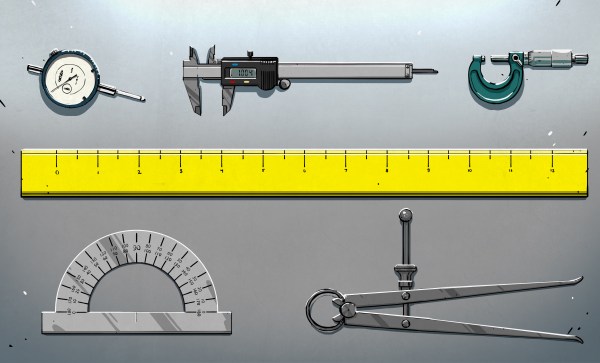
After pulling late hours in my school machine shop for a few years, I couldn’t help but wonder, who measures the measurement tools? How did they come to be? I’d heard anecdotes from other students and engineers while they inspected my freshly machined parts, but these stories were one-offs. What I wanted was a tale of industrial precision from start to finish. Years later, I found it.

The story of precision, as told by Simon Winchester, is captured in The Perfectionists: How Precision Engineers Created the Modern World. Published in 2018, Winchester’s overview stretches as far back to the Antikythera mechanism and brings us to present day silicon wafer manufacturing. Of course, this isn’t a chronology of all-things made precisely. Instead, it’s a romp through engineering highlights that hallmark either a certain level of precision manufacturing or a particular way of thinking with repercussions for the future. Continue reading “Books You Should Read: The Perfectionists”


Hackaday Podcast 150: Blackberry Runs Out Of Juice, NODE Has Your Pinouts, Rats Learn DOOM, And 2021 Is Done

Join Hackaday Editor-in-Chief Elliot Williams and Managing Editor Tom Nardi as they ring in the New Year with the first podcast episode of 2022. We get the bad news out early for those still thumbing away at their Blackberries, then pivot into some of the highlights from over the holidays such as the release of NODE’s The Pinouts Book and the discovery of a few expectation-defying OpenSCAD libraries. We’ll look at modifying a water cooler with Ghidra, and the incredible technology that let’s historians uncover the hidden history of paintings. Oh, and we’ll also talk about all the best and most important stories of the last 12 months. There’s a lot of ground to cover, so get comfortable.

Take a look at the links below if you want to follow along, and as always, tell us what you think about this episode in the comments!

Direct download (70 MB)

Continue reading “Hackaday Podcast 150: Blackberry Runs Out Of Juice, NODE Has Your Pinouts, Rats Learn DOOM, And 2021 Is Done”

This Week In Security: Y2K22, Accidentally Blocking 911, And Bug Alert

If you had the misfortune of running a Microsoft Exchange server this past week, then you don’t need me to tell you about the Y2K22 problem. To catch rest of us up, when Exchange tried to download the first malware definitions update of 2022, the version number of the new definitions triggered a crash in the malware detection engine. The date is represented as the string 2201010001, where the first two digits represent the year. This string gets converted to a signed long integer, which maxes out at 2,147,483,647. The integer overflows, and the result is undefined behavior, crashing the engine. The server fails safe, not processing any messages without a working malware engine, which means that no e-mail gets through. Happy new year!
Continue reading “This Week In Security: Y2K22, Accidentally Blocking 911, And Bug Alert”

From Nanoamps To Gigahertz: The World’s Most Extreme Op Amps

The operational amplifier, or op amp, is one of the most basic building blocks used in analog circuits. Ever since single-chip op amps were introduced in the 1960s, thousands of different types have been developed, some more successful than others. Ask an experienced analog designer to name a few op amps, and they’ll likely mention the LM324, the TL072, the NE5534, the LM358, and of course the granddaddy of all, the uA741.

If those part numbers don’t mean anything to you, all you need to know is that these are generic components that you can buy anywhere and that will do just fine in the most common applications. You can buy fancier op amps that improve on some spec or another, sometimes by orders of magnitude. But how far can you really push the concept of an operational amplifier? Today we’ll show you some op amps that go way beyond these typical “jellybean” components.

Before we start, let’s define what exactly we mean when we say “operational amplifier”. We’re looking for integrated op amps, meaning a single physical component, that have a differential high-impedance voltage input, a single-ended voltage output, DC coupling, and high gain meant to be used in a feedback configuration. We’re excluding anything made from discrete components, as well as less-general circuits like fixed-gain amplifiers and operational transconductance amplifiers (OTAs).

Continue reading “From Nanoamps To Gigahertz: The World’s Most Extreme Op Amps”

Art of 3D printer in the middle of printing a Hackaday Jolly Wrencher logo

3D Printering: One Bed Level To Rule Them All

In an ideal world, your FDM 3D printer’s bed would be perfectly parallel with the print head’s plane of movement. We usually say that means the bed is “level”, but really it doesn’t matter if it is level in the traditional sense, as long as the head and the bed are the same distance apart at every point. Of course, in practice nothing is perfect.

The second best situation is when the bed is perfectly flat, but tilted relative to the print head. Even though this isn’t ideal, software can move the print head up and down in a linear fashion to compensate for the tilt. Things are significantly worse if the bed isn’t itself flat, and has irregular bumps up and down all over.

To combat that, some printer firmware supports probing the bed to determine its shape, and adjusts the print head up and down as it travels across the map. Of course, you can’t probe the bed at every possible point, so the printer will have to interpolate between the measured reference points. Marlin’s bilinear bed leveling is an example.

But if you have enough flash space and you use Marlin, you may want to try unified bed leveling (UBL). This is like bilinear leveling on steroids. Unfortunately, the documentation for this mode is not as plain as you might like. Everything is out there, but it is hard to get started and information is scattered around a few pages and videos. Let’s fix that.

Continue reading “3D Printering: One Bed Level To Rule Them All”

Does This Lead Make My Car Look Fat?

When looking at the performance of a vehicle, weight is one of the most important factors in the equation. Heavier vehicles take more energy to accelerate and are harder to stop. They’re also more difficult to control through the corners. Overall, anything that makes a vehicle heavier typically comes with a load of drawbacks to both performance and efficiency. You want your racecar as light as possible.

However, now and then, automakers have found reason to intentionally add large weights to vehicles. We’ll look at a couple of key examples, and discuss why this strange design decision can sometimes be just what the engineers ordered.

Continue reading “Does This Lead Make My Car Look Fat?”

What You Should Know Before Buying An Industrial Sewing Machine

I’ve been sewing off and on since I was a kid, and I really started to get into it about ten years ago. Even though I technically outgrew my little 3/4 size domestic machine pretty quickly, I kept using it because it always did whatever I asked it to. I even made my first backpack on it before deciding it was time for something bigger. Don’t ask me how I managed to not kill that machine, because I have no idea.

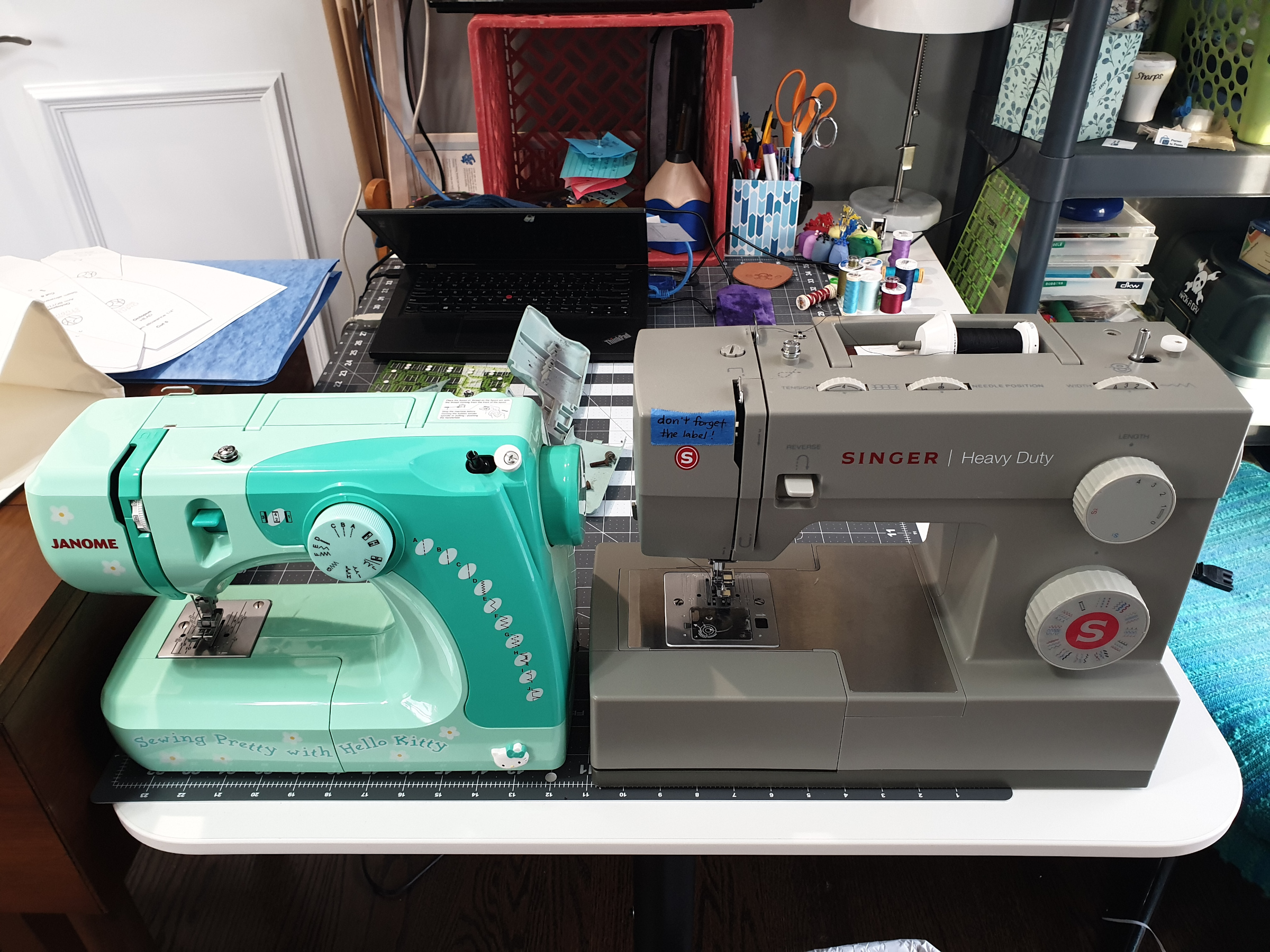
Left: a 3/4 size Janome 11706. Right: a full-size Singer Heavy Duty 4452.

Last year, I got a so-called heavy duty Singer that claims to have 50% more power than a standard domestic machine. This bad boy will make purses and backpacks with ease, I thought. And it does. Well, most of the time.

I found its limits when I tried to make a bag out of thick upholstery material. And honestly, when it comes down to finishing most bags — sewing the thickest and most difficult seams — the machine often lifts up from the table on the end opposite the needle.

What I really need is an industrial sewing machine. Not to replace the Singer at all, but to complement it. I can totally justify this purchase. Let me tell you why.

Continue reading “What You Should Know Before Buying An Industrial Sewing Machine”