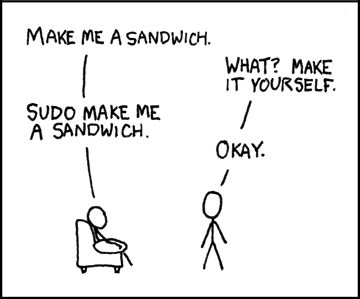
You can hardly mention the sudo command without recalling the hilarious XKCD strip about making sandwiches. It does seem like sudo is the magic power to make a Linux system do what you want. The only problem is that those superpowers are not something to be taken lightly.
CC-BY-NC-2.5 by [XKCD]If you are surfing the web, for example, you really don’t want to be root, because if someone naughty takes over your computer they could do a lot more harm with your root password. But still, there are times when you want to run certain commands that are normally root-only and don’t want to bother with a password. Luckily, sudo can handle that use case very easily.
Why?
As a simple example, suppose you like to shut your computer down at the end of the day. You run the shutdown command from the terminal but it doesn’t work because you aren’t root. You then have to do it again with sudo and if you haven’t logged in lately, provide your password. Ugh.
Before the SARS-CoV-2 pandemic took hold, few people were aware of the existence of mRNA vaccines. Yet after months of vaccinations from Moderna and BioNTech and clear indications of robust protection to millions of people, it now seems hard to imagine a world without mRNA vaccine technology, especially as more traditional vaccines seem to falter against the new COVID-19 variants and the ravages of so-called ‘Long COVID’ become more apparent.
Yet, it wasn’t that long ago that Moderna and BioNTech were merely a bunch of start-ups, trying to develop profitable therapies for a variety of diseases, using the brand-new and largely unproven field of RNA therapeutics. Although the use of mRNA in particular for treatments has been investigated since 1989, even as recently as 2017 there were still many questions about safe and effective ways to deliver mRNA into cells, as per Khalid A. Hajj et al.
Clearly those issues have been resolved now in 2021, which makes one wonder about the other exciting possibilities that mRNA delivery offers, from vaccines for malaria, cancer, HIV, as well as curing autoimmune diseases. How did the field of mRNA vaccines develop so quickly, and what can we expect to see the coming years?
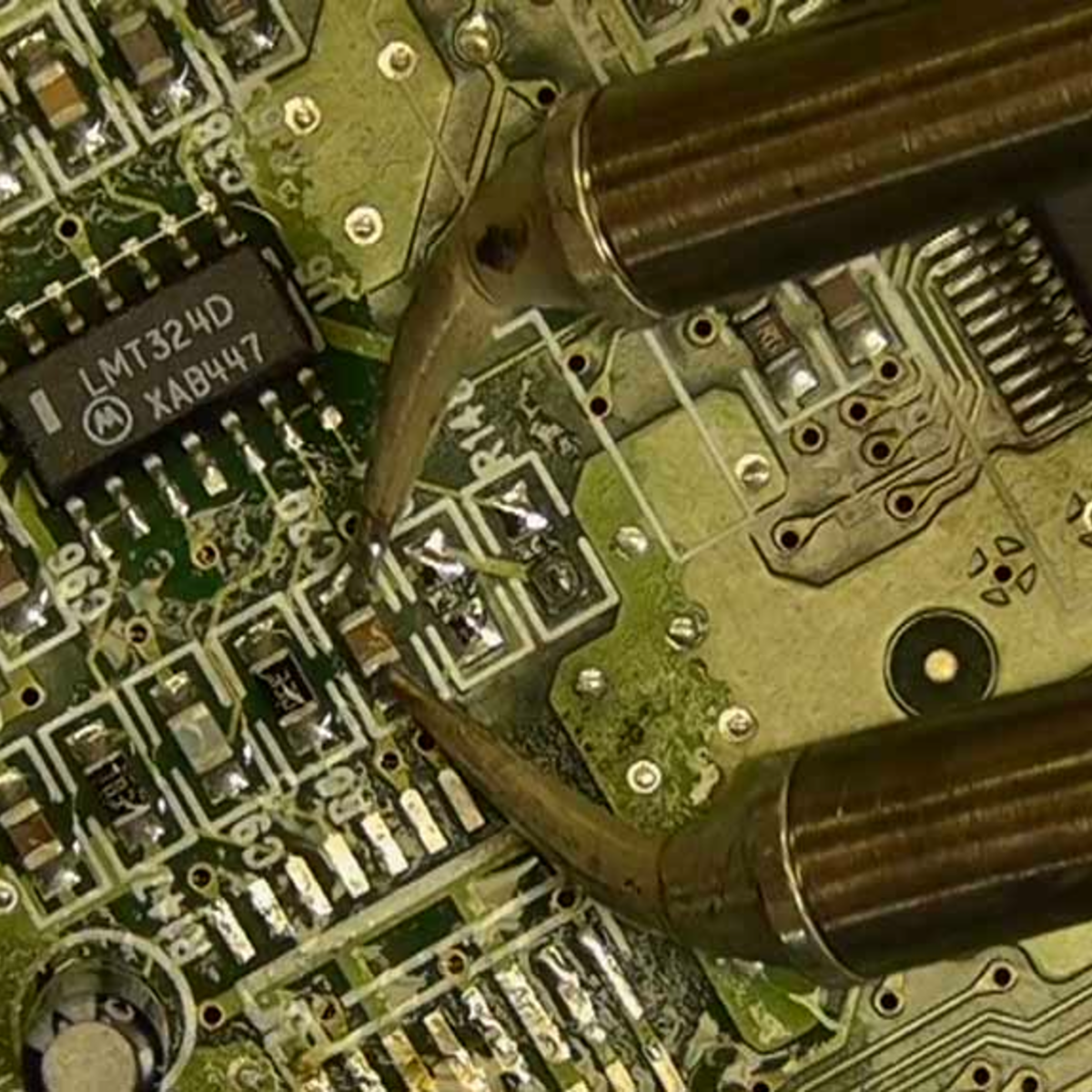
When you’re just learning to sketch, you use graphite. Why? It’s cheap, great at training you to recognize different shades, and most of all, it’s erasable. When you’re learning, you’re going to make mistakes, and un-making them is an important part of the game. Same goes for electronics, of course, so when you’re teaching someone to solder, don’t neglect teaching them to desolder.
I want these!
We could argue all day about the best ways of pressing the molten-metal undo button, but the truth is that it’s horses for courses. I’ve had really good luck with solder braid and maybe a little heat gun to pull up reluctant SOIC surface-mount chips, but nothing beats a solder sucker for clearing out a few through-holes. (I haven’t tried the questionable, but time-tested practice of blasting the joint with compressed air.)
For bulk part removal, all you really have to do is heat the board up, and there’s plenty of ways to do that, ranging from fancy to foolish. Low-temperature alloys help out in really tough cases. And for removing rows of pinheaders, it can help to add more solder along the row until it’s one molten blob, and then tap the PCB and watch the part — and hot liquid metal! — just drop out.
But the bigger point is that an important step in learning a new technique is learning to undo your mistakes. It makes it all a lot less intimidating when you know that you can just pull out the solder braid and call “do-over”. And don’t forget the flux.
This article is part of the Hackaday.com newsletter, delivered every seven days for each of the last 200+ weeks. It also includes our favorite articles from the last seven days that you can see on the web version of the newsletter.
Want this type of article to hit your inbox every Friday morning? You should sign up!
The NSO Group has been in the news again recently, with multiple stories reporting on their Pegasus spyware product. The research and reporting spearheaded by Amnesty International is collectively known as “The Pegasus project”. This project made waves on the 18th, when multiple news outlets reported on a list of 50,000 phone numbers that are reported as “potential surveillance targets.” There are plenty of interesting people to be found on this list, like 14 heads of state and many journalists.
There are plenty of questions, too. Like what exactly is this list, and where did it come from? Amnesty international has pointed out that it is not a list of people actively being targeted. They’ve reported that of the devices associated with an entry on the list that they have been able to check, roughly 50% have shown signs of Pegasus spyware. The Guardian was part of the initial coordinated release, and has some impressive non-details to add:
The presence of a phone number in the data does not reveal whether a device was infected with Pegasus or subject to an attempted hack. However, the consortium believes the data is indicative of the potential targets NSO’s government clients identified in advance of possible surveillance attempts.
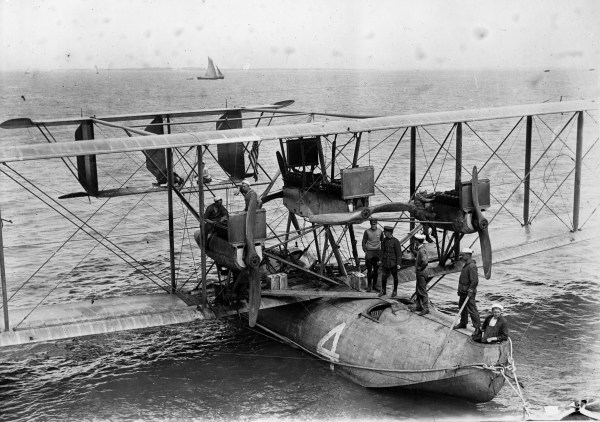
Aviation history is a bit strange. People tend to remember some firsts but not others and — sometimes — not even firsts. For example, everyone knows Amelia Earhart attempted to be the first woman to fly around the globe. She failed, but do you know who succeeded? It was Jerrie Mock. How about the first person to do it? Wiley Post, a name largely forgotten by the public. Charles Lindbergh is another great example. He was the first person to fly across the Atlantic, right? Not exactly. The story of the real first transatlantic flight is one of aviation hacking by the United States Navy.
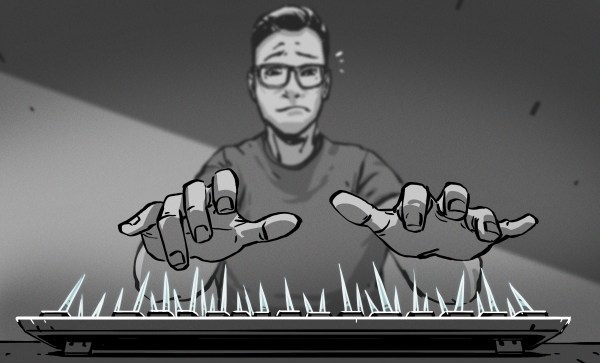
There I was, thirty years after I first sat down at an Apple IIe , and I suddenly found myself wondering if I would ever use a computer again without pain. How could I work if I couldn’t use a computer anymore? I had to seriously ask myself this question. It took a bit of a winding road to figure out what was going on and two EMGs to confirm it, but after all these years, it was clear to the medical community that I had developed a repetitive stress injury (RSI) called cubital tunnel syndrome in my left arm.
Cubital tunnel syndrome is like carpal tunnel, but in your elbow instead of your wrist. What a misnomer! Sometimes my pain went all the way from my armpit to my fingertips and made me want to gnaw my own arm off. I don’t think you can really understand neuropathy unless you’ve felt this weird, annoying type of pain firsthand. I hope you never do.
Can you stop and seriously imagine not being able to use a computer for the rest of your life? Or at least feeling that way because doing so causes incredibly annoying pain? I feel like we’re all vaguely aware of the standard list of anti-RSI precautions, but let’s review:
maintain good posture — sit with feet flat on the floor, wrists straight, elbows at 90°
put the screen an arm’s length away at eye level
take frequent short breaks
Yes, those are all fine and good. But there are other things you can do to avoid computer-related RSIs, like using ergonomic inputs, and building a custom setup that fits you exactly. This isn’t a study kiosk at the university library we’re talking about — this is your battlestation! The problem is that many people are stubborn, and won’t go out of their way to do anything to proactively prevent these injuries. But you don’t have to cross a bridge when you come to it if you have a map that shows you a way around the body of water.
In 2021 all our electronics are solid state, in that they exclusively use semiconductor devices as their active components. Some of us may experiment with vacuum tubes, but only for curiosity or aesthetic purposes. Semiconductors have overtaken vacuum devices in all but the rarest of niche applications due to their easier design requirements, greater reliability, lower cost, and increased performance.
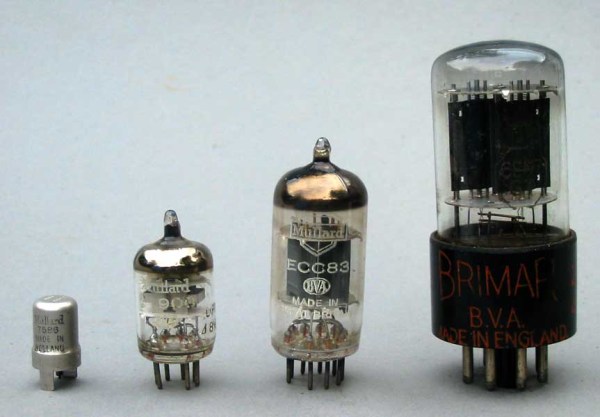
It was not always this way though, and there was a period at the start of the semiconductor era when transistors and vacuum tubes existed together side-by-side and competed directly. Vacuum tube manufacturers continued to create new devices into the 1970s, and in doing so they pushed the boundaries of their art in unprecedented directions. [David W Knight] has a page dedicated to the Nuvistor, something his calls the “final evolution of the thermionic valve”. His comparison photo seen above shows a Nuvistor on the left — a miniature vacuum tube you’ve likely never seen before.