BootBasic Fits Your Favorite Language In The Boot Sector

Humans seem to have a need to do things that aren’t practical. Make the biggest ball of twine. Engrave the Declaration of Independence on a grain of rice. We want to make things bigger, smaller, faster, or whatever. That might explain why [nanochess] put out bootBASIC.

The 8088 (or later) assembly code gives you a very restricted BASIC interpreter that you can boot up. That means it has to fit in the 512-byte boot block that the hardware loads to get an operating system running. How restricted? Keep in mind it fits in 512 bytes. Each line can only have 19 characters or less. Backspace works, but doesn’t update the screen. Line numbers range from 1 to 999 and there are only 26 integer variables named a through z that hold 16 bits. All statements are in lower case.

Continue reading “BootBasic Fits Your Favorite Language In The Boot Sector”

Neural Network In Glass Requires No Power, Recognizes Numbers

We’ve all come to terms with a neural network doing jobs such as handwriting recognition. The basics have been in place for years and the recent increase in computing power and parallel processing has made it a very practical technology. However, at the core level it is still a digital computer moving bits around just like any other program. That isn’t the case with a new neural network fielded by researchers from the University of Wisconsin, MIT, and Columbia. This panel of special glass requires no electrical power, and is able to recognize gray-scale handwritten numbers.

Continue reading “Neural Network In Glass Requires No Power, Recognizes Numbers”

ESP32 Gets Advance Windowed Apps Using This VGA GUI Library

We featured [Fabrizio Di Vittorio]’s FabGL library for the ESP32 back in April of this year. This library allows VGA output using a simple resistor based DAC (3 resistors for 8 colors; 6 resistors for 64 colors), and includes functions for PS/2 mouse and keyboard input, a graphics library, and many of the miscellaneous functions you might need to develop games on the ESP32. Now, a GUI interface library has been added to ease application development.

The GUI, of course, runs on the VGA output. The library includes what you’d expect from a minimal windowing GUI, like keyboard and mouse support, windows with the usual minimize/maximize/close controls, and modal and message dialog boxes. For input controls, there are labels, text boxes, buttons, radio buttons, checkboxes, normal and editable combo boxes, and listboxes — you know, pretty much everything you need to develop a modern GUI application. All the code is open-source (GPL 3.0) and in the GitHub repo.

While the original FabGL had a game-development orientation, the addition of this new GUI functionality opens up a new range of applications. If you want to find out more about using the FabGL library, you can check out our previous coverage of the mostly game-oriented functions.

You can get a look at the new GUI functions in action in the video, after the break.

Continue reading “ESP32 Gets Advance Windowed Apps Using This VGA GUI Library”

Making An Update Server For PythonAnywhere And GitHub

Cloud based IDEs and development tools have grown over the years, though most have limitations in their free tiers and may not be fully compatible with other services such as GitHub. [Aadi Bajpai] loved using PythonAnywhere and to collaborate using GitHub, so he made a update server that automatically updates the running code once you make a push to Github

PythonAnywhere gives you access to a python shell over a web browser, and also lets you run a web app that can be accessed via a custom sub-domain. Even though it does not have direct integration with GitHub, you can drop to the bash shell to and get access to a git client.

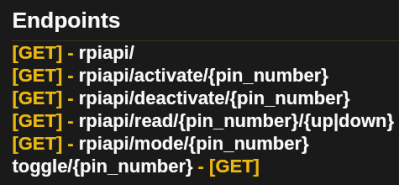
For this hack, [Aadi Bajpai] utilizes the webhooks from GitHub that are triggered when a push event is detected. A flask server running on PythonAnywhere is written such that once triggered by the get POST request, it locally executes a git pull from the repository. There a bit more work that allows adding a bit of security sauce to the recipe but it is a pretty elegant solution and can be used for other cases as well.

Setting up alert notifications has been demonstrated to be an interesting task, though integrating Discord or Slack for notifications adds a little more bragging rights.

Caching In On Program Performance

Most of us have a pretty simple model of how a computer works. The CPU fetches instructions and data from memory, executes them, and writes data back to memory. That model is a good enough abstraction for most of what we do, but it hasn’t really been true for a long time on anything but the simplest computers. A modern computer’s memory subsystem is much more complex and often is the key to unlocking real performance. [Pdziepak] has a great post about how to take practical advantage of modern caching to improve high-performance code.

If you go back to 1956, [Tom Kilburn’s] Atlas computer introduced virtual memory based on the work of a doctoral thesis by [Fritz-Rudolf Güntsch]. The idea is that a small amount of high-speed memory holds pieces of a larger memory device like a memory drum, tape, or disk. If a program accesses a piece of memory that is not in the high-speed memory, the system reads from the mass storage device, after possibly making room by writing some part of working memory back out to the mass storage device.

Continue reading “Caching In On Program Performance”

Abusing A CPU’s Adders To Optimize Bit Counting

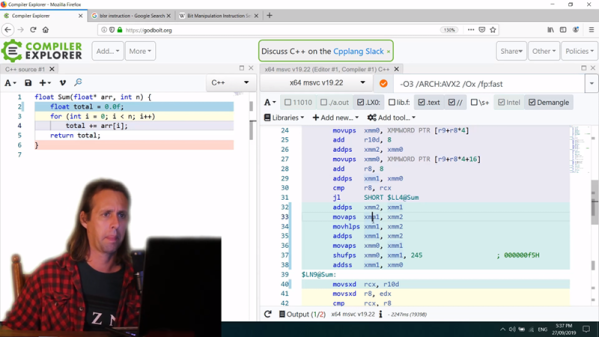
If you like nitpicking around C code and generated assembly language — and we’ll admit that we do — you shouldn’t miss [Scaramanga’s] analysis of what’s known as Kernighan’s trick. If you haven’t heard of the trick, it’s a pretty efficient way of counting bits.

Like the Wheatstone bridge and a lot of other things, the Kernighan trick is misnamed. Brian Kernighan made it famous, but it was actually first published in 1960 and again in 1964 before he wrote about it in 1988. The naive way to count bits would be to scan through each bit position noting how many one bits you encounter, but the problem is, that takes a loop for each bit. A 64-bit word, then, takes 64 loops no matter what it contains. You can do slightly better by removing each bit you find and stopping when the word goes to zero, but that still could take 64 cycles if the last bit you test is set.

Continue reading “Abusing A CPU’s Adders To Optimize Bit Counting”

Adobe Neural Net Detects Photoshop Shenanigans

Photoshop can take a bad picture and make it look better. But it can also take a picture of you smiling and make it into a picture of your frowning. Altering images and video can of course be benign, but it can also have nefarious purposes. Adobe teamed up with researchers at Berkeley to see if they could teach a computer to detect a very specific type of photo manipulation. As it turns out, they could.

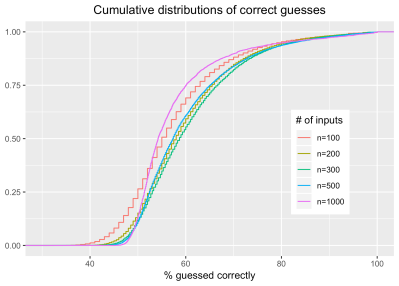
Using a Photoshop feature called face-aware liquify, slightly more than half of the people tested could tell which picture was the original and which was retouched to alter the facial expression. However, after sufficient training, Adobe’s neural network could solve the puzzle correctly 99% of the time.

Continue reading “Adobe Neural Net Detects Photoshop Shenanigans”