Kepler Closes Eyes After A Decade Of Discovery

Since its launch in March 2009, the Kepler Space Telescope has provided us with an incredible amount of data about exoplanets within our galaxy, proving these worlds are more varied and numerous than we could ever have imagined. Before its launch we simply didn’t know how common planets such as ours were, but today we know the Milky Way contains billions of them. Some of these worlds are so hot they have seas of molten rock, others experience two sunsets a day as they orbit a pair of stars. Perhaps most importantly, thousands of the planets found by Kepler are much like our own: potentially playing host to life as we know it.
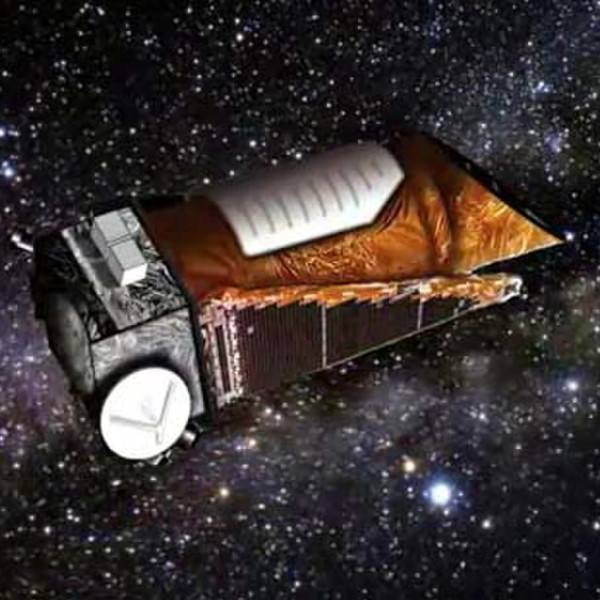
Kepler lived a fruitful life by any metric, but it hasn’t been an easy one. Too far into deep space for us to repair it as we did Hubble, hardware failures aboard the observatory nearly brought the program to a halt in 2013. When NASA announced the spacecraft was beyond hope of repair, most assumed the mission would end. Even by that point, Kepler was an unqualified success and had provided us with enough data to keep astronomers busy for years. But an ingenious fix was devised, allowing it to continue collecting data even in its reduced capacity.

Leaning into the solar wind, Kepler was able to use the pressure of sunlight striking its solar panels to steady itself. Kepler’s “eyesight” was never quite the same after the failure of its reaction wheels, and it consumed more propellant than originally intended to maintain this careful balancing act, but the science continued. The mission that had already answered many of our questions about our place in the galaxy would push ahead in spite of a failure which should have left it dead in space.

As Kepler rapidly burned through its supply of propellant, it became clear the mission was on borrowed time. It was a necessary evil, as the alternative was leaving the craft tumbling through space, but mission planners understood that the fix they implemented had put an expiration date on Kepler. Revised calculations could provide an estimate as to when the vehicle would finally run its tanks dry and lose attitude control, but not a definitive date.

For the last several months NASA has known the day was approaching, but they decided to keep collecting data until the vehicle’s thrusters sputtered and failed. So today’s announcement that Kepler has at long last lost the ability to orient itself came as no surprise. Kepler has observed its last alien sunset, but the search for planets, and indeed life, in our corner of the galaxy doesn’t end today.

Continue reading “Kepler Closes Eyes After A Decade Of Discovery”
Relativity Space’s Quest To 3D Print Entire Rockets

While the jury is still out on 3D printing for the consumer market, there’s little question that it’s becoming a major part of next generation manufacturing. While we often think of 3D printing as a way to create highly customized one-off objects, that’s a conclusion largely based on how we as individuals use the technology. When you’re building something as complex as a rocket engine, the true advantage of 3D printing is the ability to not only rapidly iterate your design, but to produce objects with internal geometries that would be difficult if not impossible to create with traditional tooling.

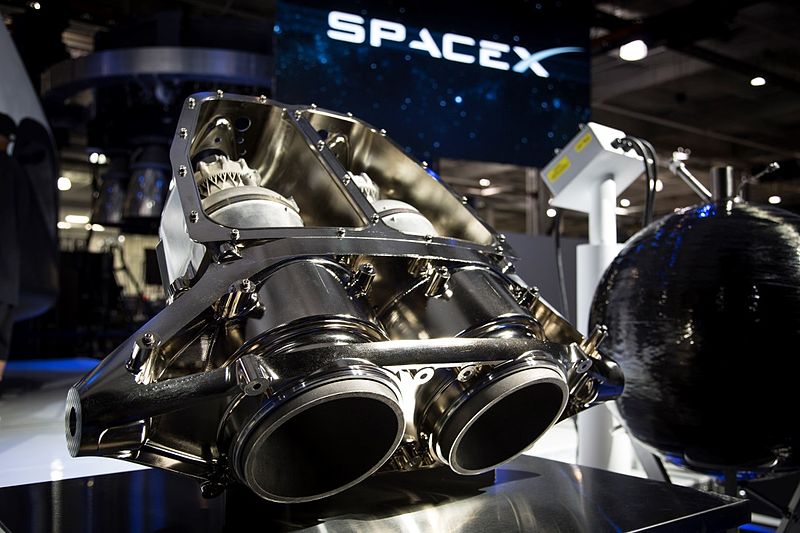
SpaceX’s SuperDraco 3D Printed Engine

So it’s no wonder that key “New Space” players like SpaceX and Blue Origin make use of 3D printed components in their vehicles. Even NASA has been dipping their proverbial toe in the additive manufacturing waters, testing printed parts for the Space Launch System’s RS-25 engine. It would be safe to say that from this point forward, most of our exploits off of the planet’s surface will involve additive manufacturing in some capacity.

But one of the latest players to enter the commercial spaceflight industry, Relativity Space, thinks we can take the concept even farther. Not content to just 3D print rocket components, founders Tim Ellis and Jordan Noone believe the entire rocket can be printed. Minus electrical components and a few parts which operate in extremely high stress environments such as inside the pump turbines, Relativity Space claims up to 95% of their rocket could eventually be produced with additive manufacturing.

If you think 3D printing a rocket sounds implausible, you aren’t alone. It’s a bold claim, so far the aerospace industry has only managed to print relatively small rocket engines; so printing an entire vehicle would be an exceptionally large leap in capability. But with talent pulled from major aerospace players, a recently inked deal for a 20 year lease on a test site at NASA’s Stennis Space Center, and access to the world’s largest metal 3D printer, they’re certainly going all in on the idea. Let’s take a look at what they’ve got planned.

Continue reading “Relativity Space’s Quest To 3D Print Entire Rockets”

Travel To Mercury On Ion Power

Star Trek — as much as we love it — was guilty sometimes of a bit of hyperbole and more than its share of inconsistency. In some episodes, ion drives were advanced technology and in others they were obsolete. Make up your mind!

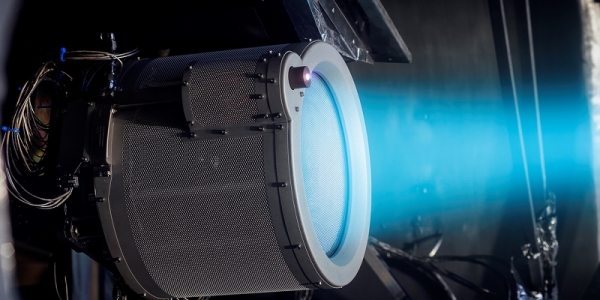
The ESA-JAXA BepiColombo probe is on its way to Mercury riding on four ion thrusters developed by a company called QinetiQ. But unlike the ion drive featured in the infamous “Spock’s Brain” episode, BepiColombo will take over seven years to get to Mercury. That’s because these ion drives are real.

The craft is actually two spacecraft in one with two different Mercury missions. The Mercury planetary orbiter will study the surface while the magnetosphere orbiter will study the little planet’s magnetic field. Check out a video about the mission, below. The second video shows [Neil Wallace] talking about how the ion propulsion — also known as solar electric engines — differ from traditional chemical thrusters.

Continue reading “Travel To Mercury On Ion Power”

Real Time Satellite Tracker Shows You What’s Going Over Your Head

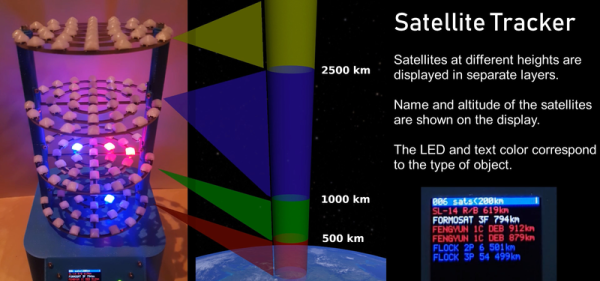
Whilst modern technology relies heavily on satellites, it’s easy to forget they’re there; after all, it’s hard to comprehend mostly-invisible lumps of high-density tech whizzing around above you at ludicrous speeds. Of course, it’s not hard to comprehend if you’ve built a real-time satellite tracker which displays exactly what’s in orbit above your head at any given time. [Paul Klinger]’s creation shows the position of satellites passing through a cylinder of 200 km radius above the tracker.

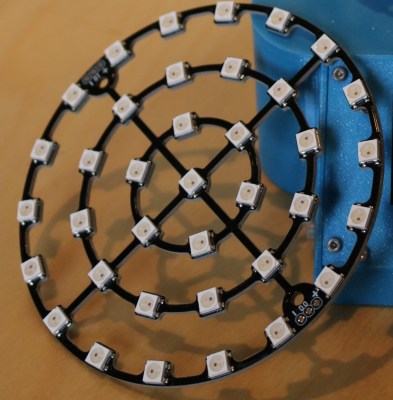
Each layer of LEDs represents a specific band of altitude, whilst the colour of the LEDs and text on the screen represent the type of object. The LEDs themselves are good old WS2812b modules, soldered to a custom PCB and mounted in a 3D-printed stand. The whole thing is a really clean build and looks great – you can see it in action in the video after the break

On the software side, a Raspberry Pi is in charge, running Python which makes use of pyorbital for some of the heavy lifting. The data is taken from space-track.org, who provide a handy API. All the code is on the project GitHub, which also includes the 3D print and PCB files.

[Paul] answers questions in the reddit thread, and gives more detail in this reddit comment. The project was inspired by one of our favorite sites: stuffin.space.

Some of the satellites the device displays are de-commisioned and inactive. Space junk is a significant problem, one which can only be tackled by a space garbage truck.

Continue reading “Real Time Satellite Tracker Shows You What’s Going Over Your Head”

The Science Of Landing On An Asteroid

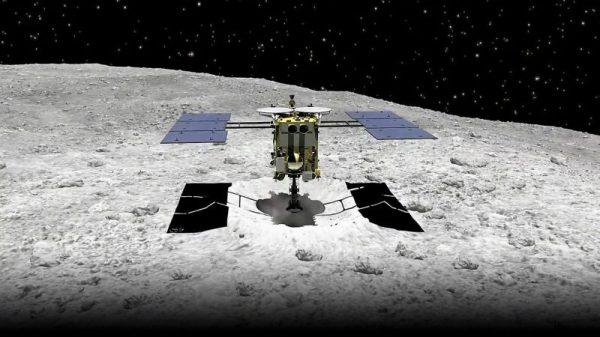
Exploiting the resources of the rock-strewn expanse of space between Mars and the outer planets has been the stuff of science fiction for ages. There’s gold in them ‘thar space rocks, or diamonds, or platinum, or something that makes them attractive targets for capitalists and scientists alike. But before actually extracting the riches of the asteroid belt, stuck here as we are at the bottom of a very deep gravity well that’s very expensive to climb out of, we have to answer a few questions. Like, how does one rendezvous with an asteroid? What’s involved with maneuvering near a comparatively tiny celestial body? And most importantly, how exactly does one land on an asteroid and do any useful work?

Back in June, a spacecraft launched by the Japanese Aerospace Exploration Agency (JAXA) finally caught up to an asteroid named Ryugu after having chased it for the better part of four years. The Hayabusa2 was equipped to answer all those questions and more, and as it settled in close to the asteroid with a small fleet of robotic rovers on board, it was about to make history. Here’s how they managed to not only land on an asteroid, but how the rovers move around on the surface, and how they’ll return samples of the asteroid to Earth for study.

Continue reading “The Science Of Landing On An Asteroid”

Hams See Dark Side Of The Moon Without Pink Floyd

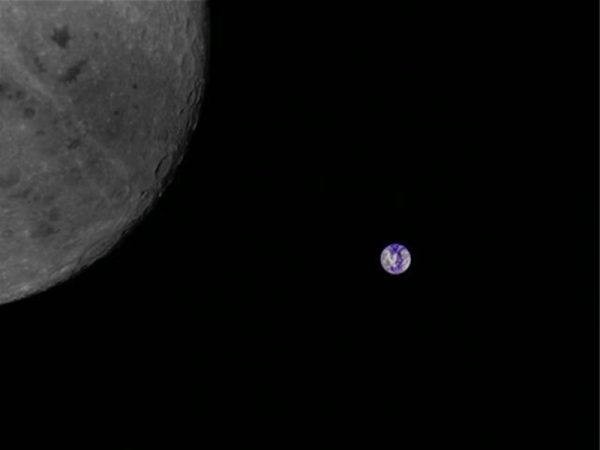
Ham radio operators bouncing signals off the moon have become old hat. But a ham radio transmitter on the Chinese Longjiang-2 satellite is orbiting the moon and has sent back pictures of the Earth and the dark side of the moon. The transceiver’s main purpose is to allow hams to downlink telemetry and relay messages via lunar orbit.

While the photo was received by the Dwingeloo radio telescope, reports are that other hams also picked up the signal. The entire affair has drawn in hams around the world. Some of the communications use a modulation scheme devised by [Joe Taylor, K1JT] who also happens to be a recipient of a Nobel prize for his work with pulsars. The Dwingeloo telescope has several ham radio operators including [PA3FXB] and [PE1CHQ].

Continue reading “Hams See Dark Side Of The Moon Without Pink Floyd”

International Space Station Is Racing The Clock After Soyuz Failure

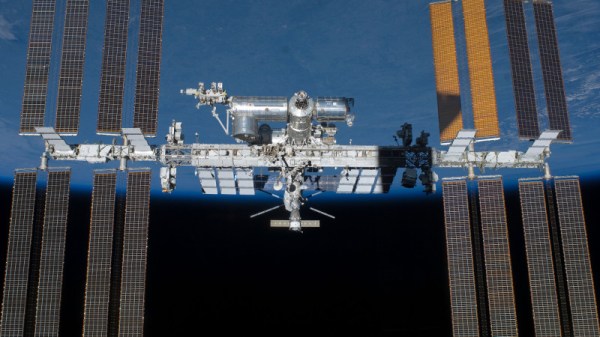
Today’s failed Soyuz launch thankfully resulted in no casualties, but the fate of the International Space Station (ISS) is now in question.

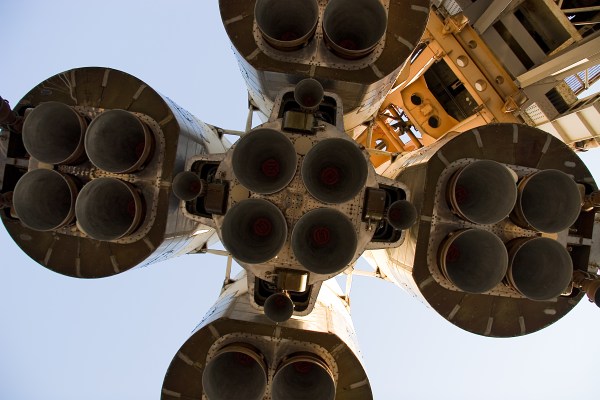
Just two minutes after liftoff, the crew of the Soyuz MS-10 found themselves in a situation that every astronaut since the beginning of the manned space program has trained for, but very few have ever had to face: a failure during launch. Today the crew of two, Russian Aleksey Ovchinin and American Nick Hague, were forced to make a ballistic re-entry into the Earth’s atmosphere; a wild ride that put them through higher G forces than expected and dropped the vehicle approximately 430 km from the launch site in Baikonur. Both men walked away from the event unharmed, but while the ordeal is over for them, it’s just beginning for the crew of the ISS.

Until a full investigation can be completed by Roscosmos, Russia’s space agency, the Soyuz rocket is grounded. This is standard procedure, as they obviously don’t want to launch another rocket and risk encountering the same issue. But as the Soyuz is currently the only way we have to get humans into space, this means new crew can’t be sent to the ISS until Roscosmos is confident the issue has been identified and resolved.

Soyuz MS-11, which would have brought up three new crew members to relieve those already on the Station, was scheduled for liftoff on December 20th. While not yet officially confirmed, that mission is almost certainly not going to be launching as scheduled. Two months is simply not long enough to conduct an investigation into such a major event when human lives are on the line.

The failure of Soyuz MS-10 has started a domino effect which will deprive the ISS of the five crew members which were scheduled to be aboard by the end of 2018. To make matters worse, the three current crew members must return to Earth before the end of the year as well. NASA and Roscosmos will now need to make an unprecedented decision which could lead to abandoning the International Space Station; the first time it would be left unmanned since the Expedition 1 mission arrived in November 2000.

Continue reading “International Space Station Is Racing The Clock After Soyuz Failure”