Getting A Rise With Laser Cutting

Your first 3D print probably seemed pretty amazing. But if you revisit it after a few years, you’ll likely notice it wasn’t nearly as good as you thought. We improve our printers and our processes and the new better results become normal. If you have a laser cutter, you may go through the same iteration. At first, you are happy just to get scorch marks on the workpiece. But when you move to cutting, you want cleaner cuts. You put tape over the work, add air assist, and invest in a honeycomb bed. Each step gets you better results, but you can always improve.

[The Louisiana Hobby Guy] (also known as [Rich]) knows a lot about the practical side of lasers. He suggests using standoff pins to not just secure the part to the honeycomb bed but lift it up a little, allowing air to flow under the part and lets the laser easily cut all the way through. You can see them in action in the video below.

This is a cheap upgrade to prevent flashback when cutting. [Rich] explains how to size them properly and even how to make your own if you don’t want to buy them off the shelf. You can laser cut hold-down pins from plans [Rich] provides, although he prefers to 3D print them, and you can do that, too. Most beds look similar, but if yours is an oddball, you might have to modify them slightly. He has regular dog clamps and the antiflashback standoffs, so you can make some of each. You can also buy them online. Most do not have the antiflashback feature, but at least one vendor that [Rich] points out does have them

If you don’t like the ones [Rich] shows, you can find 3D models for similar pins in the usual places. You can also design them yourself if you want them exactly how you want.

A good thing to add to your laser cutting workflow. [Rich’s] channel is full of great stuff. If you want to know more about air assist, we’ve added it to our cutters. If you are serious about precision cuts, know your kerf, too.

Continue reading “Getting A Rise With Laser Cutting”

Exploring A New Frontier: Desktop EDM Is Coming

To say that desktop 3D printing had a transformative effect on our community would be something of an understatement. In just a decade or so, we went from creaky printers that could barely extrude a proper cube to reliable workhorses that don’t cost much more than a decent cordless drill. It’s gotten to the point that it’s almost surprising to see a project grace these pages that doesn’t include 3D printed components in some capacity.

Cooper Zurad

There’s just one problem — everything that comes out of them is plastic. Oh sure, some plastics are stronger than others…but they’re still plastic. Fine for plenty of tasks, but certainly not all. The true revolution for makers and hackers would be a machine that’s as small, convenient, and as easy to use as a desktop 3D printer, but capable of producing metal parts.

If Cooper Zurad has his way such a dream machine might be landing on workbenches in as little as a month, thanks in part to the fact that its built upon the bones of a desktop 3D printer. His open source Powercore device allows nearly any 3D printer to smoothly cut through solid metal using a technique known as electrical discharge machining (EDM). So who better to helm this week’s Desktop EDM Hack Chat?

Continue reading “Exploring A New Frontier: Desktop EDM Is Coming”

Ice Wrenchers, Wrencher Chocolates, And The Vaquform DT2

What do you do when you find some friends have bought a vacuum forming machine? Make novelty chocolates and ice cubes, of course! This was my response when I had the opportunity to play with a Vaquform DT2 all-in-one vacuum forming machine, so what follows is partly a short review of an exciting machine, and partly an account of my adventures in edible merchandise creation.

The vaquform machine, on a neutral white background
The Vaquform machine in all its glory.

Vacuum forming, the practice of drawing a sheet of heat-softened plastic film over a model to make a plastic shell copy of it, is nothing new in our community. It’s most often found in hackerspaces in the form of home made vacuum forming tables, and usually requires quite a bit of experimentation to get good results. The Vaquform machine I was lucky enough to be able to try is an all in one machine that puts the whole process into a compact desktop machine of similar size to a typical 3D printer. It’s a machine of two parts with a moveable carriage between them for the plastic sheet; a vacuum table on its base, and a heater unit suspended above it. The unique selling point is that it’s an all-in-one computer controlled unit that does as much as possible for you, it simply requires the user to place a sheet in the carriage and follow the instructions.

When I first saw the machine I didn’t really have anything to try it with, so of course I resorted to producing a Wrencher or two. Because what it makes are essentially moulds, it made sense to produce something Wrencher-shaped with them, and thus the chocolate and ice plan formed. The first mould was made with laser-cut Wrenchers in 2mm acrylic, stacked on two more layers of uncut acrylic to make a bar with an inset Wrencher on top, while the second one used a 3D-printed array of larger stand-alone Wrenchers with channels between them. Would my first attempt at vacuum forming make usable moulds or not? Only one way to find out. Continue reading “Ice Wrenchers, Wrencher Chocolates, And The Vaquform DT2”

Freq Out With LTSpice

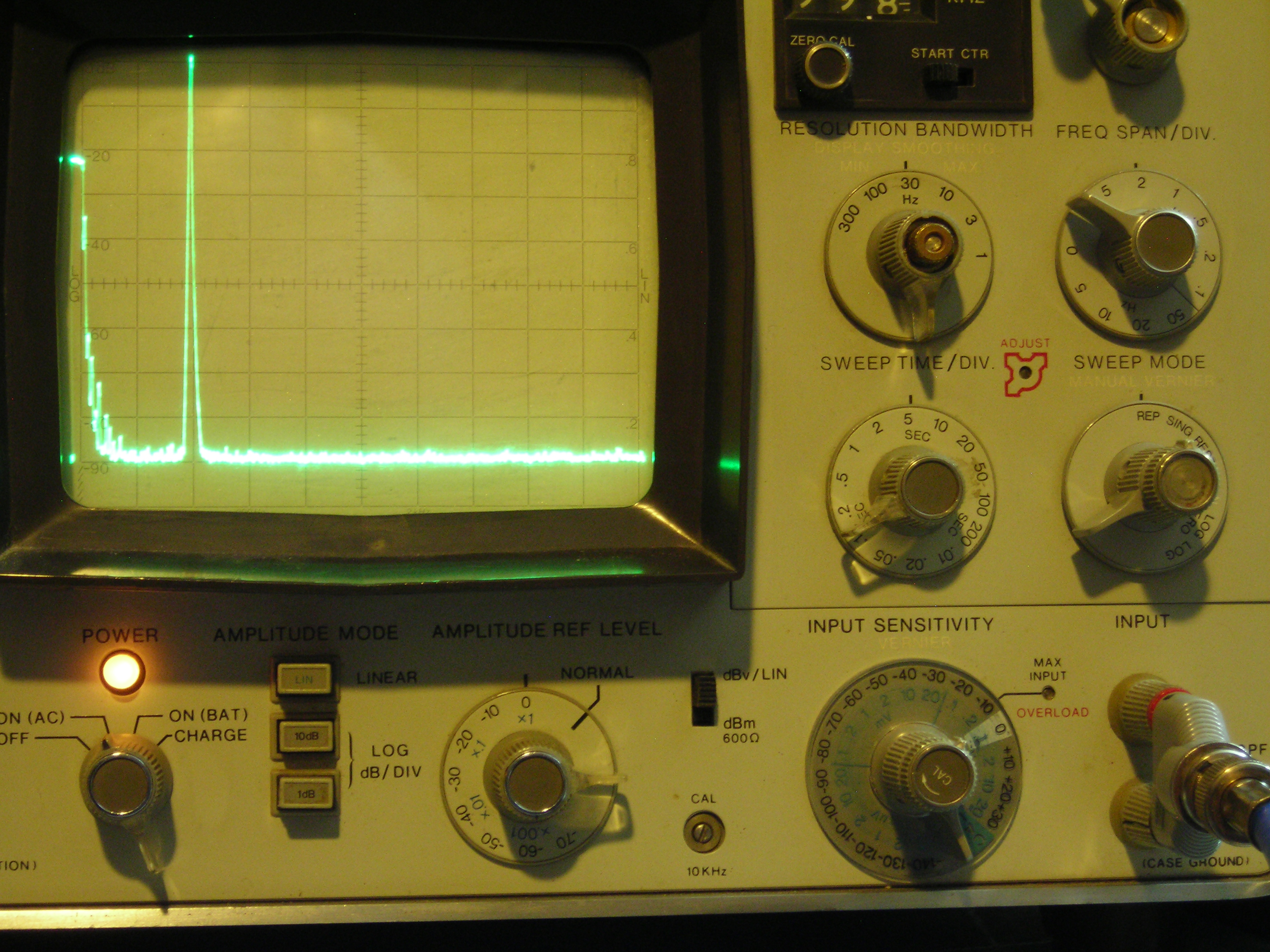
We always enjoy [FesZ’s] videos, and his latest about FREQ function in LTSpice is no exception. In fact, LTSpice doesn’t document it, but it is part of the underlying Spice system. So, of course, you can figure it out or just watch the video below. The FREQ keyword allows you to change component attributes in a frequency-depended way.

Of course, capacitors and inductors are frequency dependent by design. But the FREQ technique allows you to adjust things like voltage sources or resistance in arbitrary ways. By default, you must specify the frequency response data in decibels, which isn’t always convenient. However, [FesZ] shows you how to use other methods to express them using modifiers to the command.

Continue reading “Freq Out With LTSpice”

Watch This Beautiful Japanese Factory Manufacturing Hand Planes

If you’re a woodworker, you know the value of a good hand plane. A stout model will last a lifetime if properly cared for. [Process X] has now taken us behind the scenes of a Japanese factory that turns out quality hand planes to show us how it’s done. 

The video starts at the forge, where steel is attached to soft iron to form a blank that will become the hand plane blade. This is proper blacksmithing, with autohammers and flames akimbo. It’s also a woodworking story, though, with the hand plane bodies themselves carefully prepared for the years of faithful service ahead. We get to see the raw wood roughed into shape and put through the thicknesser, along with the more interesting machining steps that carve out the angled pockets and the blade slot.

The final assembly is great, too, particularly when the pins are nailed in to hold everything in place. The test is the icing on the cake, in which the hand plane peels a perfect contiguous strip from a long piece of lumber.

It’s still very much a manual process, with the workshop largely relying on classical machine tools. There’s not a hint of CNC control to speak of. For the Komori Small Plane Factory and the Koyoshiya Watanabe Woodworking Shop, though, the old methods are doing just fine.

Continue reading “Watch This Beautiful Japanese Factory Manufacturing Hand Planes”

Dentist Tool Hardware Inspires Non-Slip Probe Tips

Cross-pollination between different industries can yield interesting innovations, and a few years ago [John Wiltrout] developed some non-slip meter probe adapters. He recently used our tips line to share some details that you won’t see elsewhere, letting us know how the idea came to be.

It started with [John] being frustrated by issues that will sound familiar: probes did not always want to stay in place, and had a tendency to skid around at the slightest provocation. This behavior gets only more frustrating as boards and components get smaller. John was also frustrated by the general inability to reliably probe through barriers like solder masking, oxidation, and conformal treatments on circuit boards. Continue reading “Dentist Tool Hardware Inspires Non-Slip Probe Tips”

Never Drill In The Wrong Place, With This Camera!

It’s fair to say that one of the biggest advances for the electronic constructor over the last decade or so has been the advent of inexpensive small-order PCB manufacture. That said, there are still plenty who etch their own boards, and for them perhaps the most fiddly part of the process comes in drilling holes accurately. It’s to aid in this task that [John McNelly] has created a camera with a periscope, to give the drill bit perfect alignment with the hole.

The idea is simple enough, an off-the-shelf all-in-one microscope camera points sideways at a mirror allowing it to look upwards. The viewport is placed under the drill and the crosshairs on the microscope are lined up with the end of the drill. Then the board can be placed on top and the pad lined up with the crosshairs, and a perfectly placed hole can be drilled. It’s a beautiful piece of lateral thinking which we like, as it ends that lottery of slightly off-centre holes. You can see it in glorious portrait-mode action in the video below the break.

Oddly this isn’t the first PCB drilling microscope we’ve shown you. but it may well be the more elegant of the two.

Continue reading “Never Drill In The Wrong Place, With This Camera!”