Wire Glue

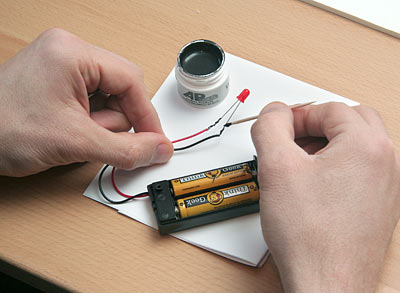
[John P. Barker] writes up an interesting product called Wire Glue. This conductive adhesive is a paint-on alternative to soldering. At first it seems like a bizarre product but we can think of a few uses. Who hasn’t had a solder joint on a free-formed circuit break? One thing’s for sure, we’d recommend throwing a resistor into that LED circuit he’s working on.
Bench Power Supply Adapter

psu_adapter

Every electronics workbench could benefit from having a bench power supply. Converting a PC power supply works, but often, it involves splicing wires and limits the supply to only bench use, and building one from scratch is definitely an undertaking. To counter this, [silic0re] and his father came up with a detachable adapter that simply plugs into the existing connectors. The adapter provides posts for four different voltages and can be built in no time. It’s nice to see a solution that will let you use any power supply laying around without having to worry about the dangers of opening it or cutting it up.

[Thanks silic0re]

Etch Aluminum Control Panels

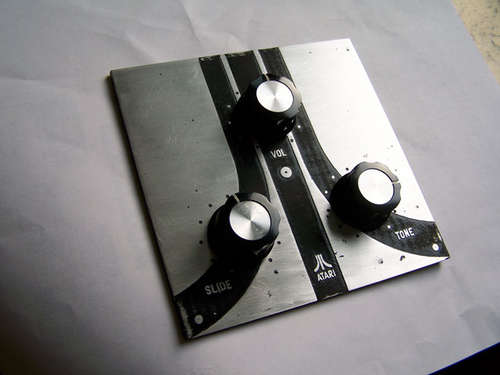
This clever Instructable demonstrates how to etch beautiful aluminum control panels for electronics projects. We like how similar this process is to DIY circuit board etching. Both abide by the same technique and use blue transfer paper. The primary difference is in the use of muriatic acid and hydrogen peroxide for etching aluminum.

Cheap SD Card Cradle

SD (Custom)

When utilizing an SD card in your projects, you would generally buy an SD card slot to wire in. Sometimes, you just don’t plan that far ahead, or maybe you just want to play with an SD a little bit to see what you think. [Kroden] shows us how to make a fairly simple and cheap SD card dock. The result is actually pretty impressive looking. He has simply bent some header pins and soldered them together to make a simple SD slot. It can even be adapted to a horizontal layout for more permanent use.

Etching Agitator

[youtube=http://www.youtube.com/watch?v=yDA16dfqgeg]

It might be a little bit of overkill, but this etching container agitator sure looks convenient. There’s not much to it technically, a small circuit with an ATtiny45. For those beginning with this stuff, he has written a pretty good tutorial on working with basic microcontrollers. If you are more interested in a tutorial on etching, we did a  guide on how to etch a single sided PCB.

Tatjana Van Vark

scanplatfs1

Go to this site and you’ll be greeted by a crazy looking woman wielding a giant egg and a blunt object that looks like Jupiter with mischief in her eyes. This is Tatjana van Vark.  Her library of projects ranges from the mundane such as a couple of incandescent lamps, to a fully functional Antikythera mechanism. As you browse around at things like her one of a kind cipher based on the enigma machine and her inertial navigator platform shown above, you’ll find the quality of her work astounding. Randomly peppered haikus give us a brief glimpse into her mind as we look at, literally decades, of amazing work. We’re sure many of you are drooling at the thought of some build details, but you’ll have to work for it. Decipher the haiku on the coding machine’s page for the build details… if you can.

[thanks Verimius]

PCB Toner Transfer With Dowel

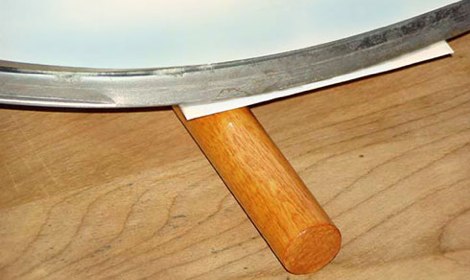
Pulsar Professional FX has a neat tip on their site for getting a really even toner transfer when making your own PCBs. First, the PCB is cut to size, and the paper is tacked to the board. Then, the PCB is placed paper up onto a dowel and rolled back and forth with the iron. Since the board bends slightly over the dowel the toner sticks evenly to the copper. After that, just remove the paper as usual and etch with your preferred method.