Hackaday Links Column Banner

Hackaday Links: May 17, 2026

To start things off, we’d like to extend a special thanks to everyone who joined us for Hackaday Europe this weekend in Lecco, Italy. It was 48 hours of fascinating talks, incredible badge hacks, and some of the greatest company you could hope for. For those who couldn’t make it in person, we didn’t forget you — expect to hear more about what went down once we get a chance to catch our collective breath.

That’s not the only thing to keep an eye out for in the coming days. This is your reminder that Amazon will be officially ending support for older Kindles in a few days. After May 20th, any of the megacorp’s e-readers that were introduced before 2012 will be persona non grata, so you should plan accordingly.

The biggest change is that these older devices won’t be able to buy digital books from Amazon, but you can still use them offline, and the fantastic Calibre makes it a breeze to load up content from other sources. To be perfectly honest, we’d advise any Kindle user to decouple their device from the Amazon mothership by using Calibre or even jailbreaking it and installing KOReader, so the end of official support is fine by us. In fact, if a surge of unsupported Kindles brings more attention and users to those projects, that suits us just fine.

Continue reading “Hackaday Links: May 17, 2026”

Running Windows CE On The Nintendo 64

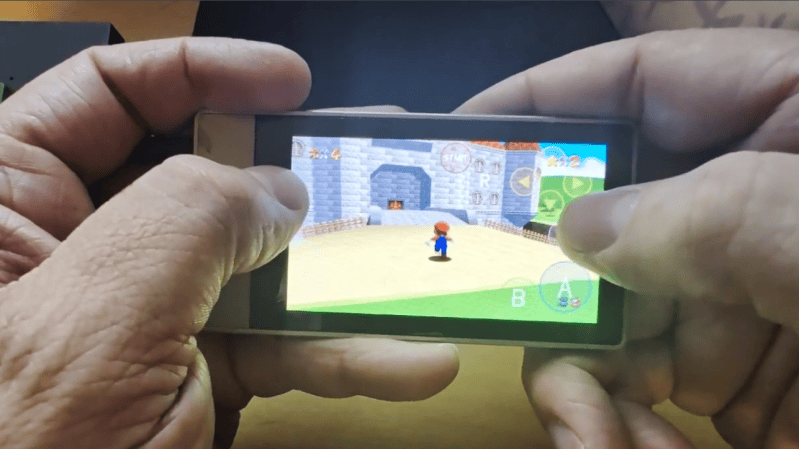
Although Windows CE doesn’t use the NT kernel, it’s similarly designed to run on a wide variety of system architectures. Since the Nintendo 64 uses a MIPS CPU it should basically just run either kernel. You might assume that the N64’s rather limited specs are a bit of a problem, but fortunately Windows CE is designed to run on a digital potato, and requires only a MB of RAM. Since that just so happens to be what the N64 has under the hood, [Throaty Mumbo] was optimistic about getting Windows CE running on the 1990s game console.

The idea for this project came when [Throaty] was tinkering with an IBM Workpad Z50 laptop that uses almost the same CPU as the N64 and also runs Windows CE. Although said laptop is probably a lot more practical of a platform to run Windows on, this didn’t mean that it wouldn’t be a fun challenge.

Since CE was intended to be customized by companies for their own embedded hardware this means that you can use an official SDK, such as Microsoft Windows CE 2.11 Platform Builder. Making Windows CE 2.11 run on an N64 thus involves creating a board-specific configuration and compile that against said SDK.

If you want to give it a shot yourself, the entire project is available on GitHub which is where you find most of the technical details as well. When using a flash cart such as the EverDrive, you can also put applications on the SD card and run them from within the Windows GUI. You’ll still be limited by the N64 hardware, but otherwise the experience is very smooth as the video below demonstrates.

Continue reading “Running Windows CE On The Nintendo 64”

2026 Hackaday Europe: Pre-party, More Workshops, And Everything Else

With Hackaday Europe no more than two days away, we want to help you wrap up all of the last loose ends. And that means last-minute changes in the workshop schedule, details on the Friday night pre-party, and more! Some tickets for the event itself, the workshops, and the pre-party (reservations required) are still available right here.

Pre-Party, Friday May 15th

Kick off the weekend with us at the official Hackaday Europe pre-party at Soqquadro Restaurant, Piazza Era 7, 23900 Lecco, Italy. Enjoy the Italian aperitivi on the gorgeous Lago di Lecco waterfront. Your ticket includes two drinks and an array of delicious snacks. It’s the Italian way to pregame the weekend ahead. Bring a hack, or just relax and hang out. Your choice. Either way, make sure you pre-register. (On the preregistration page, scroll all the way down past the workshops.)

Workshops

Unfortunately, the Let’s Mesh workshop has been canceled, but the good news, thanks to our incredible sponsors, we’ve added two great new workshops to the lineup. On Saturday, May 16th, we’ll have Tiny Tapeout, When Code Needs a Body, and Fault Injection 101. Sunday features EchoGlow: Arduino UNO Q Workshop with the brand-new Arduino Q devices, from 11:00 AM – 2:00 PM.

Tickets and full descriptions are available at registration.

Lightning Talks

On Sunday afternoon, we’ll dedicate some time to Lightning Talks. These are short, seven-minute talks, with or without slides, on whatever interests you at the moment. If you’ve got hacks or deep thoughts to share with us, you’ll never find a more receptive audience. Register now! Talk slots are FIFO.

Thanks, and See You Soon!

If you’ve never attended a Hackaday event before, we’re excited to see you. Half the fun is the crowd that convenes. If you want to bring along a hack to informally show-and-tell, it’s a great icebreaker. You won’t have to bring food or drinks – we’ve got that covered all weekend.

If you’re an old Hackaday hand, we’re stoked to see you again! A first at Hackaday Europe is going to be whatever large fraction of our SAO collection fits into carry-on luggage, and a sweet-looking SAO wall made by Hackaday Superfriend [Thomas Flummer]. If you have an SAO that you’d like to add to our pile, bring it along! It’s about time for us to do a photo gallery and write-up of everything we’ve got.

And we can’t leave without thanking our broad array of sponsors who make Hackaday Europe possible:

Hackaday Links Column Banner

Hackaday Links: May 10, 2026

While Artemis II was primarily a demonstration flight of the architecture NASA plans to use for future lunar missions, it was also an excellent excuse for the crew to snap some photos of the Moon and Earth with the benefit of modern camera technology. If you’ve been looking forward to seeing more of the crew’s images, you’re in luck, as thousands of new images have recently been released.

Now we don’t mean to beat up on the folks at NASA, but browsing through these images, we couldn’t help but be reminded of an article we saw on PetaPixel that discussed the space agency’s haphazard approach to sharing images online.

It’s really more like an unsorted file dump than anything, made worse by the fact that you have to access it through a government website that looks and performs like it was designed in the early 2000s. There’s even a prominent button that attempts to load a gallery feature that relies on the long-deprecated Adobe Flash. It would be nice to see the situation improved by the time astronauts actually touch down on the lunar surface, but we wouldn’t count on it.

Speaking of old tech, we’ve been following the resurgence of keyboard-equipped smartphones with great interest, as we imagine many of you have been. A recent CNBC article addresses the trend, although it didn’t quite take the nerd contingent into account. We want physical keys so we can work in the terminal and write code without fighting an on-screen keyboard, but of course, that’s not exactly what your average consumer is looking for.

It’s quite the opposite, in fact. A 20-something user referenced in the article explained how the younger generations see the physical keyboard as a way to be less connected to their phones, describing it as “an extra barrier of inconvenience that adds more steps into the thinking process.” If you need us, we’ll be collecting dust in the corner.

Continue reading “Hackaday Links: May 10, 2026”

Hackaday Podcast Episode 369: IR, E-Ink, And Avgas

In this episode, Hackaday Editors Elliot Williams and Tom Nardi start things off by discussing the latest reason that cheap PCB fabrication isn’t quite as cheap as it once was. The conversation will then move on to hacking electronic shelf labels, stylish e-ink status displays, cutting metal at home with high current and a bit of water, a solarpunk message board hiding in a IKEA-style lantern, and pushing NFC out of its comfort zone. From there you’ll hear about a matching transistors, taking pictures of the International Space Station, and Linux on the PS5. They’ll wrap up this week’s episode by going over the surprisingly simple concept behind flow batteries, and learn who’s still using leaded gasoline and why.

Check out the links if you want to follow along, and as always, tell us what you think about this episode in the comments!

Direct download in DRM-free MP3.

Continue reading “Hackaday Podcast Episode 369: IR, E-Ink, And Avgas”

The ESP8266 Gets An OS, And It’s Familiar

A couple weeks back we brought you news of KernelUNO, a command line shell and very simple operating system for the Arduino Uno. It’s a neat idea, so it’s hardly surprising to see someone port it to another microcontroller and add more features.

Here’s [hery-torrado], with KernelESP for the ESP8266, which takes the original idea and adds a web console, scheduled jobs, sensor rules, scripting, NTP, and a JSON API. The networking using the ESP’s built-in WiFi takes the original and makes it significantly more useful.

It’s worth suggesting that the ability to call URLs with GET data to pass things to APIs would be useful on a networked processor too, but this is already so well featured it seems rude to ask for more. Yet again though, this project has given a new life to an old chip, and we think it has a way further to go. Perhaps a port to the ESP32 would allow it to reach its full potential, or maybe for a ridiculously cheap and powerful platform, the CH32 series of chips. We look forward to see what more will come from KernelUNO.

Our original coverage can be read here.

Teardown Of A Shahed-136 Gimbaled Camera

The remains of a gimbal camera after its drone was shot down. (Credit: Le labo de Michel, YouTube)

The Iranian Shahed-136’s basic design has seen many changes and additions since Russia began using them, with some featuring interesting payloads such as cameras in a gimbal, making these drones useful for tasks like surveillance. Recently [Michel] got his hands one one such camera that was recovered from a shot-down drone in Ukraine, providing the opportunity for an in-depth look at what hardware is in these cameras.

The teardown thus covers the gimbal mechanism itself as well as the electronics and camera. First up is an Artix-7 FPGA-based board, followed by the range finder assembly. Unsurprisingly the camera feed handling is performed by an Hi3519 SoC, as this appears to be the off-the-shelf option you find all over on AliExpress and similar sites. There’s also an Artix-7 FPGA-based board here, which presumably performs some machine vision tasks or similar.

Continuing the ‘bought off AliExpress’ vibe, the power supply board (pictured above) is quite literally just that. A relay board follows the same pattern, with apparently the entire contents of the camera consisting of off-the-shelf development boards and modules that are readily found for sale online.

For the camera there is a thermal camera presumably for night operations, as most of these drone swarms are launched towards Ukraine at night. Looking at the gimbal assembly it similarly feels like it was sourced off AliExpress, featuring mostly Western components, sometimes with the typical lasered-off component markings and such.

This makes one wonder how much has changed here since nearly two years ago we saw an air data computer from a similar drone that could have been sourced off AliExpress, while the Russian missile teardowns show significantly more custom hardware, presumably because those are harder to source off AliExpress.

Continue reading “Teardown Of A Shahed-136 Gimbaled Camera”