Largest Chip Ever Holds 1.2 Trillion Transistors

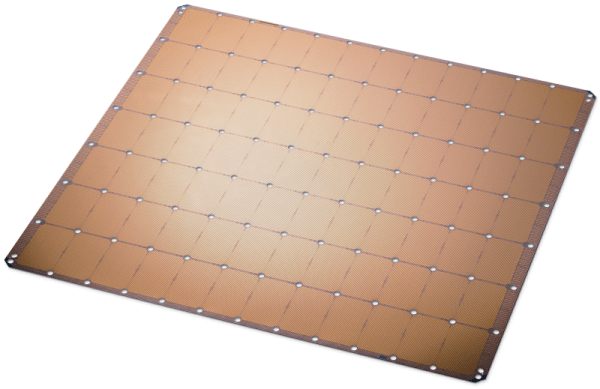
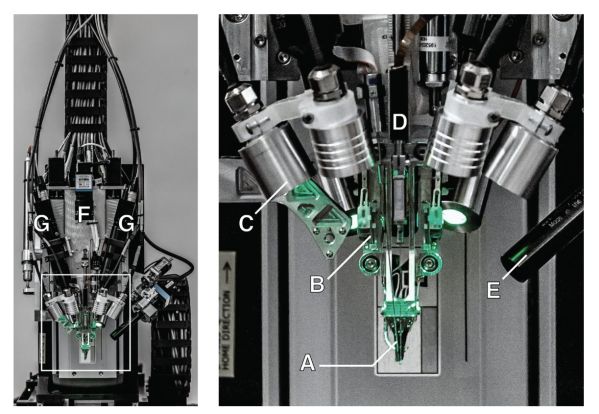
We get it, press releases are full of hyperbole. Cerebras recently announced they’ve built the largest chip ever. The chip has 400,000 cores and contains 1.2 trillion transistors on a die over 46,000 square mm in area. That’s roughly the same as a square about 8.5 inches on each side. But honestly, the WSE — Wafer Scale Engine — is just most of a wafer not cut up. Typically a wafer will have lots of copies of a device on it and it gets split into pieces.

According to the company, the WSE is 56 times larger than the largest GPU on the market. The chip boasts 18 gigabytes of storage spread around the massive die. The problem isn’t making such a beast — although a normal wafer is allowed to have a certain number of bad spots. The real problems come through things such as interconnections and thermal management.

Continue reading “Largest Chip Ever Holds 1.2 Trillion Transistors”

Brain-Computer Interfaces: Separating Fact From Fiction On Musk’s Brain Implant Claims

When it comes to something as futuristic-sounding as brain-computer interfaces (BCI), our collective minds tend to zip straight to scenes from countless movies, comics, and other works of science-fiction (including more dystopian scenarios). Our mind’s eye fills with everything from the Borg and neural interfaces of Star Trek, to the neural recording devices with parent-controlled blocking features from Black Mirror, and of course the enslavement of the human race by machines in The Matrix.

And now there’s this Elon Musk guy, proclaiming that he’ll be wiring up people’s brains to computers starting next year, as part of this other company of his: Neuralink. Here the promises and imaginings are truly straight from the realm of sci-fi, ranging from ‘reading and writing’ to the brain, curing brain diseases and merging human minds with artificial intelligence. How much of this is just investor speak? Please join us as we take a look at BCIs, neuroprosthetics and what we can expect of these technologies in the coming years.

Continue reading “Brain-Computer Interfaces: Separating Fact From Fiction On Musk’s Brain Implant Claims”

Neural Network In Glass Requires No Power, Recognizes Numbers

We’ve all come to terms with a neural network doing jobs such as handwriting recognition. The basics have been in place for years and the recent increase in computing power and parallel processing has made it a very practical technology. However, at the core level it is still a digital computer moving bits around just like any other program. That isn’t the case with a new neural network fielded by researchers from the University of Wisconsin, MIT, and Columbia. This panel of special glass requires no electrical power, and is able to recognize gray-scale handwritten numbers.

Continue reading “Neural Network In Glass Requires No Power, Recognizes Numbers”

Keep Pesky Cats At Bay With A Machine-Learning Turret Gun

It doesn’t take long after getting a cat in your life to learn who’s really in charge. Cats do pretty much what they want to do, when they want to do it, and for exactly as long as it suits them. Any correlation with your wants and needs is strictly coincidental, and subject to change without notice, because cats.

[Alvaro Ferrán Cifuentes] almost learned this the hard way, when his cat developed a habit of exploring the countertops in his kitchen and nearly turned on the cooktop while he was away. To modulate this behavior, [Alvaro] built this AI Nerf turret gun. The business end of the system is just a gun mounted on a pan-tilt base made from 3D-printed parts and a pair of hobby servos. A webcam rides atop the gun and feeds into a PC running software that implements the YOLO3 localization algorithm. The program finds the cat, tracks its centroid, and swivels the gun to match it. If the cat stays in the no-go zone above the countertop for three seconds, he gets a dart in his general direction. [Alvaro] found that the noise of the gun tracking him was enough to send the cat scampering, proving that cats are capable of learning as long as it suits them.

We like this build and appreciate any attempt to bring order to the chaos a cat can bring to a household. It also puts us in mind of [Matthias Wandel]’s recent attempt to keep warm in his shop, although his detection algorithm was much simpler.

Continue reading “Keep Pesky Cats At Bay With A Machine-Learning Turret Gun”

Wimbledon 2019: IBM’s Slammtracker AI Technology Heralds The Demise Of The Human Player

Whilst we patiently wait for the day that Womble-shaped robots replace human tennis players at Wimbledon, we can admire the IBM powered AI technology that the organisers of the Wimbledon tennis tournament use to enhance the experience for TV and phone viewers.

As can be expected, the technology tracks the ball, analyses player gestures, crowd cheers/booing but can’t yet discern the more subtle player behaviour such as serving an ace or the classic John McEnroe ‘smash your racket on the ground’ stunt. Currently a large number of expert human side kicks are required for recording these facets and manually uploading them into the huge Watson driven analytics system.

Phone apps are possibly the best places to see the results of the IBM Slammtracker system and are perfect for the casual tennis train spotter. It would be interesting to see the intrinsic AI bias at work – whether it can compensate for the greater intensity of the cheer for the more popular celebrities rather than the skill, or fluke shot, of the rank outsider. We also wonder if it will be misogynistic – will it focus on men rather than women in the mixed doubles or the other way round? Will it be racist? Also, when will the umpires be replaced with 100% AI?

Finally, whilst we at Hackaday appreciate the value of sport and exercise and the technology behind the apps, many of us have no time to mindlessly watch a ball go backwards and forwards across our screens, even if it is accompanied by satisfying grunts and the occasional racket-to-ground smash. We’d much rather entertain ourselves with the idea of building the robots that will surely one day make watching human tennis players a thing of the past.

AI Recognizes And Locks Out Murder Cats

Anyone with a cat knows that the little purring ball of fluff in your lap is one tiny step away from turning into a bloodthirsty serial killer. Give kitty half a chance and something small and defenseless is going to meet a slow, painful end. And your little killer is as likely as not to show off its handiwork by bringing home its victim – “Look what I did for you, human! Are you not proud?”

As useful as a murder-cat can be, dragging the bodies home for you to deal with can be – inconvenient. To thwart his adorable serial killer [Metric], Amazon engineer [Ben Hamm] turned to an AI system to lock his prey-laden cat out of the house. [Metric] comes and goes as he pleases through a cat flap, which thanks to a solenoid and an Arduino is now lockable. The decision to block entrance to [Metric] is based on an Amazon AWS DeepLens AI camera, which watches the approach to the cat flap. [Ben] trained three models: one to determine if [Metric] was in the scene, one to determine whether he’s coming or going, and one to see if he’s alone or accompanied by a lifeless friend, in which case he’s locked out for 15 minutes and an automatic donation is made to the Audubon Society – that last bit is pure genius. The video below is a brief but hilarious summary of the project for an audience in Seattle that really seems quite amused by the whole thing.

So your cat isn’t quite the murder fiend that [Metric] is? An RFID-based cat door might suit your needs better.

Continue reading “AI Recognizes And Locks Out Murder Cats”

Blisteringly Fast Machine Learning On An Arduino Uno

Even though machine learning AKA ‘deep learning’ / ‘artificial intelligence’ has been around for several decades now, it’s only recently that computing power has become fast enough to do anything useful with the science.

However, to fully understand how a neural network (NN) works, [Dimitris Tassopoulos] has stripped the concept down to pretty much the simplest example possible – a 3 input, 1 output network – and run inference on a number of MCUs, including the humble Arduino Uno. Miraculously, the Uno processed the network in an impressively fast prediction time of 114.4 μsec!

Whilst we did not test the code on an MCU, we just happened to have Jupyter Notebook installed so ran the same code on a Raspberry Pi directly from [Dimitris’s] bitbucket repo.

He explains in the project pages that now that the hype about AI has died down a bit that it’s the right time for engineers to get into the nitty-gritty of the theory and start using some of the ‘tools’ such as Keras, which have now matured into something fairly useful.

In part 2 of the project, we get to see the guts of a more complicated NN with 3-inputs, a hidden layer with 32 nodes and 1-output, which runs on an Uno at a much slower speed of 5600 μsec.

This exploration of ML in the embedded world is NOT ‘high level’ research stuff that tends to be inaccessible and hard to understand. We have covered Machine Learning On Tiny Platforms Like Raspberry Pi And Arduino before, but not with such an easy and thoroughly practical example.