Chiptune Instrument From NES

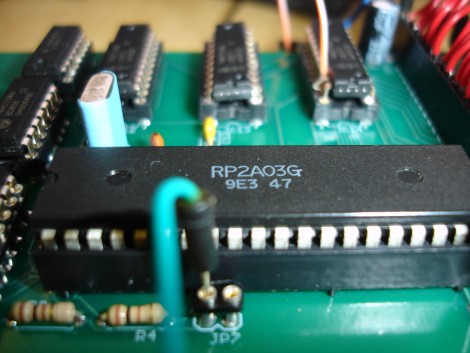
[Jarek Lupinski] wanted an instrument that would let him play chiptunes live, without a need for pre-programming a cartridge for playback during a concert. His preferred hardware is an original Nintendo Entertainment System because of its familiar nostalgic sound. After picking up a lot of 5 broken NES units he set out to build a midi-compliant device.

The five NES units he bought had nothing wrong with them other than the 70-pin cartridge connector. He fixed them all, then de-populated the board on one and tried to build out a circuit on a breadboard. After much trial and error, forum searching, and conversations with others who were familiar with the hardware he got the circuit working. He’s posted a schematic and had a board fabricated which takes the transplanted chips and transforms them into an instrument. Check out the test notes being played by an Arduino Mega after the break.
Continue reading “Chiptune Instrument From NES”

Arduino UNO And Mega 2560

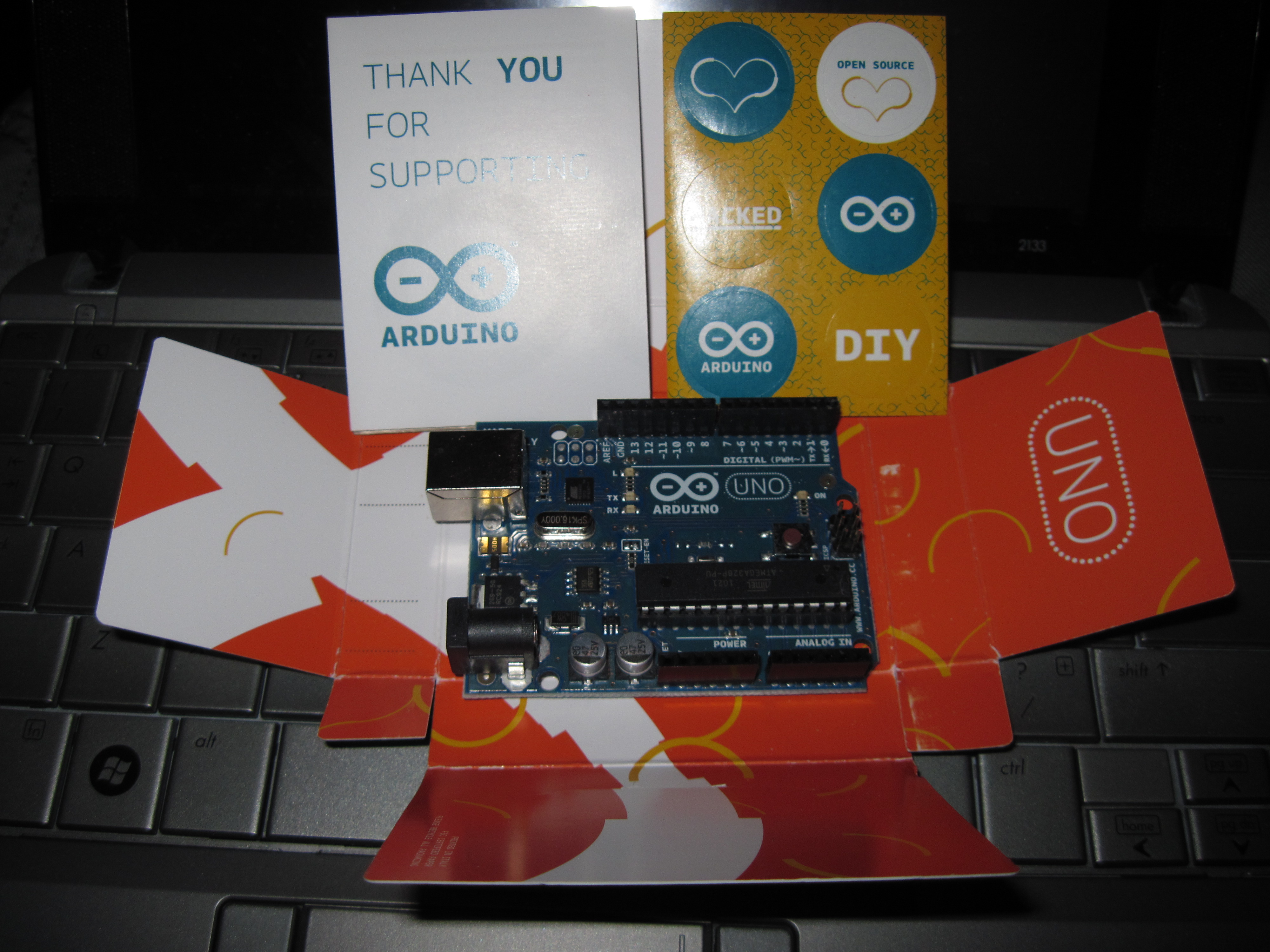
The Arduino Team presented some new products at Maker Faire this weekend. It’s a significant update. The Arduino UNO and Arduino Mega 2560 update the Duemilanove and Mega respectively. They now use an ATMega8U2 instead of an FTDI USB to serial converter chip. Allowing an Arduino to become nearly any kind of USB device. A fourth mounting hole has been added to the UNO for more stable mounting. The booloader is now the Optiboot bootloader. The boards can run firmata out of the box. We are not sure about existing Arduino boards, but the last six bytes of EEPROM have a unique serial number. At this point, the Mega 2560 has some kind of issue with gcc on certain platforms and unable to use the full memory available until there is an update to the IDE.

The team also gave a preview of some works in progress. Arduino Ethernet POE can be power over ethernet and loaded with TFTP. Available October 18, TinkerKit will be released. Geared toward designers, the kit has PCB modules that include a joystick, soft pots, transistor, relay, power MOSFET, push button, LEDs and motor driver. That same day will be the launch of the multi-lingual Arduino Store.

These developments will be a nice addition to the toolset out there that you can use and we look forward to new projects using these tools.

Update: [PT] sent us a link to an ever-growing FAQ about this hardware.

Daft Punk Table With IPod Dock

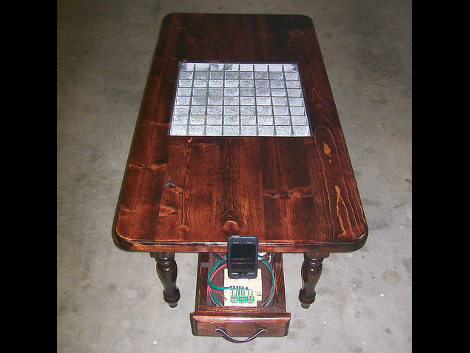
This beautifully crafted Daft Punk table with iPod dock was built by [Dustin Evans]. The table itself was built with the help of a friend in one day with electronics added a bit later. It features an 8×8 grid of boxes with red LEDs mounted inside. The picture above is not quite the finished product, a diffuser will be added later to augment the scattering of light already provided by cutting the tip off of each LED. On the underside you’ll find a power supply and a set of speakers. The system is controlled by an Arduino which resides in the same drawer as the dock. See the final product in the clip after the break.

Continue reading “Daft Punk Table With IPod Dock”

Web Controlled Sprinkler Automation

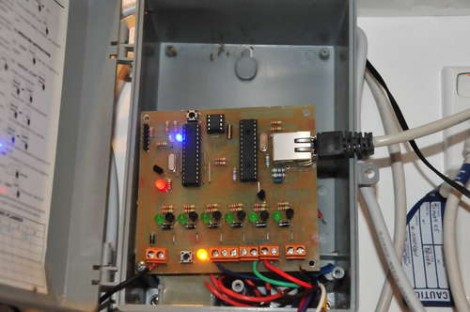
[Doug] needed to update his watering system to comply with his city’s new water saving ordinance. The old system wasn’t capable of being programmed to water only on even or odd calendar days. Rather than purchase a replacement he decided to build his own sprinkler controller. It needed to switch 12V solenoids, a job that’s not too hard to design for. Rather than re-invent the wheel, he modified a previous controller design. It is basically an Arduino and Ethernet shield on a his own etched board. In addition to the ATmega328 and an ENC28J60 (for ethernet connectivity) there is a bank of transistors to drive the watering solenoids. Now he has a web interface that controls the watering schedule and is fully in compliance with the new city code.

If you need another way to save when watering your grass you should take a look at the sidewalk-avoiding sprinkler.

5 Tones, 1 Arduino

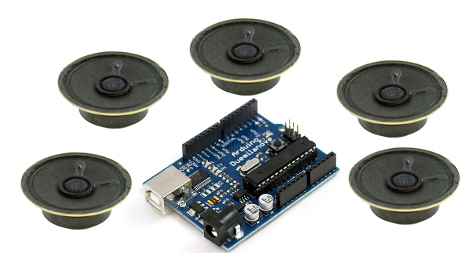
Because the Arduino is in such high demand for producing multiple musical tones at the same time; [Jeremy Blum] has successfully figured out the math and other necessaries that will take your once previously single tone producing MCU and turn it into a 5 tone producing machine. unsurprisingly its really just some creative use of PWM control but it all works out in the end anyway and helps prevent you from purchasing additional sound generating chips. This truly does open up some new doors, as [Jeremy] shows with his still in production thingamakit like project: ReacXion.

LEGO Host For All Of Your Prototyping Projects

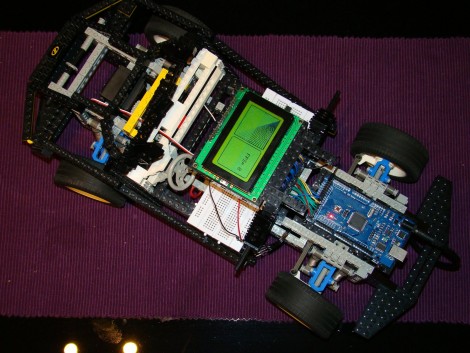
[Deadbird] decided to use a LEGO 8880 Super Car as a host for all of his electronic tinkering. Throughout his blog (translated) you’ll find the vehicle with an Arduino MEGA interfacing various prototyping bits. It starts with the motors for locomotion, closely followed by a servo for steering. From there we see the addition of a breadboard and graphic LCD screen. So far he’s worked out the use of a PS2 keyboard as a controller and, most recently he’s interfaced a Wii Nunchuck.

We’re more used to seeing NXT kits adapted for wider use, but if you’ve got a nice kit like this one it makes a great base onto which you can add your own robotic elements.

Web Controlled Watering Can

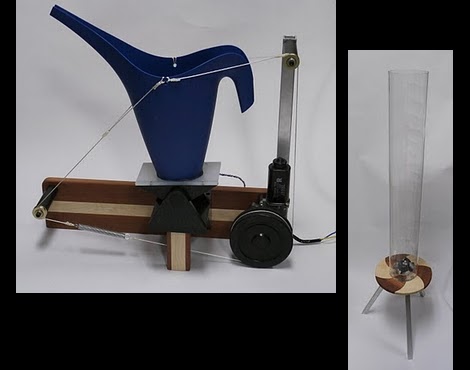
Here’s a watering can and water vortex that are controlled with a webkit browser interface. The interface displays a drawing of the watering can on your browser. If you grab one of the handles on the circle around the image and move it, the can will rotate as well.

Okay, so this isn’t going to change the world and actually presents a fairly useless watering setup. But [Ben] seems to be a master of fabrication and that’s what we appreciate in this build. The watering can is solidly mounted and moves fluidly with seemingly little effort from the motor. He uses a spring to keep the rope loop taut, sourcing a castor wheel and automotive power-window motor to provide the motion. The hinged base on which the can sits has a potentiometer in it, used to measure the current position of the watering can. Remember these techniques as they’ll come in handy in your future builds.

There’s also a little bonus at the end of the video after the break. We wondered what [Ben] might use that power drill controller hack for. Looks like it makes an appearance in his water vortex work.

Continue reading “Web Controlled Watering Can”