Choosing The Right Battery For Your Electric Vehicle Build

Many a hacker has looked at their scooter, bike, or skateboard, and decided that it would be even better if only it had a motor on it. Setting out to electrify one’s personal transport can be an exciting and productive journey, and one that promises to teach many lessons about mechanical and electronic engineering. Fundamentally, the key to any build is the battery, which has the utmost say in terms of your vehicle’s performance and range. To help out, we’ve prepared a useful guide on selecting the right battery for your needs.

One Chemistry To Rule Them All

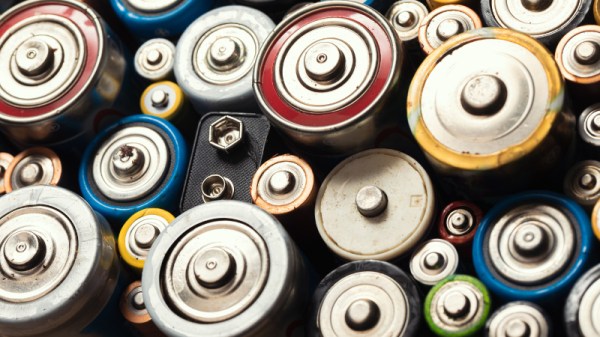
Batteries come in all shapes and sizes, and a variety of different chemistries that all have their own unique properties and applications. When it comes to small electric vehicles, it’s desirable to have a battery with a low weight, compact size, plenty of current delivery for quick acceleration, and high capacity for long range.

30 years ago, options were limited to lead acid, nickel cadmium, and nickel metal hydride batteries. These were heavy, with low current output, poor capacity, and incredibly slow charge times. Thankfully, lithium polymer batteries have come along in the meantime and are more capable across the board. Offering huge discharge rates, fast charging, light weight and high capacity, they’re undeniably the ultimate choice for a high performance electric vehicle. They’re also wildly popular, and thus cheap, too!

There are some hangups, however. It’s important to keep all the cells in a pack at the same voltage in order to avoid cells back-charging each other. This can cause damage to the pack, or even explosions or fire. Maintaining the battery voltages to avoid this is called “balancing”. It can be handled in various ways, depending on the exact style of battery you’re using, as we’ll cover later.

Additionally, lithium batteries do not like being over-discharged. As a rule of thumb, it’s a good idea not to let your batteries drop below 3.0 V per cell. Failure to keep this in check can lead to ruining a pack, hurting its maximum capacity and ability to deliver current.

There are thankfully ways around these issues, and which ones you use depends on the battery you choose for your application. Continue reading “Choosing The Right Battery For Your Electric Vehicle Build”

A Modular System For Building Heavy Duty 18650 Battery Packs

With 18650 cells as cheap and plentiful as they are, you’d think building your own custom battery packs would be simple. Unfortunately, soldering the cells is tricky, and not everyone is willing to invest in a spot welding setup just to put the tabs on them. Of course that’s only half the battle, you’ll still want some battery protection and management onboard to protect the cells.

The lack of a good open source system for pulling all this together is why [Timothy Economu] created DKblock. Developed over the last three years, his open source system allows users to assemble large 18650 battery packs for electric vehicles or home energy storage, complete with integrated intelligent management and protection systems. Perhaps best of all there’s no welding required, the packs simply get bolted together.

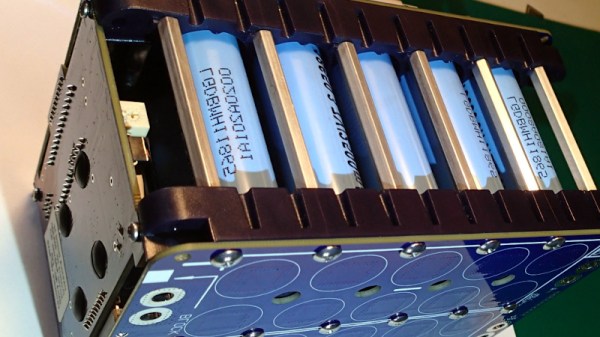
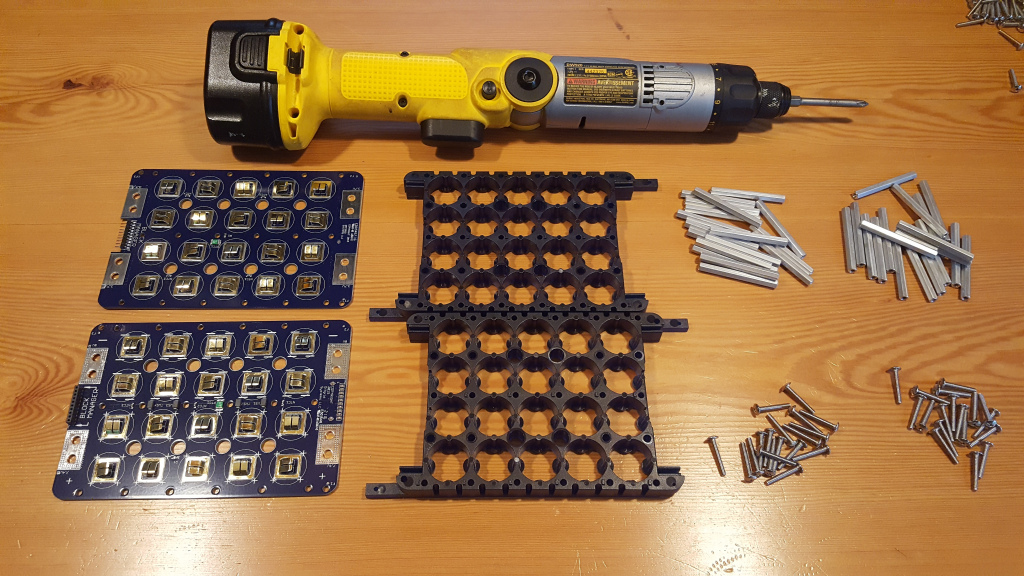
Each block of batteries is assembled using screws and standoffs in conjunction with ABS plastic cell holders. A PCB is placed on each side of the stack, and with tabs not unlike what you’d see in a traditional battery compartment, all the cells get connected without having to solder or weld anything to them. This allows for the rapid assembly of battery packs from 7.2 VDC all the way up to 150 VDC , and means individual cells can easily be checked and replaced in the future should the need arise.

For monitoring the cells, a “Block Manager” board is installed on each block, which communicates wirelessly to a “Pack Supervisor” board that monitors the overall health of the system. Obviously, such a robust system is probably a bit overkill if you’re just looking to build a pack for your quadcopter, but if you’re looking to build a DIY Powerwall or juice up a custom electric vehicle, this could be the battery management system you’ve been looking for.

Brussels Looks Towards Banning Fossil Fuel Transportation As Soon As 2035

Many cities around the world routinely struggle with smog. Apart from being unsightly, heavy air pollution has serious negative health effects, both in the short term and with regards to long-term life expectancy. Over the years, governments have tried to tackle the problem with varied tactics around the world.

When talking about smog, Brussels is not one of the cities that comes first to mind. Regardless, the local government has developed its new climate plan that seeks to abolish fossil fuel vehicles from its streets by 2035. The scheme has a variety of measures that will be staggered over the coming years. It’s part of a broadening trend in transportation, and something we’ll likely see more of around the world in coming years.

What’s The Go?

Brussels is in the process of reducing congestion by converting former roads into pedestrian-only spaces. REUTERS/Eric Vidal

Under the new plan, diesel vehicles will be banned from the city’s Low Emission Zone, or LEZ, by 2030. This will further extend to gasoline vehicles in 2035. Furthermore, special categories of higher polluting vehicles will have bans enforced even earlier. Motorcycles had previously been exempt from the LEZ, but moving forward, the most polluting models will be locked out of the city centre as soon as 2022. The aim is to reduce emissions, with a goal of cutting CO2 output by 40 percent by 2030, and becoming carbon neutral by 2050. The city is also exploring the concept of a Zero Emission Zone, or ZEZ, expanding upon earlier efforts which transformed the Boulevard Anspach from a heavily-trafficked road into a pedestrian-only plaza. Continue reading “Brussels Looks Towards Banning Fossil Fuel Transportation As Soon As 2035”

The Ultimate Hacker’s Compact 4WD!

If you’ve spent any time at one of the larger European hacker camps over the last few years you’ll have seen the invasion of little electric vehicles sporting hoverboard motors as an all-in-one propulsion system. German hackers, in particular, have incorporated them into the iconic Bobby Car children’s toy, and ca be seen whizzing around looking slightly incongruous as adults perched on transport designed for five-year-olds.

[Peter Pötzi] has created just such an electric Bobby Car, and his one is particularly well-executed with a 3D-printed steering column extender and four motors for full 4WD rather than the usual two. A steering wheel-mounted display has a neat enclosure, and is fed SPI from the ESP32 that runs the show via an RJ45 patch cable. Many of these builds use hoverboard motor controllers with hacked firmware, but this one instead takes a set of off-the-shelf VESCs. Control comes via a set of Xbox 360 trigger buttons mounted to the underside of the steering wheel.

The result is typically self-contained as are all the Bobby Car builds, with the added bonus of the extra power of four motors rather than two. We’re not so sure that 4WD gives it off-road capabilities though, but having seen these vehicles perform some nifty maneuvers in the past perhaps it’ll lend extra traction on corners.

Drop In Motor Converts Car To EV

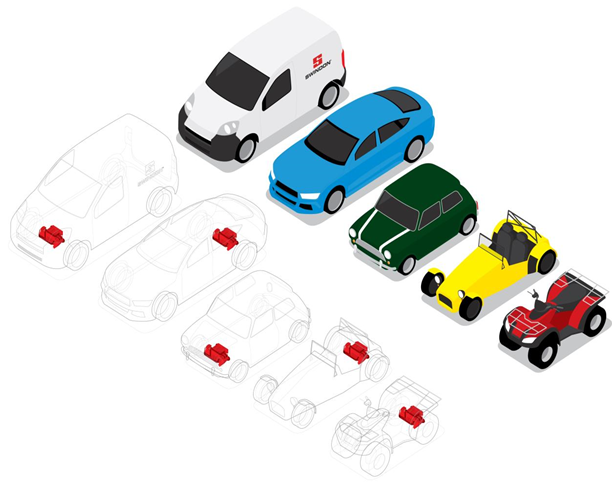
With the latest craze of electric vehicles, it might be tempting to take an old project car and convert it from gas to electric. On the surface, it sounds simple, but the reality is there are a number of pitfalls. It would be nice if you could find a drop in engine replacement that was ready to go. According to Swindon Powertrain, you’ll be able to soon.

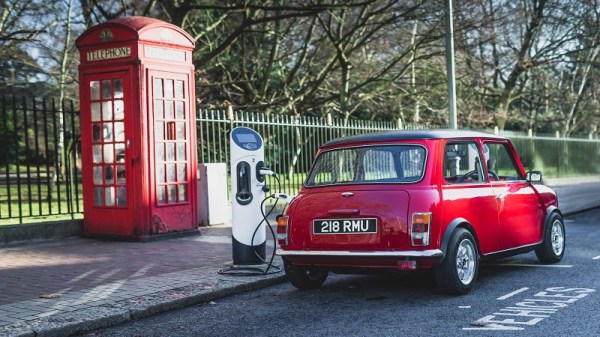
Based on their existing powertrain that can convert a Mini to EV, the transverse powertrain weighs 70 kg and if it can fit in a Mini, it can probably fit in nearly anything. Specifically, it’s 60 cm wide and 44 cm deep — that means it could fit easily in a roughly two foot box. The height can be as little as 28 cm. The company talks about fitting it on a quad bike or even a loading platform. It can be thought of as sort of an electric “crate engine” — a common term for a ready to install powerplant that, as the name implies, arrives in a crate.

The powertrain with a single-speed transmission, cooling system, and inverter weighs in at 154 pounds and generates up to 110 horsepower.  We aren’t sure what the expected battery pack is, but presumably, it will be somewhat flexible.

It’ll be interesting to see how people will integrate these if and when they become available as planned in June of next year. Can you drive a differential? Can you use two or four, each driving a different wheel? Turns out we might just be car designers after all.

If you want to see what they did with a Mini, look at their E Classic which claims an 80 MPH top speed and a range of 125 miles. We’ve looked at conversions before. If a conversion is not your thing, you could try to go Open Source although that project doesn’t seem very active.

An All-Electric Plane Takes To The Skies

With climate protests and airline strikes occurring around the world, there is more awareness than ever before for the necessity of environmental sustainability. More importantly, there is more discussion around the immense carbon footprint left by the airline industry, perhaps one of the largest contributors to climate change worldwide.

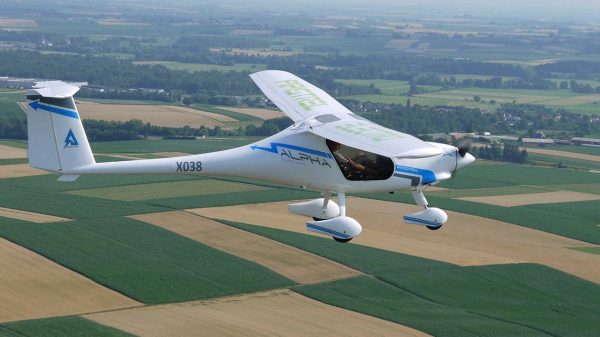
The Slovenian-based Pipistrel ALPHA Electro is one of the leading electric planes today, with bragging rights as the world’s first mass-produced electric aircraft. While NASA may have announced their X-57 Maxwell, the plane is still undergoing testing for its first planned flight in 2020. The ALPHA Electro, marketed as a trainer plane for flight students and recreational flyers, features a 34’6″ wingspan and low running costs.

The two-person flyer is equipped with a 60 kW electric motor, with a cruising speed of about 157 km/hr. A 21 kW battery provides the plane with enough energy for a 55 minute flight, with a half hour reserve, and takes about an hour to charge back up. An additional perk of flying an electric plane is the low noise and zero CO2 emissions, which allows the flights to take place near large cities with exhaust and noise emission standards.

With airplanes, a majority of the fuel is used for takeoff and landing, making short haul flights particularly troublesome – compare 107 lbs CO2 flying from New York to Boston versus 62 lbs CO2 driving. While refraining from frequent flights is still the best idea for reducing your carbon footprint, we’re hopefully headed towards more environmentally-friendly options for air travel.

Check out the ALPHA Electro’s teaser video below.

Continue reading “An All-Electric Plane Takes To The Skies”

Worn Out EMMC Chips Are Crippling Older Teslas

It should probably go without saying that the main reason most people buy an electric vehicle (EV) is because they want to reduce or eliminate their usage of gasoline. Even if you aren’t terribly concerned about your ecological footprint, the fact of the matter is that electricity prices are so low in many places that an electric vehicle is cheaper to operate than one which burns gas at $2.50+ USD a gallon.

Another advantage, at least in theory, is reduced overal maintenance cost. While a modern EV will of course be packed with sensors and complex onboard computer systems, the same could be said for nearly any internal combustion engine (ICE) car that rolled off the lot in the last decade as well. But mechanically, there’s a lot less that can go wrong on an EV. For the owner of an electric car, the days of oil changes, fouled spark plugs, and the looming threat of a blown head gasket are all in the rear-view mirror.

Unfortunately, it seems the rise of high-tech EVs is also ushering in a new era of unexpected failures and maintenance woes. Case in point, some owners of older model Teslas are finding they’re at risk of being stranded on the side of the road by a failure most of us would more likely associate with losing some documents or photos: a disk read error.

Continue reading “Worn Out EMMC Chips Are Crippling Older Teslas”