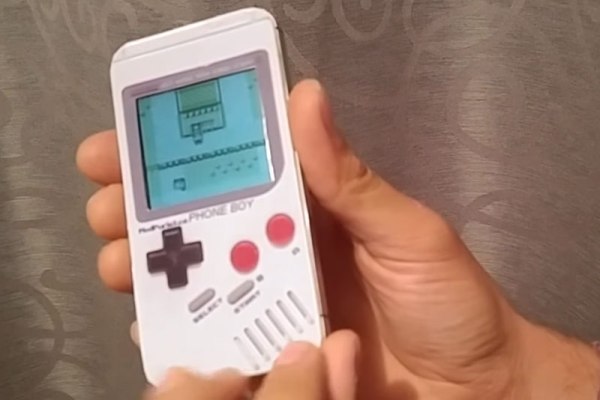
We’ve featured the work of [Modpurist] before, but his latest hack is wonderful in its simplicity. He wanted to create a more authentic Game Boy feel on his iPhone, so he printed out and stuck a skin on the front that makes it look like a Game Boy. Or rather, a Phone Boy, as the form factor is a bit different.
By measuring out the on-screen buttons and using light photo paper, he was able to have buttons on the skin as well: the touch screen still works through it. You can download his printable templates… and the finishing touch is a similar print for the back of the phone to gives that genuine Game Boy feel. Okay, feel is not the right term since the classic d-pad and red buttons are still just capacitive and have no throw. But this is a clever step in a fun direction.
Check out his other hacks while you are at it, including the Game Boy Fridge.
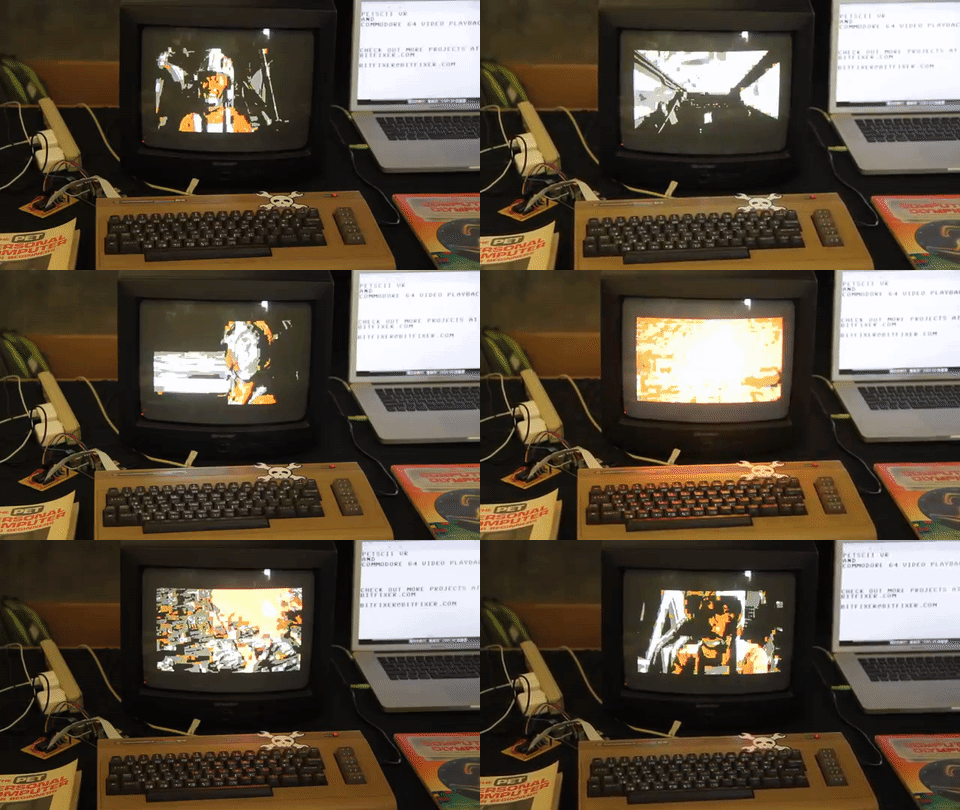
 Here at the Vintage Computer Festival, we’ve found oodles of odds and ends from the past. Some, however, have gotten a modern twist like [bitfixer’s] recent Commodore PET project upgrades.