If you watch Star Trek, you will know one way to get rid of pesky aliens is to vent antimatter. The truth is, antimatter is a little less exotic than it appears on TV, but for a variety of reasons there hasn’t been nearly as much practical research done with it. There are well over 200 electron accelerators in labs around the world, but only a handful that work with positrons, the electron’s anti-counterpart. [Dr. Aakash Sahai] would like to change that. He’s got a new design that could bring antimatter beams out of the lab and onto the desktop. He hasn’t built a prototype, but he did publish some proof-of-concept simulation work in Physical Review Accelerators and Beams.
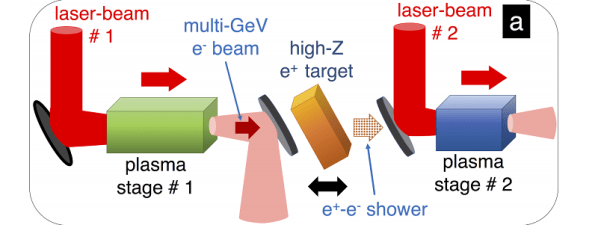
Today, generating high-energy positron beams requires an RF accelerator — miles of track with powerful electromagnets, klystrons, and microwave cavities. Not something you are going to build in your garage this year. [Sahai] is borrowing ideas from electron laser-plasma accelerators (ELPA) — a technology that has allowed electron accelerators to shrink to mere inches — and turned it around to create positrons instead.
Continue reading “Creating Antimatter On The Desktop — One Day”


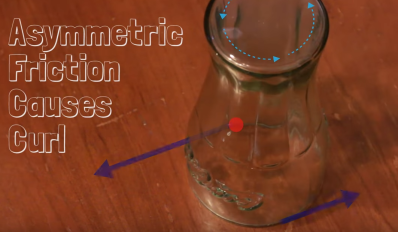 If you’ve been watching the Olympics, you’ve probably seen some curling, the Scottish sport of competitively pushing stones on ice. As the name implies, curling stones don’t go straight. The thrower pushes them with a bit of rotation, and the stones curve in the direction they are rotating. This is exactly the opposite of what one would expect — try it yourself with an inverted drinking glass on a smooth table. The glass will curl opposite the direction of rotation. Clockwise spin will result in a curl to the left, counterclockwise in a curl to the right.