60 Watt USB Soldering Iron Does It With Type-C

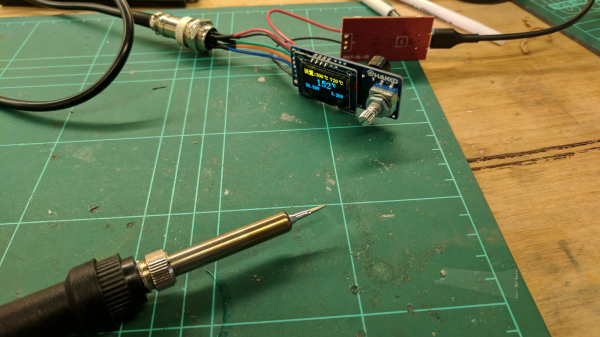
Some time back we ran a post on those cheap USB soldering irons which appeared to be surprisingly capable considering they were really under powered, literally. But USB Type-C is slated to change that. Although it has been around for a while, we are only now beginning to see USB-C capable devices and chargers gain traction. USB-C chargers featuring the USB-PD option (for power delivery) can act as high power sources allowing fast charging of laptops, phones and other devices capable of negotiating the higher currents and voltages it is capable of sourcing. [Julien Goodwin] shows us how he built a USB-C powered soldering iron that doesn’t suck.

He is able to drive a regular Hakko iron at 20 V and 3 Amps, providing it with 60 W of input power from a USB-C charger. The Hakko is rated for 24 V operating voltage, so it is running about 16% lower power voltage. But even so, 60 W is plenty for most cases. The USB-C specification allows up to 5 A of current output in special cases, so there’s almost 100 W available when using this capability.

It all started while he was trying to consolidate his power brick collection for his various computers in order to reduce the many types and configurations of plugs. Looking around, he stumbled on the USB-PD protocol. After doing his homework, he decided to build a USB Type-C charger board with the PD feature based on the TI TPS65986 chip – a very capable USB Type-C and USB PD Controller and Power Switch. The TI chip is a BGA package, so he had to outsource board assembly, and with day job work constantly getting in the way, it took a fair bit of time before he could finally test it. Luckily, none of the magic smoke escaped from the board and it worked flawlessly the first time around. Here is his deck of slides about USB-C & USB-PD [PDF] that he presented at linux.conf.au 2017 Open Hardware Miniconf early this year. It provides a nice insight to this standard, including a look at the schematic for his driver board.

Being such a versatile system, we are likely to see USB-C being used in more devices in the future. Which means we ought to see high power USB Soldering Irons appearing soon. But at the moment, there is a bit of a “power” struggle between USB-C and Qualcomm’s competing “Quick Charge” (QC) technology. It’s a bit like VHS and Betamax, and this time we are hoping the better technology wins.

Hackaday Links Column Banner

Hackaday Links: December 4, 2016

The Chaos Communication Congress is growing! Actually, it’s not, but there may be an ‘overflow venue’ for everyone who didn’t get a ticket. There’s a slack up for people who didn’t get a ticket to 33C3 but would still like to rent a venue, set up some tables, stream some videos, and generally have a good time.

Need to test a lot of batteries? Have one of those magnetic parts tray/dish things sitting around? This is freakin’ brilliant. Put your batteries vertically in a metal dish, clip one lead of a meter to the dish and probe each battery with the other lead of your meter.

Pravda reports the USS Zumwalt and HMS Duncan – the most technologically advanced ships in the US and Royal Navies – have turned into, ‘useless tin cans due to China’, with ‘Microchips made in China putting the vessels out of action’. Again, Pravda reports this, so don’t worry. In other news, someone found a few USB drives in a parking lot in Norfolk, Virginia.

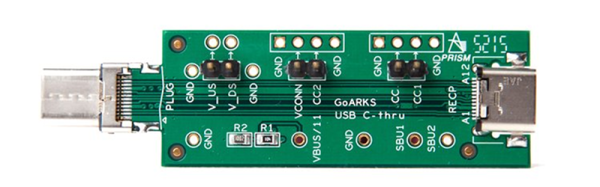
Here’s how discourse goes on the Internet. Someone does something. Everyone says it’s stupid. We wait a few days or weeks. Someone posts something on Medium telling everyone it’s actually okay. Public opinion is muddled until the actual issue being discussed is rendered technologically irrelevant. For the newest MacBook Pro, we’re currently at stage 3 and ‘it’s kind of great for hackers’. Now if only we knew how to make USB-C ports work with microcontrollers…

If you have a Prusa i3, here’s a free gift: a Spitfire. The files to print a remote control, 973mm Spitfire Mk XVI are now free for Prusa i3 and i3 Mk 2 owners. Why? Because it’s cool, duh, and [Stephan Dokupil] and [Patrik Svida], the guys behind the Spitfire and other 3D printed RC planes, are also in Czech. Now all we need are Czech roundel stickers.

Ask Hackaday: Does Apple Know Jack About Headphones?

If you’ve watched the tech news these last few months, you probably have noticed the rumors that Apple is expected to dump the headphone jack on the upcoming iPhone 7. They’re not alone either. On the Android side, Motorola has announced the Moto Z will not have a jack. Chinese manufacturer LeEco has introduced several new phones sans phone jack. So what does this mean for all of us?

This isn’t the first time a cell phone company has tried to design out the headphone jack. Anyone remember HTC’s extUSB, which was used on the Android G1? Nokia tried it with their POP Port. Sony Ericsson’s attempt was the FastPort. Samsung tried a dizzying array of multi-pin connectors. HP/Palm used a magnetic adapter on their Veer. Apple themselves tried to reinvent the headphone jack by recessing it in the original iPhone, breaking compatibility with most of the offerings on the market. All of these manufacturers eventually went with the tried and true ⅛” headphone jack. Many of these connectors were switched over during an odd time in history where Bluetooth was overtaking wired “hands-free kits”, and phones were gaining the ability to play mp3 files.

Continue reading “Ask Hackaday: Does Apple Know Jack About Headphones?”