Security Audit Kit In A Mouse

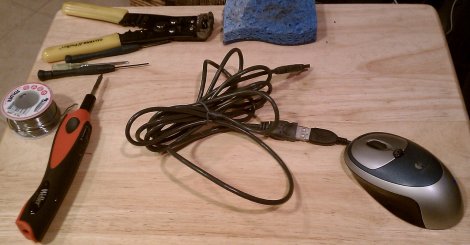
Sometimes it helps to have an entire set of tools with you to tackle a problem, and sometimes it helps to take the discreet route. [StenoPlasma] took the latter of these approaches, and stuffed a USB hub, a 16 GB flash drive, and an Atheros based USB wireless adapter into a regular looking USB mouse to make a Linux bootable system in a mouse. Because he chose the Atheros adapter, he is also capable of doing packet injection with tools like Aircrack-ng, which can invaluable in a security audit or (white hat) hacking situation.

This is the only photo we have, so it could be possible that the mouse is no more than a mouse, however we know all of what [StenoPlasma] claims is 100% possible, so we’ll give him the benefit of the doubt, and hope this inspires others to hack up your own mouse kits. Be sure to check out the full parts list after the break.

Continue reading “Security Audit Kit In A Mouse”

Plug And Prey: Malicious USB Devices

This very informative talk given at Shmoocon 2011 has been posted over at IronGeek. Covering all kinds of angles that a person could attack someones computer through the USB port, this should be read by anyone who is security minded at all. No matter which side of the port you tend to be on, this article has great information. They cover some common attack methods such as keyloggers and fake keyboards as well as some common methods of securing your system against them. We’ve actually seen this in the news a bit lately as people have been using the keyboard emulation method in conjunction with android phones to hack into systems.

[thanks Adrian]

MCP2200 USB To Serial Chip Hacked To Do Your Bidding

Mircrochip has a new USB to Serial converter available called the MCP2200. [Sjaak] suspected that it may have been made from an existing 20-pin PIC and found that reading the device signature with the PICKIT3 shows that the chip is an 18F14K50. Most likely this is running Microchip’s USB stack but it’s hard to tell because chip is code-protected, reading back all zeros. So he set out to write some replacement firmware which would provide the same functionality and give you access to the rest of the chip’s features.

There were some speed bumps along the way. The first one is that Microchip’s licensing for their USB stack won’t allow you to open source your firmware. That’s okay, it seems there is already a USB stack that can be ported which doesn’t have this restriction. The second wrinkle in the plan is that [Sjaak’s] code doesn’t come with a VID/PID pair that you can use like V-USB does for AVR chips. But that doesn’t diminish the accomplishment of getting the device to work by echoing back characters it receives. Full USB to serial support with the replacement firmware is on the way.

[Thanks Chris]

Reverse Geocache Features UI And Is Reprogrammable

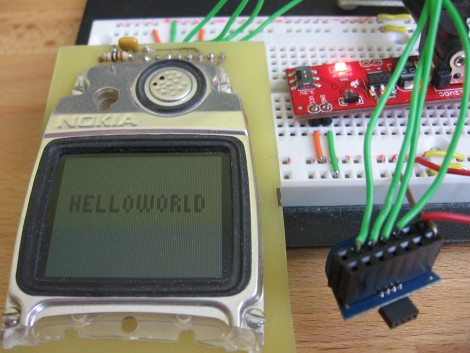
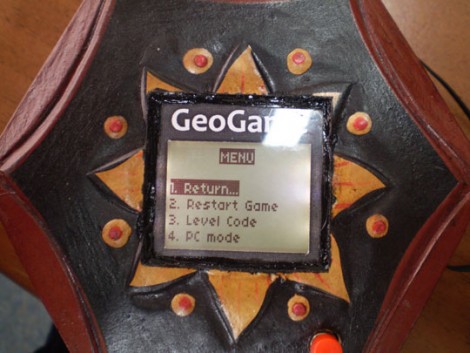
Here is yet another offering in the Reverse Geocache puzzle arena. We’ve been getting a lot of tips about these projects but this one in particular stuck out from the others. [Mure] packed in a bunch of features, starting with the LCD screen seen above. You can just make out the single red button near the bottom of the image which is used to traverse the menu. The octagonal box has an octagonal PCB inside that includes a USB connector. As you can see in the video after the break, this can be used for charging the batteries, and communicating with the internals. An accompanying program is used to generate puzzle data, which can then be programmed via that USB connection to set a new puzzle location. This functionality certainly protects against accidental lock-outs which were a problem with the last puzzle we looked in on.

Classic Game Emulation On The Dockstar

[Hunter Davis] is playing games like Contra, Monkey Island, and Quake 3 by running them on a Seagate Dockstar. We were shocked after seeing how well these run in the video after the break. [Hunter], who used the ZipIt for game emulation in the past, added a couple of hardware peripherals to get everything running. For sound he picked up an inexpensive USB sound card which was no problem to get up and running. Next he picked up a USB to DVI adapter and fired up the Linux USB DisplayLink driver. With the peripherals running he loaded up Fluxbox and the rest was history. Not bad for a small network storage adapter. Continue reading “Classic Game Emulation On The Dockstar”

Building A Security Access Panel

It turns out that hacking together a security keypad is remarkably simple if you know what you’re doing. [Don] needed to add a keypad with an RFID reader on it. He had previously built a USB RFID reader and thought he could integrate those concepts into the new unit.

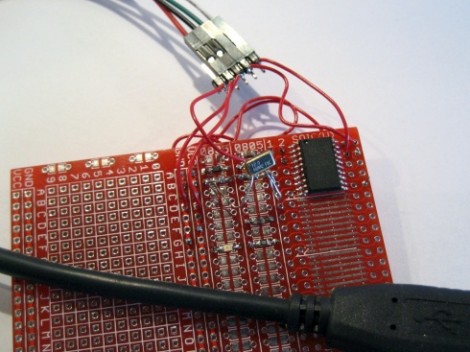
He once again started with a serial to USB converter and removed the voltage converter IC for later use since he doesn’t need TTL levels for this project. The keypad is a USB product and it turns out there’s a hub inside. With plenty of space inside for the serial converter PCB and a blank spot at the top where he mounted the RFID reader, he adding a few passive components to wire it up and connect it to the hub. The only connection is the original USB cord but the PC will detect both the keypad and the converter.

Shutter Remote For RICOH Cameras

[Toby] wanted to have a remote shutter trigger for his RICOH GR III camera. This brand doesn’t have a dedicated port for remote operation but a bit of research allowed him to build his own trigger. The camera’s USB port is used for triggering but not using the USB protocol. Instead, a pulse pattern on the 5V line identifies the half-press, full-press, and release states of the shutter button. From there it was just a matter of wiring up a circuit centering around an Arduino that leaves room for a lot of expansion into realms like photo automation.