The ZX Microdrive: Budget Data Storage, 1980s Style

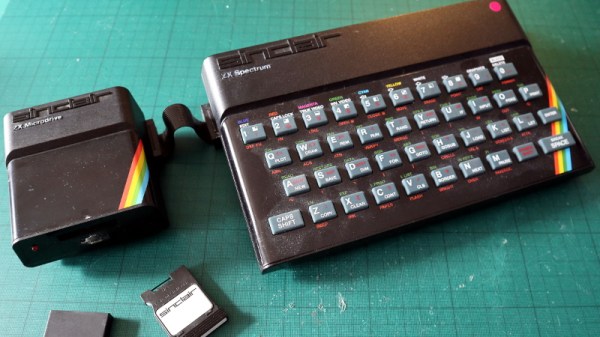
An enduring memory for most who used the 8-bit home computers of the early 1980s is the use of cassette tapes for program storage. Only the extremely well-heeled could afford a disk drive, so if you didn’t fancy the idea of waiting an eternity for your code to load then you were out of luck. If you had a Sinclair Spectrum though, by 1983 you had another option in the form of the unique Sinclair ZX Microdrive.

This was a format developed in-house by Sinclair Research that was essentially a miniaturized version of the endless-loop tape carts which had appeared as 8-track Hi-Fi cartridges in the previous decade, and promised lightning fast load times of within a few seconds along with a relatively huge storage capacity of over 80 kB. Sinclair owners could take their place alongside the Big Boys of the home computer world, and they could do so without breaking the bank too much.

Continue reading “The ZX Microdrive: Budget Data Storage, 1980s Style”

3D On The ZX Spectrum 48K

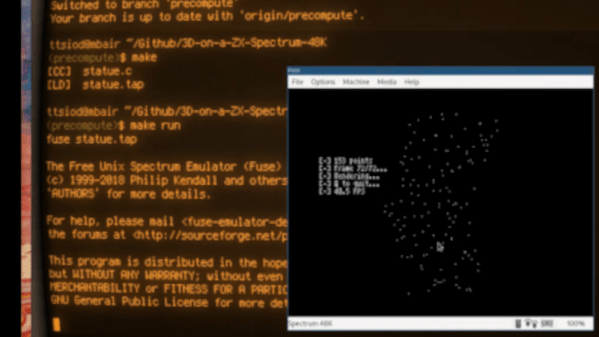
There are times when a project becomes such a big part of a maker’s life that they find themselves revisiting it even years later. [Thanassis] combined this phenomena with his love for the ZX Spectrum when he ported one of his old 3D rendering projects to the ZX Spectrum 48K. The video below shows the result, and they speak for themselves.

The roots of this project go back around three years, when [Thanassis] posted a similar project for the ATMega328 which employed fixed point math tricks for achieving the graphics. The code needed to be even tighter to run on the Spectrum, eventually getting boiled down to just a handful of calculations. This got the proof of concept working with the z88dk compiler, but it wasn’t quite fast enough.

In the end, hand assembly optimizations nearly doubled the performance to a blistering 10 frames per second. There’s also a version that kicks it all the way up to 40 FPS, but only if you give it a few minutes to do the calculations ahead of time. With a few teaks and the right display, this project could produce some very cool retro visuals.

Continue reading “3D On The ZX Spectrum 48K”

FPGA Raises Component Video From A Sinclair ZX Spectrum

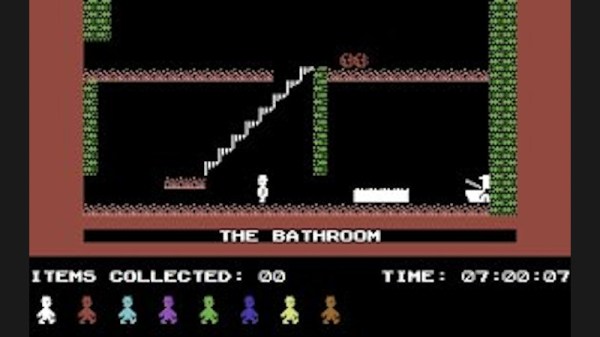
An abiding memory of the early-80s heyday of 8-bit computing for many is operating their computer from the carpet in front of the family TV. While the kids in the computer adverts had parents who bought them a portable colour telly on which to play Jet Set Willy, the average kid had used up all the Christmas present money on the computer itself. The cable would have been an RF connection to the TV antenna socket, and the picture quality? At the time we thought it was amazing because we didn’t know any different, but with the benefit of nearly 40 years’ hindsight, it was awful.

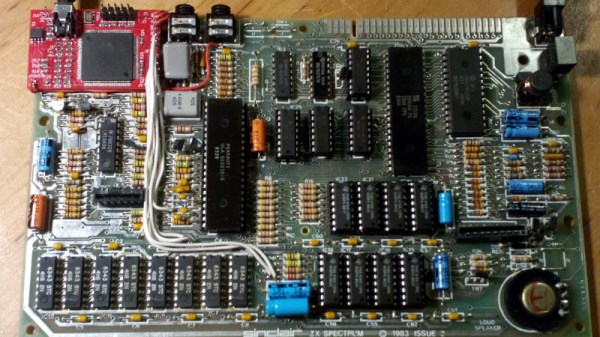
For ZX Spectrum owners in 2020 a standard modification is to bring out a composite video signal, but [c0pperdragon] has gone a step or two beyond that with a component video interface. And this isn’t a mod in which the signals are lifted from the Spectrum’s colour encoder circuitry, instead it uses an FPGA hooked directly to the ULA chip to generate the component video itself.

The Altera chip sits on a little PCB designed to occupy the footprint of the original Astec modulator, and sports a neat bundle of wires hooked up to the various Spectrum signals it needs. There are a couple of jumpers to select the output type and resolution, it supports YPbPr or RGsB outputs and both 288p and 576p. If you think perhaps it looks a little familiar, that’s because it’s the sister project of an earlier board for the Commodore 64. So if you have a Spectrum and are annoyed by UHF and PAL, perhaps it’s worth a look.

Download A Bit Of Sinclair History

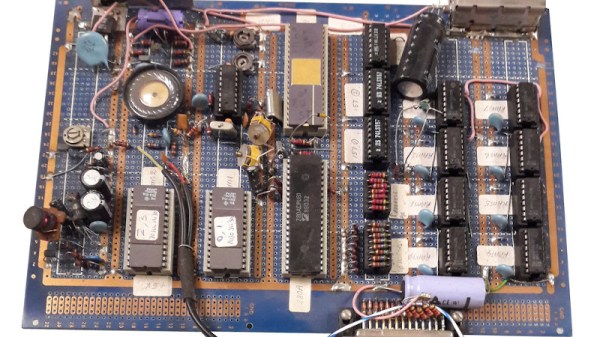
If you are a devotee of the Sinclair series of 8-bit home computers then a piece of news from the Centre For Computing History in Cambridge may be of interest to you, they’ve released a copy of the ROM from their ZX Spectrum prototype. This machine surfaced last year as part of a donation form the company originally contracted to write the Spectrum ROM and has been given pride of place int heir exhibition ever since. They’ve been doing some very careful work on it, and while The Register reports they can’t yet make the board boot, they have extracted the code for study. In the video below the break, we see it running on the Speccy emulator on an older Windows PC.

The ROM comes with an invitation to the ZX Spectrum community to analyze it against the stock version, in the hope of revealing ossified fragments of code such as that for the Microdrive storage peripheral which never made it into the stock Spectrum. But should you simply want to try your favorite games with the earliest possible version of the ROM, you can do that too.

We covered the machine’s emergence last year, meanwhile, if you haven’t been to the Centre for Computing History yet, we suggest you take a look at our review from a few years ago.

Continue reading “Download A Bit Of Sinclair History”

The ZX Spectrum Next Arrives

Sinclair Research was best known in the United States for the tiny ZX80, and the ZX81, under its Timex branding. However, they also made the ZX Spectrum which had many features that were — at the time — unusual. A few years ago there was a Kickstarter to recreate a modern version of the Spectrum, and [Nostalgia Nerd’s] new ZX Spectrum Next has finally arrived. As you can see in the first part of the hour-long video he was very excited about it. Almost too excited for YouTube.

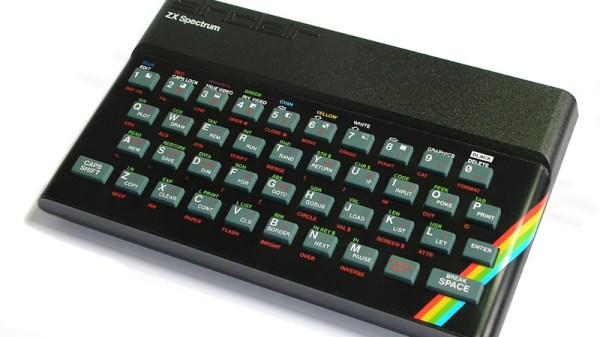
The new incarnation of the Spectrum claims to be fully compatible with the original but also offers improved graphics modes, SD cards instead of tape, and an optional 7 MHz clock speed. The 512K of RAM would have been sinfully luxurious back in the day when the original model came with 16K, although the most iconic Spectrums would be the 48K models. The new version even has the option of taking a Raspberry Pi Zero to act as an accelerator.

Continue reading “The ZX Spectrum Next Arrives”

Spectrum Chiptunes On An STM

Some of us here at Hackaday are suckers for a bit of chiptune music as the backdrop for many excellent times. The authentic way to create chiptunes is of course the original hardware, but in 2019 it’s far more common to do so with an emulator on a modern computer. That computer doesn’t have to sport a high-end processor and desktop operating system though, as [Deater] shows us with his ZX spectrum chiptune player on an STM32L46G Discovery board.

The impetus for the project came he tells us while teaching students to code simple sine wave music players, having code already in the bag for emulating the classic AY-3-8910 sound chip on the Raspberry Pi and the Apple II he decided to port that to the STM32L476 dev board. An earlier version used the internal DAC, but this was refined to send I2S data to an external DAC. The code can be had from GitHub (confusingly buried among code for an LED driver), and we’ve attached a video below of it playing some chiptune goodness.

Of course, Sinclair chiptunes don’t grab all the limelight. There have been plenty of Nintendo and Sega players too. You might also recognize [Deater] from his non-chiptune work, porting Portal to the Apple ][.

Continue reading “Spectrum Chiptunes On An STM”

Stick Your Own Samples In The Cheetah SpecDrum

The Sinclair ZX Spectrum was a popular computer in the 8-bit era, and particularly so in its homeland of the United Kingdom. It was known more for its low cost than its capabilities, but it gained many add-ons over the years. One of those was the Cheetah SpecDrum, which turned the Spectrum into a rudimentary drum machine. [PianoMatt] wasn’t happy with the original drum samples, so he set about loading a custom kit into the SpecDrum.

The SpecDrum software initially came with extra sample tapes, so [PianoMatt] knew it was an achievable task to load in custom samples. Starting by loading the software in an emulator, the RAM was then exported as raw data and loaded up in Audacity. After some experimentation, it was determined the samples were stored in 8-bit format at a sample rate of approximately 20 kHz. With this figured out, it was then possible to load replacement samples directly into RAM through the emulator.

However, this wasn’t enough for [PianoMatt]. Further digging enabled him to reverse engineer the format of the replacement sample tapes. Armed with this knowledge, [PianoMatt] then generated his own tape, complete with proper headers and labels for each drum sound.

It’s a tidy effort to bring a more modern sound to a now positively ancient piece of hardware. We’d love to hear a track with drums courtesy of the SpecDrum, so we’ll keep an ear out on Soundcloud. Mucking around with old sound hardware is a popular pastime in these parts – we’ve even seen people go so far as to build bespoke Sega chiptune players from scratch.