Virtual Windows That Track A Viewer’s Position

Winscape will let you replace that garbage-strewn ally view with just about anything you want. The two windows above are actually plasma screen televisions. In between them you can spot a Nintendo Wii Remote that is used to track an IR badge worn by the person in the room. As they move, the images on the screens are changes to simulate the change in perspective you would see out of a real-world window. Take a look at the video after the break. This is unfortunately not an open source project but the software is available for trial and we find the concept interesting. If you can write video processing algorithms you may be able to take the Wii Remote Whiteboard concept and turn it into a Winscape clone. Continue reading “Virtual Windows That Track A Viewer’s Position”
Vigorous Exercise Keeps The Tunes Coming

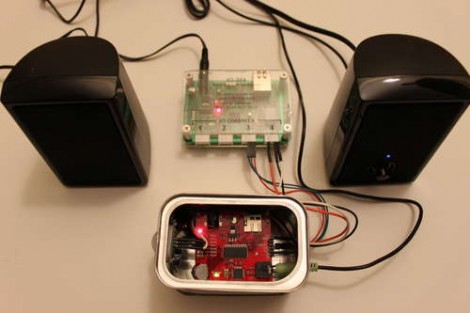
There are cars that increase the radio volume as you drive faster, and video games that ramp up the music as your gameplay improves (we’re looking at you SSX Tricky). Now you can add that feature to your workout with [Polymithic’s] Motion Feedback MP3 Player. It uses a passive infrared sensor to detect motion so there’s no need to wear any electronics. But if you used some Bluetooth headphones you could bring the system with you to the gym, just don’t exercise so hard that you blow your eardrums out.

[via Hacked Gadgets]

Coin-op Pays Out When You Win

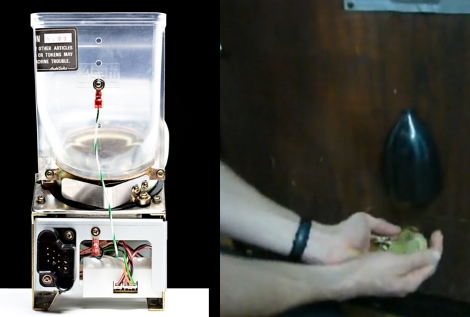
The days of plugging coins into a stand up arcade game are sadly dwindling. [Dirk] figured out a way to prolong the nostalgia by incorporating currency back into the experience in a useful way. He rebuilt the video game Raiden to pay out a prize when you win the game. Now it takes a coin for each play but if you make it to the end you can recoup the expense.

[Dirk] took an original cabinet game, did some dangerous work to replace the old CRT monitor, and retrofit a MAME machine to handle the gaming. He’s using Windows and had some problems because of it but, as you can see after the break, things worked out in the end. The hopper hardware that spits out coins went through several steps from the initial design to the finished product, but it has always been based around a PIC controller connected to the MAME box via parallel port. This is a fun addition to any MAME cabinet.

Continue reading “Coin-op Pays Out When You Win”

Victorian Styled Nixie Tester

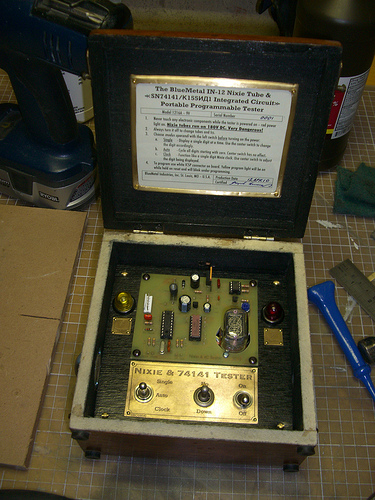
While building some nixie clocks,[Blue_Metal] ended up destroying a few tubes. He found that having a tester sitting around would have been most helpful. Taking some pride in his tools, he put some major effort into building his nixie tube tester. It is quite visually pleasing, featuring hand cut brass framing, custom etched information panels. Scroll through his flickr set to see the build process in detail.

Beer Can Pinhole Camera

When [Justin Quinnell] sent in his beer can pinhole camera, we were just floored. The parts are easy to obtain, and the process for building and ‘shooting’ with the camera are near effortless.

The really impressive part of this hack is letting your camera sit for 6 months facing the sun. Yes, you read that correct, a 6 month exposure. Check out after the break for one of his astonishing shots, and trust us, its well worth the click. Continue reading “Beer Can Pinhole Camera”

Mindstorm Plays Tetris For You

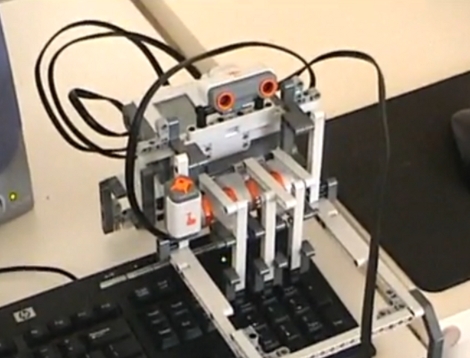
Obviously you’ve got too much hacking to do right now, but that game of Tetris isn’t going to play itself. [Branislav Kisacanin] has you covered with his Tetris-playing robot which is build with LEGO Mindstorm pieces. The setup is actually pretty complicated. A Texas Instruments DM6437 video development board watches the computer screen via a webcam and calculates the next move. It then outputs that to a grid of LEDs which the Mindstorm watches using a light sensor. See it in action after the break and then take some time to check out our other various Tetris based hacks.

Continue reading “Mindstorm Plays Tetris For You”

Solenoid Orchestra Led A By Laser Conductor

[youtube=http://www.youtube.com/watch?v=B-rpp28AuXo]

This video brought a smile to our faces. [Griffin Milsap] is creating live music using an orchestra of solenoid instruments. Each solenoid is set up to strike an object such as a bowl or mug. The trigger mechanism is a light sensor inside of a ping-pong ball. The collection of instruments is conducted by a motor-mounted green laser. When the beam of light passes by one of the ping-pong balls the photo transistor inside actuates the solenoid and a note is played. The pitches are quite a bit more random than the Robo-vibe, but it’s delightful to hear the results that [Griffin] has achieved.