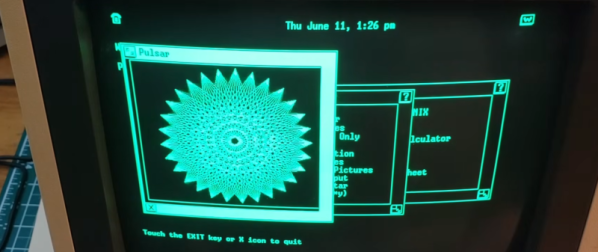
Before Linux, there was Unix. It was great, but it was and has been plagued by problems with licensing and proprietary competition. [Vintage Appartus] recalls, for example, the AT&T Unix PC from the 1980s. It was awesome, but you’ve probably never heard of it. For 1985, it was a nice setup. You got a 10 MHz Motorola 68010, 512K of RAM (but upgradable to 4M), a floppy, a modem, a 720×384 monochrome screen, and a 10 or 20 MB hard drive. You can check out the video explaining the machine and its problems below.
Physically, the computer looked like a high-end Apple ][ with a removable keyboard and a built-in monitor. Expansion was via three slots. Cold start took about three minutes, and then you have a fairly normal Unix setup for the period.
Normally, when you design an electronic gadget, you worry about how hot it will get. Automotive-grade components, for example, often have higher allowable temperatures than commercial parts. However, extremely cold environments, such as deep space or the interiors of quantum computers, are also challenging. Researchers at King Abdullah University of Science and Technology believe gallium oxide may be key to operating near absolute zero.
According to [Vishal Khandelwal], one of the researchers, most conventional electronics fail below -173C or 100K. Quantum computers routinely operate at 4K. However, β-Ga2O3 is a wide-bandgap semiconductor that has low current leakage and works at high temperatures up to 500C. However, it also avoids the freeze-out effect that traps electrons in other semiconductor materials.
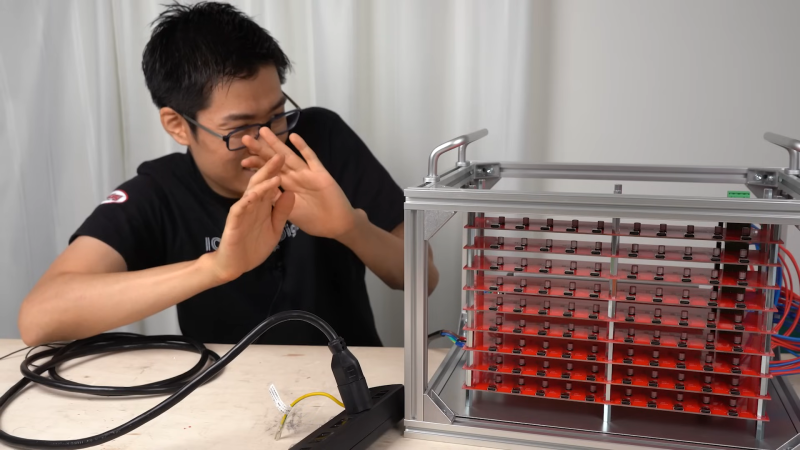
Back when phones used to ship with chargers in the box, you’d get a plugpack that could charge one device. Aftermarket manufacturers eventually started making chargers with four or five ports which were great for travelling. But what if you wanted to charge even more devices? You might build something like this rig from [DENKI OTAKU].
The goal was to build a charger that could handle 100 devices at once. The charger is designed to charge devices at up to 1.5 amps. That’s no mean feat, as the device would have to be able to deliver 150 amps total when fully loaded. As for the actual design, though, it’s relatively simple. [DENKI OTAKU] simply built a simple USB-C charger PCB based around an off-the-shelf chip which has ten individual chargers on it, and stacked it up ten of those in a housing made out of aluminium extrusion. To deliver the current to run all these chargers, the rig got two massive switching power supplies to feed the charger array a massive amount of current. The open enclosure design here makes sense, in that it probably helps keep everything cool.
The only thing missing from the build video? A heavy-duty test. We’d love to see if it actually holds up under full load with 100 phones connected. We have some suspicions as to whether the traces on the PCBs would hold up under a continuous 15 amp load, for example. Still, if you wanted to provide phone charging en-masse at an event or similar, this kind of simple stacked design could be an easy way to go.
One doesn’t generally associate cardboard with structural components like hinges, but [Itoshige Studio] assures us that you can absolutely create hinges out of this ubiquitous material. In total the video covers five different designs, ranging from the simple and straightforward to an interlocking tab design that approximates a typical steel hinge with paper rod to keep both sides of the hinge together.
Simple paper hinge. (Credit: Itoshige Studio, YouTube)
The most simplistic hinge is unsurprisingly just a strip of craft paper, which is also demonstrated as the hinge for a wooden box in lieu of the typical metal hinge. This same principle is then demonstrated for a fancy cardboard box.
From here the designs get increasingly more involved. First a seamless hinge variation, and then a kamichoban hinge design that’s inspired by traditional Japanese room dividers and furniture, using panels that are interconnected with overlapping sections to create a fascinatingly flexible hinge that can fully fold either way.
The flush hinge design is somewhat like the craft paper hinge, but significantly fancier and probably sturdier, while also looking pretty good on something like a cabinet. Finally the interlocking tab hinge is effectively a cardboard version of the hinge design that’s found on every room’s door, with a similar level of flexibility. This is obviously the trickiest one to assemble and get right, but it has its own charm.
Considering that all of these examples use regular corrugated cardboard that we get shipped to our homes by the truckload, the cost to try these examples is your time plus some basic tools and glue. The author also sells a book that contains templates – in addition to digital versions – for these hinges and other designs, if you’d like to enjoy the 100% paper experience.
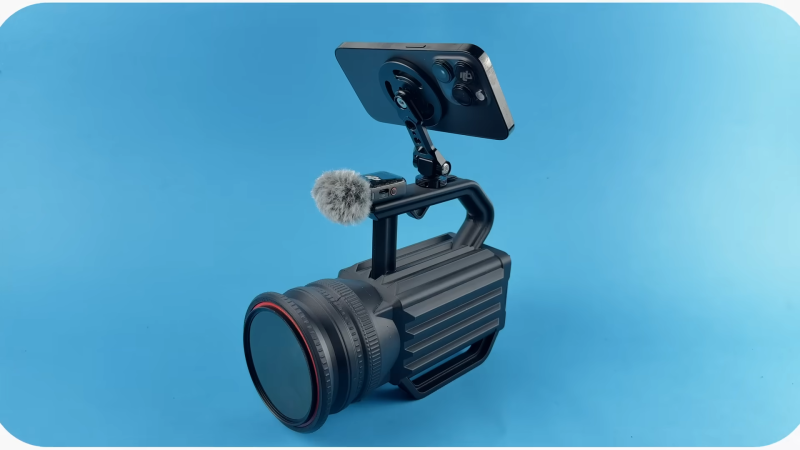
The Osmo Pocket 4 is a handheld gimballed camera that’s perfect for shooting running content on the go. However, it’s got a weird sort of form factor and is limited when it comes to things like fitting filters or recording quality sound. To that end, [Byron Seven] whipped up an upgrade kit that turns the Pocket 4 into more of a “real” camera.
The idea is simple enough—the Osmo Pocket 4 is packaged in a 3D printed shell that expands its capabilities. It’s tucked into the structure with a USB power bank that greatly increases how long you can shoot before the batteries run out. In front of the gimbal head, there’s a fitting that allows attaching standard camera filters for visual effect. Topside there’s a handle for better physical control of the camera, along with a rail mount for a DJI wireless mic and a phone to act as a monitor. Down below, there’s a quick-connect fitting so the camera can be slammed on and off a tripod with ease. What’s great is that you can slot a Pocket 4 into this rig when you need, and pull it back out and use it as normal when you’re done.
We’re used to seeing technologies move with the times, and it’s likely among Hackaday readers are the group who spend the most time doing that and are most aware of it. There’s one which we’ll all be aware of which has quietly slipped away for most of us almost without a word, I speak of course of 32-bit computing. For most of us that means 32-bit computing on x86 machines, and since the 64-bit x86 instruction set we all now use has been around for nearly a quarter century, its 32-bit ancestor is now ancient history.
In the world of software that means we’re now in an era of operating systems and browsers dropping 32-bit support, so increasingly keeping a 32-bit machine up to date will become a challenge. That sounds like something just painful and difficult enough to subject to a Daily Drivers piece, so just how practical is it to use a 32-bit machine for my daily work in 2026?
2005 Just Gave Me A Computer
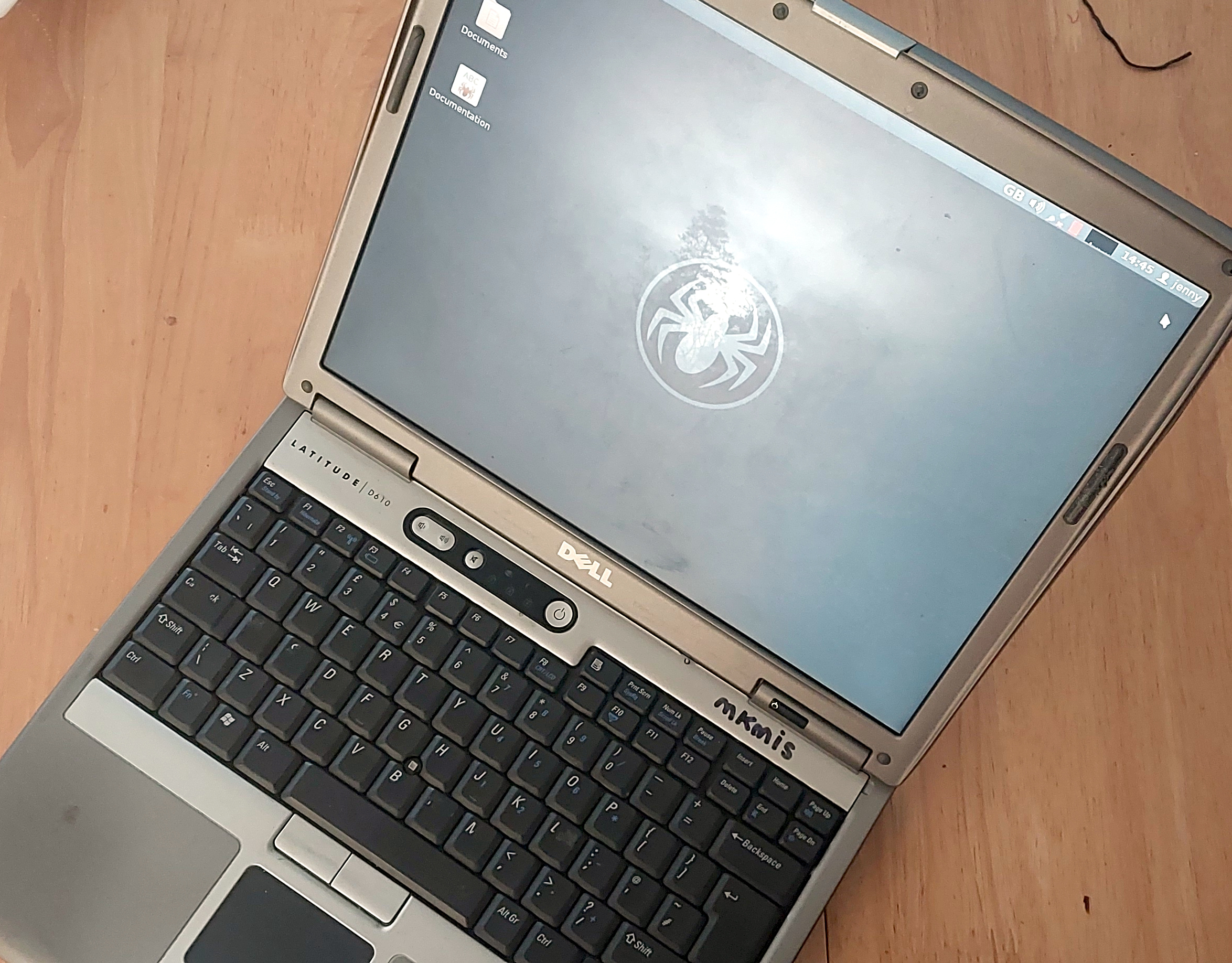
Not looking too bad for a 21 year old laptop.
On my desk I have a Dell Latitude D610. It was made in about 2005 in the days when Dells were solidly made, and with its 1.6GHz Pentium M and 2Gb of memory it represents roughly the final throw of the dice for a 32-bit Intel laptop. Just over a year later it would have been replaced by one of the Intel Core series with the 64-bit instructions grudgingly adopted from AMD, but at the time it was a respectably useful machine.
It came into my possession about eight years ago when I used it to test the Revbank bar tab software for my hackerspace, and for the past six years it’s languished unloved in my box there. It’s got an ancient Ubuntu distro on it, so my first task is to pick a 32-bit replacement from 2026. That’s now a dwindling selection, so it’s time to start digging though some minimalist distros. With the supply of those based on mainstream distros drying up as they drop 32-bit support, it’s time to look into more esoteric offerings. This fits well with the ethos of this series, we’re all about the unusual here.
Cutting out the mainstream based distros certainly narrows the field, and out of the promising contenders in the minimalist field, I went for SliTaz. It uses Busybox and the Openbox desktop, that runs from RAM. I was looking for good application support in the repos, and this distro has the things I need. Download it, stick it on a USB stick, and let’s see what it can do. I know one thing, I wouldn’t have been able to download that ISO in five seconds with the internet connection I had in 2005. Continue reading “Jenny’s Daily Drivers: Going 32-Bit With SliTaz In 2026”→
Odd things sometimes pop up in the feed of a Hackaday scribe, not hacks as such, but stories with a meaning in our community. One such that’s come our way from a variety of sources over the last week features Ursa Ag, a small machinery manufacturer based in Alberta, Canada. The reason they’re in the news is because they have gained bulging order books by taking on the likes of John Deere with a tractor more like the one their customers’ parents bought back in the ’80s or ’90s. It’s a basic machine without much in the way of electronics, and certainly without all the DRM lockdown that has made those big manufacturers so unpopular.
It’s clear that Hackaday isn’t in the business of shilling Canadian tractors, but it should be of interest to readers because it represents an alternative route to challenge the DRM lockdowns than the legal and consumer routes we’ve previously reported on. The Ursa Ag tractor may be as niche Albertan as a Corb Lund CD, but it’s not the tractor itself but the idea which matters. We doubt much sweat will be shed by John Deere execs over a tiny company out on the prairies making a basic spec tractor, but given that Ursa Ag customers are reported as buying them because they have no DRM, the prospect of larger upstart competitors taking note and offering machines without it may cause them some sleep loss. The free market is held up to outsiders as perhaps the most American of ideals, and for it to eventually prove to be the means by which something intended to limit it might be defeated, is sweet justice indeed.