 Water timers are nifty devices that can water the lawn at set times or keep that vegetable garden from turning into a dustbowl. When [electronupdate] timer refused to output water on any of its three outlets, he did the right thing. Instead of angrily checking the warranty on the sodding thing, he tore it apart to attempt a repair.
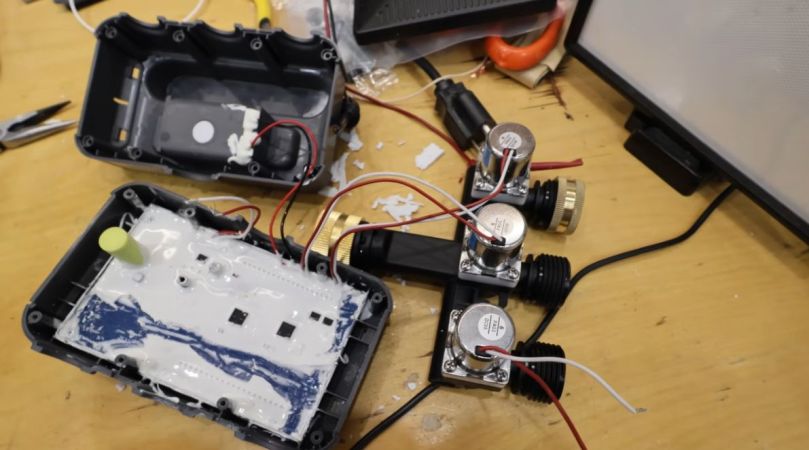
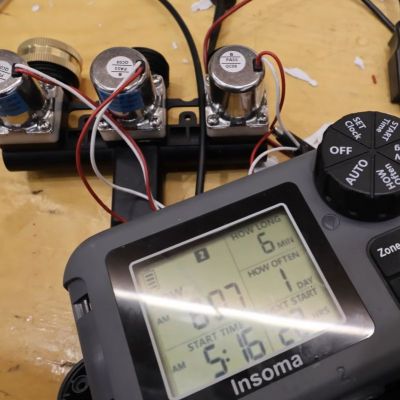
As expected, the design of these devices is quite straightforward. Three solenoids control whether an outlet is open or closed. A control board also handles the user controls and display.
There was no obvious sign of damage, and the PCB was potted in a white substance that should have kept out any moisture. A quick check with a battery revealed that the three solenoids also worked just fine, so the cause likely was somewhere on the — potted — PCB.
These solenoids are rated for 6VDC and take about 20 ms to act, but on an oscilloscope capture it was plain to see that the board was only putting out around 2V. This wasn’t enough to drive the solenoid, raising the question of what had gone wrong on the controller board and setting the stage for some fun epoxy potting compound scraping.
A good bit of elbow grease revealed the control ICs, the H-bridges that drive the solenoids, and the rest of the circuitry, including a power boost circuit with a big electrolytic capacitor. The latter had a bit of suspicious liquid near its base, which turned out to be the culprit. Perhaps the most annoying thing here is that this electrolytic capacitor had the temerity to fail after only four months of use, but at least it was an easy enough fix.
If we had been in there, we might have been tempted to avoid many future battery changes. Impractical, but we wonder if anyone ever built a water timer with a water clock?
Continue reading “Teardown And Repair Of An Insoma Water Timer”