Diffuse glow of red, green, and blue LEDs embedded in silicone

Embedded LEDs For Soft Robots Made From Silicone

Over on their YouTube channel [Science Buddies] shows us how to embed LEDs in soft robots. Soft robots can be made entirely or partially from silicone. In the video you see an example of a claw-like gripper made entirely from silicone. You can also use silicone to make “skin”. The skin can stretch, and the degree of stretch can be measured by means of an embedded sensor made from stretchy conductive fabric.

As silicone is translucent if you embed LEDs within it when illuminated they will emit diffuse light. Stranded wire is best for flexibility and the video demonstrates how to loop the wires back and forth into a spring-like shape for expansion and contraction along the axis which will stretch. Or you can wire in the LEDs without bending the wires if you run them along an axis which won’t stretch.

The video shows how to make silicone skin by layering two-part mixture into a mold. A base layer of silicone is followed by a strip of conductive fabric and the LED with its wires. Then another layer of silicone is applied to completely cover and seal the fabric and LED in place. Tape is used to hold the fabric and LED in place while the final layer of silicone is applied.

When the LEDs are embedded in silicone there will be reduced airflow to facilitate cooling so be sure to use a large series resistor to limit the current through the LED as much as possible to prevent overheating. A 1K series resistor would be a good value to try first. If you need the LED to be brighter you will need to decrease the resistance, but make sure you’re not generating too much heat when you do so.

If you’re interested in stretchy circuits you might also like to read about flexible circuits built on polyimide film.

Continue reading “Embedded LEDs For Soft Robots Made From Silicone”
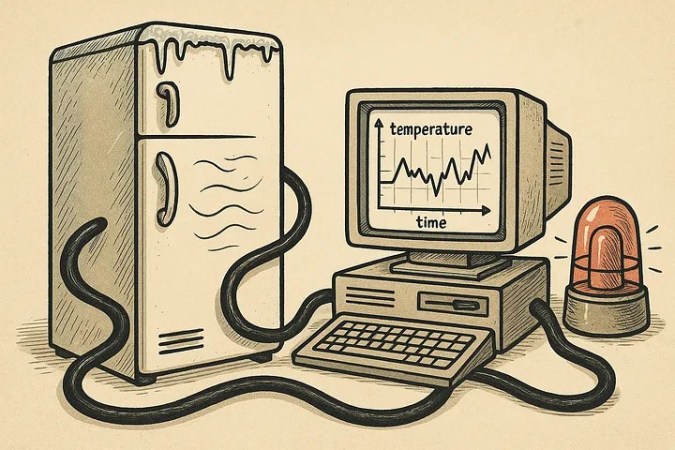
This image created using GPT-4o on Poe using the prompt “picture of an upright freezer connected to a computer for temperature monitoring, together with a graph and an alarm siren. Suitable for a professional blog. Be humorous and use a vintage theme.”

Freezer Monitoring: Because Ice Cream Is A Dish Best Served Cold

[Scott Baker] wrote in to let us know about his freezer monitor.

After a regrettable incident where the ice cream melted because the freezer failed [Scott] decided that what was called for was a monitoring and alerting system. We enjoyed reading about this hack, and we’ll give you the details in just a tick, but before we do, we wanted to mention [Scott]’s justifications for why he decided to roll his own solution for this, rather than just using the bundled proprietary service from the white goods manufacturer.

We’re always looking for good excuses for rolling our own systems, and [Scott]’s list is comprehensive: no closed-source, no-api cloud service required, can log with high fidelity, unlimited data retention, correlation with other data possible, control over alerting criteria, choice of alerting channels. Sounds fair enough to us!

Continue reading “Freezer Monitoring: Because Ice Cream Is A Dish Best Served Cold”

The Open-Source Multimeter: The HydraMeter

Designing An Open Source Multimeter: The HydraMeter

Our hacker [John Duffy] wrote in to let us know about a video he put together to explain the design of his open-source multimeter, the HydraMeter.

If you’re interested in how the circuitry for a voltmeter, ohmmeter, or ammeter might work, this video is a masterclass. In this long and detailed video, [John] walks us through his solutions to various challenges he had while designing his own multimeter. We covered this multimeter last year, and this new video elaborates on the design of the HydraMeter which has been a work in progress for years now.

The basic design feeds voltage, current, and resistance front-ends into an Analog to Digital Converter (ADC), which then feeds into a microcontroller and out to the (detachable) display. You can find the KiCad design files on the GitHub page. There is also a write-up on hackaday.io.

The user interface for the meter is… opinionated, and perhaps not to everyone’s taste. In the video, [John] talks a little bit about why he made the UI work the way that it does, and he noted that adding a rotary range switch is a goal for version 2.0.

Thank you, [John], for putting this video together; it is an excellent resource. We look forward to seeing version 2.0 develop soon!

Continue reading “Designing An Open Source Multimeter: The HydraMeter”

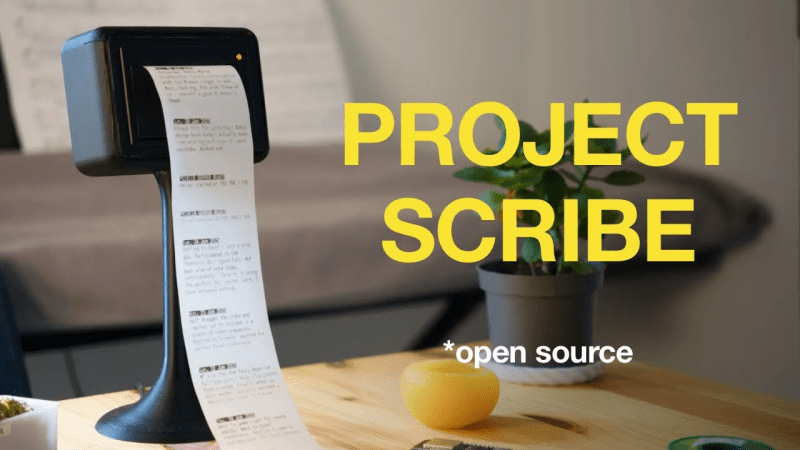
Project Scribe thermal printer printing out a receipt

Project Scribe: Receipts For Life

Here’s a fun project. Over on their YouTube page [Urban Circles] introduces Project Scribe.

The idea behind this project is that you can print out little life “receipts”. Notes, jokes, thoughts, anecdotes, memories. These little paper mementos have a physical reality that goes beyond their informational content. You can cut them up, organize them, scribble on them, highlight them, stick them on the wall, or in a scrapbook. The whole idea of the project is to help you make easier and better decisions every day by nudging you in the direction of being more mindful of where you’ve been and where you’re going.

Continue reading “Project Scribe: Receipts For Life”

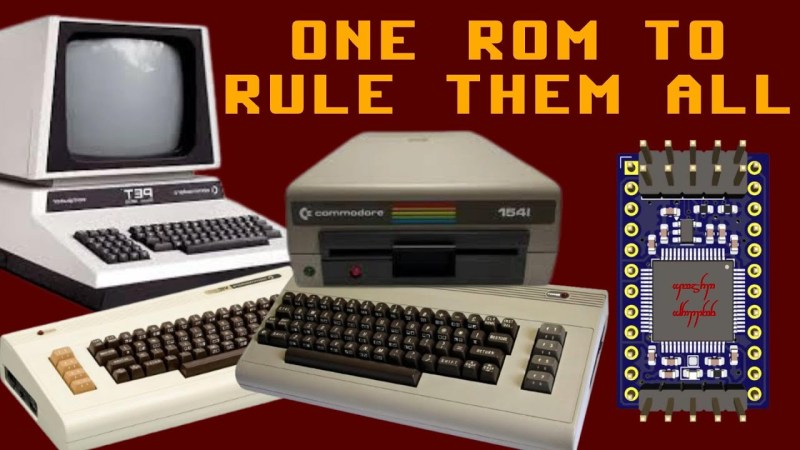
One ROM to rule them all.

Software Defined Retro ROMs

Here’s something fun from our hacker [Piers]: Software Defined ROMs.

In this series of three videos, [Piers] runs us through what a software defined ROM is, how to make them, and then how to use them.

As [Piers] explains, one frustration a retro technician will face is a failed ROM chip. In the era he’s interested in, there are basically three relevant kinds of ROM chip, all 24-pin Dual Inline Package (DIP):

  • 2364 ROM chip: 8KB; 1x chip-select line
  • 2332 ROM chip: 4KB; 2x chip-select lines
  • 2316 ROM chip: 2KB; 3x chip-select lines

Continue reading “Software Defined Retro ROMs”

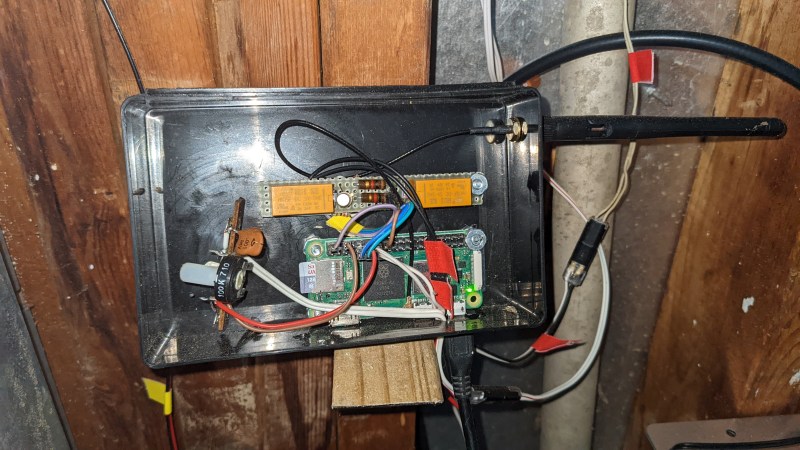
A photo of the circuitry in its case

GarageMinder: Automatic Garage Door

After getting a new car, [Solo Pilot] missed the automatic garage door opening and closing system their old car had. So they set about building their own, called GarageMinder. On the project page you will find a bill of materials, schematics, and some notes about the approach taken in various versions of the software. [Solo Pilot] also made the software available.

The basic hardware centers around a Raspberry Pi Zero W, but there are plans to switch to an ESP32. From the car side of things there are built-in continuous Bluetooth Low Energy (BLE) advertisement broadcasts, which the Raspberry Pi can detect. Building a reliable system on top of these unreliable signals is difficult and you can read about some of the challenges and approaches that were taken during development. This is a work in progress and additional techniques and approaches are going to be trialed in future.

If you’re interested in Bluetooth garage door openers be sure to read about using a Bluetooth headset as a garage door opener for your Android device.

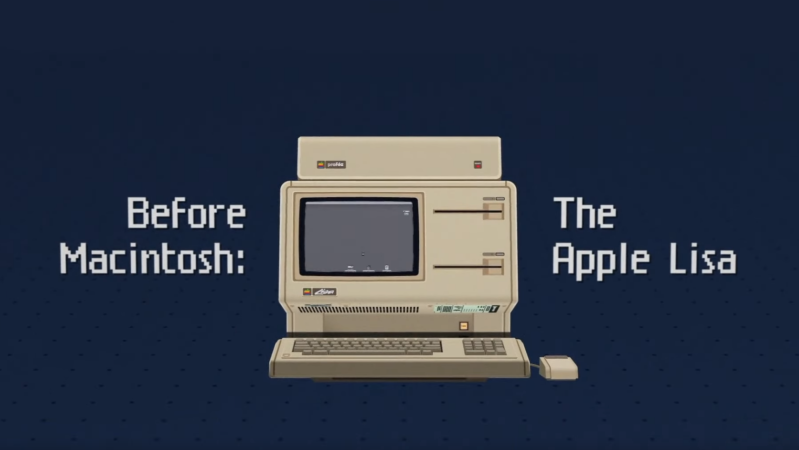
Before Macintosh banner with stylized pixelated picture of one

Before Macintosh: The Story Of The Apple Lisa

Film maker [David Greelish] wrote in to let us know about his recent documentary: Before Macintosh: The Apple Lisa.

The documentary covers the life of the Apple Lisa. It starts with the genesis of the Lisa Project at Apple, covering its creation, then its marketing, and finally its cancellation. It then discusses the Apple Lisa after Apple, when it became a collectible. Finally the film examines the legacy of the Apple Lisa, today.

The Apple Lisa was an important step on the journey to graphical user interfaces which was a paradigm that was shifting in the early 1980s, contemporary with the Macintosh and the work at Palo Alto. The mouse. Bitmapped graphics. Friendly error messages. These were the innovations of the day.

Continue reading “Before Macintosh: The Story Of The Apple Lisa”