
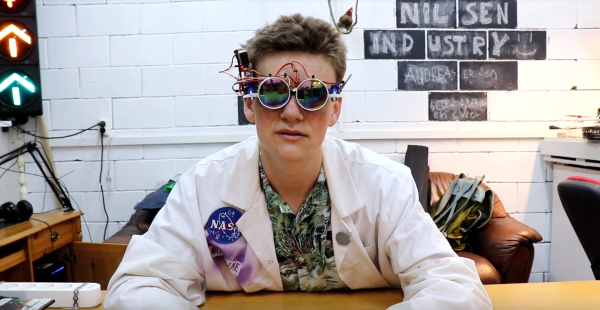
[Andreas] may have created the ultimate lazy hacker accessory: automatic sunglasses, or “Selfblending sunglasses” as he creatively titled his video. If you can’t tell from the name, these are glasses that you never have to take off. If the light is dim, they move away from your eyes. Going back outside to bright light? The glasses move to protect your eyes.
The glasses consist of a couple of micro servos which move tinted lenses toward or away from the user’s eyes. A side-mounted Arduino Uno reads a CdS cell light sensor and drives the servos. Why an Uno rather than a much more wearable Arduino Nano? It’s what [Andreas] had lying around.
Yes, a good portion of the fun of this build is [Andreas’] comedy. But the best part comes when he tests the glasses out — in an actual car on the highway. The glasses work better than expected — moving the lenses into and out of [Andreas] field of view as he drives through tunnels. You can actually see how surprised [Andreas] is that it works so well.
These aren’t the first automatic sunglasses we’ve seen, nor are they the most peril-sensitive. Still, it’s a fun project and the video gave us a few chuckles.



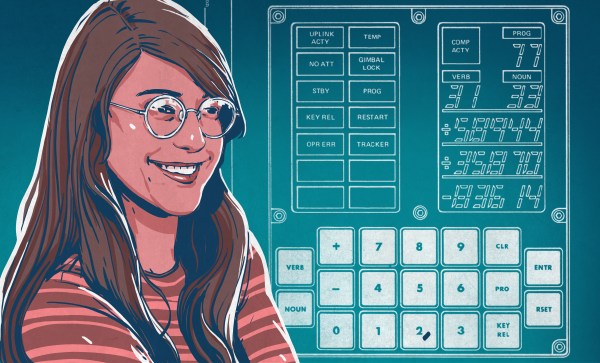
 Hamilton soon moved on to the SAGE program, writing software which would monitor radar data for incoming Russian bombers. Her work on SAGE put Margaret in the perfect position to jump to the new Apollo navigation software team.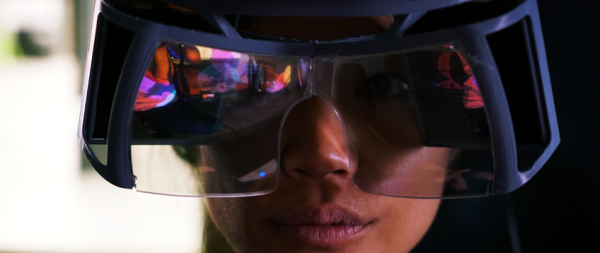
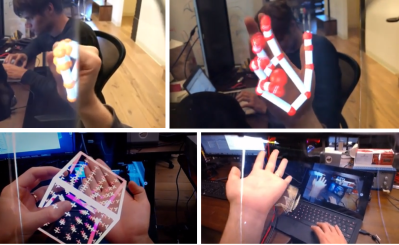 Now that we’ve got you excited, let’s mention what the North Star is not — it’s not a consumer device. Leap Motion’s idea here was to create a platform for developing Augmented Reality experiences — the user interface and interaction aspects. To that end, they built the best head-mounted display they could on a budget. The company started with standard 5.5″ cell phone displays, which made for an incredibly high resolution but low framerate (50 Hz) device. It was also large and completely unpractical.








